The storefronts along Peace Arch Highway in Blaine, Wash., once depended on a rhythm as steady as the tide. Canadian drivers crossed the border for gasoline, groceries and outlet malls, their license plates filling parking lots from morning until dusk. Today, many of those lots sit half empty. The shift has been abrupt enough that some shopkeepers have taped maple leaves to their windows and offered 25 percent discounts simply for presenting a Canadian ID.
What has unfolded over the past several months is not a formal trade embargo or a legislative sanction. It is something quieter, but potentially more enduring: a pullback by Canadian travelers from the United States, a consumer response to political friction that is now rippling through local economies from Washington State to Florida. Analysts estimate that Canadians made more than 20 million visits to the United States last year, spending upward of $20 billion. This year, that flow has slowed markedly.
Tourism officials trace the downturn to the escalating rhetoric and tariff disputes initiated by President Donald Trump, including remarks suggesting that Canada could become the “51st state.” While such comments were dismissed by supporters as bluster, they landed differently north of the border. Travel data compiled by industry groups show double-digit percentage declines in Canadian arrivals in several states, with particularly sharp drops in border communities that rely on short-term visits.
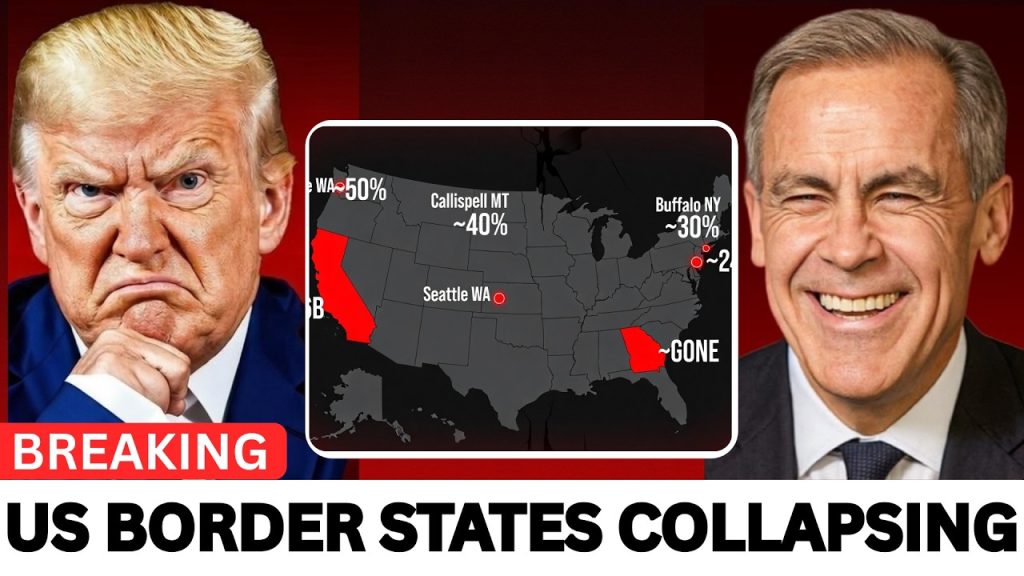
In Callispell, Mont., a ski gateway town accustomed to winter visitors from Alberta, local businesses have banded together to create a “welcome pass,” a coordinated package of discounts meant to lure Canadians back. In Detroit, restaurant owners have gone on local television appealing directly to patrons across the river in Windsor, Ontario. In California, tourism authorities project billions of dollars in potential losses this year, citing declines in international arrivals led in part by fewer Canadians.
The economic mechanics are straightforward. Canadians constitute the largest group of foreign visitors to the United States. Their proximity allows for frequent, low-cost trips — a weekend shopping excursion, a concert, a sporting event. When that habit is disrupted, even temporarily, the impact concentrates quickly in regions structured around cross-border convenience. A 30 or 40 percent reduction in vehicle crossings can translate into layoffs, reduced hours and deferred expansion plans within months.
What makes the current moment distinct, economists say, is that the decline appears motivated less by exchange rates or fuel prices than by sentiment. Surveys conducted in Canada indicate that a growing number of citizens are choosing alternative destinations — Mexico, Europe, domestic travel within Canada — as a form of economic signaling. Airlines have adjusted routes accordingly. Tourism boards in competing countries have expanded marketing campaigns aimed at Canadian consumers.
For American communities, the question is whether the downturn represents a cyclical protest or a structural shift. Consumer behavior, once altered, can harden into routine. A family that discovers a new winter destination may not automatically return to its previous one. Retirees who sell seasonal properties in Florida and relocate elsewhere are unlikely to reverse course quickly. The longer the decline persists, the more businesses adapt to a smaller baseline.
Industry groups have attempted to quantify the broader implications. The U.S. Travel Association has projected billions in potential losses tied to reduced international visitation, with Canadian travel representing a significant share. While overall national tourism figures remain substantial, the contraction is uneven, disproportionately affecting border states and sunbelt regions popular with Canadian “snowbirds.”
Administration officials have emphasized that trade negotiations are multifaceted and that tourism trends fluctuate for many reasons. Supporters of the president argue that short-term declines may be offset by domestic travel and future international events, including the 2026 FIFA World Cup, which the United States will co-host. Large-scale sporting events typically produce temporary surges in visitation, though economists caution that such spikes rarely compensate fully for sustained downturns in core markets.
Canadian officials, for their part, have not issued formal travel restrictions. The shift has been voluntary, shaped by public opinion and media discourse. Yet the cumulative effect resembles an informal economic countermeasure — one rooted not in policy decree but in individual choice. In that sense, it is difficult to counter with traditional tools. Discount campaigns and advertising blitzes may soften margins, but they do little to address the underlying grievance expressed by many Canadian travelers: a perception of diminished respect.
In Blaine, a business owner recently described the situation as feeling like a “new normal.” The phrase carries weight. Cross-border commerce between the United States and Canada has long been characterized by familiarity — neighbors sharing supply chains, sports leagues and weekend plans. When that familiarity frays, the consequences extend beyond revenue columns.
Whether the downturn proves temporary will depend in part on political tone as much as tariff policy. Economic relationships between the two countries remain deeply integrated, from energy flows to automotive manufacturing. But tourism, unlike oil pipelines or auto plants, runs on discretionary goodwill. And goodwill, once unsettled, can take longer to restore than any balance sheet might suggest.