Canada has officially secured access to the European Union’s massive €150 billion SAFE (Security Action for Europe) Defence Fund, marking a historic shift in transatlantic defence cooperation. The announcement immediately sent ripples through global security circles, as Ottawa becomes one of the first non-EU countries allowed to participate in the ambitious European defence financing initiative. Analysts say the move signals a deepening alignment between Canada and Europe at a time of rising geopolitical uncertainty.
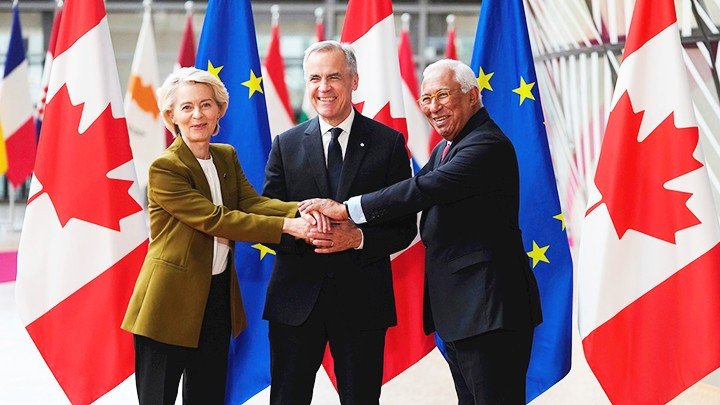
The SAFE Defence Fund, launched by the EU to strengthen Europe’s military readiness, aims to boost joint weapons production, accelerate defence innovation, and reduce dependence on external suppliers. By opening the door to Canada, the EU demonstrates a willingness to expand trusted partnerships beyond its borders while reinforcing collective security capabilities. Canadian defence firms are now positioned to compete for billions in procurement projects ranging from advanced weapons systems to cybersecurity and military technology development.
However, Canada’s entry comes with significant limitations and new access barriers. Despite being granted participation status, Canadian companies must comply with strict EU industrial rules, supply-chain requirements, and security regulations designed to prioritize European manufacturers. Experts warn that these conditions could restrict full market access, potentially limiting how much Canadian industry can ultimately benefit from the funding pool.
European officials insist the safeguards are necessary to protect strategic autonomy and ensure taxpayer-funded defence investments remain anchored within Europe. The SAFE program was created partly to strengthen domestic defence production following recent global conflicts and supply disruptions. As a result, non-EU partners like Canada must navigate complex eligibility standards, local partnership requirements, and technology-sharing constraints before securing contracts.

For Canada, the opportunity nonetheless represents a major strategic victory. Participation strengthens Ottawa’s defence ties with NATO allies, diversifies export opportunities for Canadian defence companies, and enhances collaboration on next-generation military capabilities. Industry leaders believe Canadian expertise in aerospace, artificial intelligence, and naval systems could make the country a valuable contributor despite regulatory hurdles.
The broader geopolitical implications are substantial. Canada’s inclusion in the EU’s €150B SAFE Defence Fund highlights the emergence of a more interconnected Western defence ecosystem, where partnerships increasingly extend beyond traditional regional boundaries. Yet the new barriers underscore an evolving reality: cooperation is expanding, but competition within allied defence markets is intensifying. As implementation begins, the world will be watching whether Canada can turn access into real economic and strategic gains.