JUST IN: TRUMP’S CANADA TARIFFS COLLAPSE AS HIS OWN PARTY BREAKS RANKS — HOUSE VOTES TO END TRADE WAR
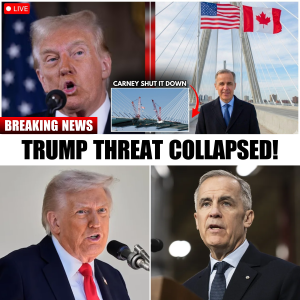
In a stunning political reversal, Donald Trump’s Canada tariff strategy suffered its first formal defeat as the United States House of Representatives voted to terminate the tariffs—thanks in part to members of Trump’s own party. Six Republicans crossed party lines to join Democrats, delivering a 219–211 vote that publicly rejected the core of Trump’s trade agenda. While Trump retains veto power, the vote sent a clear message: Republican unity behind the tariff war is cracking.

The rebellion did not come out of nowhere. The tariffs were imposed by declaring a national emergency on Canada, allowing Trump to bypass Congress entirely. That maneuver angered lawmakers who argue the Constitution gives tariff authority to Congress, not the White House. When Democrats forced a privileged resolution onto the House floor, Republican leaders tried to block it. The effort failed—and the dam broke. For the first time, Trump’s trade war faced open rejection from his own party.
The six Republicans who defected cited pressure from their districts, not Washington politics. Representatives from agricultural and manufacturing regions said farmers, exporters, and small businesses were being crushed by higher costs and lost Canadian markets. Retaliatory tariffs from Canada hit U.S. wheat, beef, dairy, wine, and industrial goods, wiping out export sales and raising input prices at home. Several lawmakers explicitly called the tariffs a tax on American consumers rather than a penalty on foreign producers.
Economically, the backlash is severe. Studies cited by lawmakers show tariffs costing the average U.S. household roughly $1,700 a year in higher prices, while exports to Canada dropped by more than 20 percent. Businesses delayed hiring and investment due to trade uncertainty, and job growth slowed sharply. Even as tariffs generated government revenue on paper, companies passed nearly all the costs directly to American families, fueling inflation and voter anger in swing districts.
Politically, the vote marks a turning point. Trump threatened primary challenges against any Republican who opposed him, yet six lawmakers voted no anyway—calculating that angry voters were a bigger threat than Trump’s endorsement power. The move exposes a shift in Republican politics: in competitive districts, loyalty to Trump is no longer absolute when trade wars start hurting local economies. Similar votes have already passed the Senate with bipartisan support, showing opposition runs deeper than many expected.
For Canada, the outcome is a strategic win. Leaders in Ottawa, including Mark Carney, argued all along that Trump’s tariffs would eventually collapse under domestic U.S. pressure. Canadian retaliation, consumer boycotts, and supply-chain shifts were designed to create exactly this moment. While Trump is expected to veto the resolution, the damage is done: his leverage in future trade negotiations is weaker, and every new vote increases the odds that more Republicans will defect. The tariff war remains in place—for now—but its political foundation is clearly starting to crumble.