CANADA–INDIA URANIUM DEAL SHAKES GLOBAL POWER — WHY WASHINGTON IS WATCHING NERVOUSLY
Canada and India have quietly restarted high-level trade negotiations, marking a dramatic thaw after relations froze in 2023 over a major diplomatic crisis. This time, the talks are moving faster, deeper, and with far greater strategic consequences.
Prime Minister Mark Carney confirmed that Canada and India have agreed to launch negotiations toward a new trade agreement following meetings on the sidelines of the G20 summit. Indian Prime Minister Narendra Modi described the discussions as “very productive,” signaling mutual urgency on both sides.

What appears on the surface as routine trade diplomacy is, in reality, a significant shift in global power dynamics. At the center of the talks is energy, particularly uranium, a resource with long-term geopolitical weight.
Canada is preparing to finalize a 10-year uranium supply agreement worth approximately $2.8 billion, positioning itself as a core supplier for India’s rapidly expanding civilian nuclear energy program. For India, this is not optional energy diversification but critical infrastructure planning.
India’s electricity demand is surging due to industrial growth and urbanization, and nuclear power is essential to meeting that demand while controlling emissions. Securing a stable uranium partner for the next decade gives New Delhi strategic certainty.
For Canada, the deal represents something bigger than revenue. It signals a deliberate move away from automatic alignment with Washington and toward diversified, independent partnerships that reduce vulnerability to U.S. political pressure.
That pressure has been unmistakable. Donald Trump recently threatened sweeping 100% tariffs if Canada pursued trade arrangements involving China, a move widely expected to force Ottawa into retreat. Instead, Canada accelerated talks with India.
The assumption in Washington was that Canada would slow down, issue reassurances, and quietly fall back into familiar dependency. That assumption collapsed almost immediately.
Rather than back off, Ottawa doubled down, framing diversification as economic security rather than provocation. India, having long navigated external pressure, emerged as a natural partner.
May you like

The agreements expected to be announced in March are not symbolic gestures. They include uranium, energy cooperation, critical minerals, artificial intelligence, quantum computing, education, and advanced technology partnerships designed to last decades.
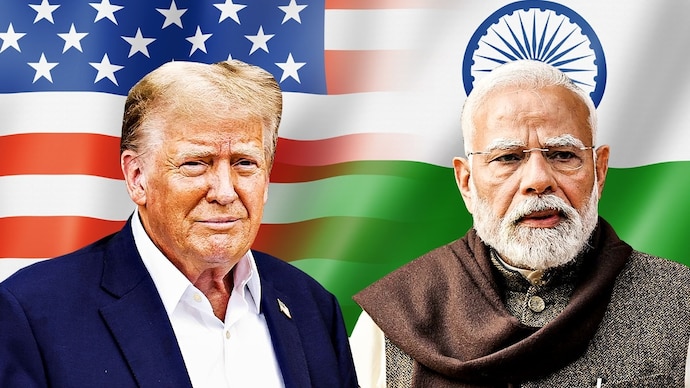
Canada’s energy minister has already traveled to India to prepare the groundwork, confirming that uranium sales will proceed under existing nuclear cooperation frameworks and international safeguards. The message was clear: Canada is ready to anchor itself in India’s energy future.
This shift did not happen in isolation. At the World Economic Forum in Davos earlier this year, Carney delivered a speech that resonated far beyond the room, arguing that the traditional rules-based international system no longer guarantees stability.
He called on middle powers to build coalitions that deliver fairness and predictability without relying on a single dominant authority. The standing ovation reflected recognition, not politeness.
Within days of that speech, Canada announced targeted tariff reductions with China, unlocking an estimated
$7 billion in export opportunities. The stated goal was explicit: double non-U.S. exports over the next decade.
Trump responded with threats. Canada responded with contracts.
Ottawa reaffirmed its commitment to USMCA while pointing out that bilateral tariff reductions remain fully legal. Then came the move that changed the equation entirely: a high-profile visit to India scheduled for early March.
Beyond uranium, Canada and India will formally relaunch negotiations for a comprehensive economic partnership agreement. Talks that stalled for two years are now moving at a pace rarely seen in trade diplomacy, with officials suggesting a deal could be reached within a year.
The speed reflects urgency shared by many countries facing unpredictable U.S. tariffs. Economic security, Indian officials have said bluntly, can no longer depend on the mood swings of a single capital.
This partnership also repairs a diplomatic rupture left by previous leadership. Carney moved quickly to stabilize relations after the 2023 crisis, inviting Modi to the G7 and reopening channels that had gone silent.
Legal proceedings related to the past dispute continue, but both sides have chosen compartmentalized diplomacy, allowing strategic cooperation to move forward without being paralyzed by unresolved tensions.
The contrast with Washington’s approach is striking. Where the U.S. increasingly uses threats, Canada is building durability. Where ultimatums dominate, Ottawa is offering predictability.
Carney’s strategy follows a clear pattern: reduce targeted tariffs with China, secure long-term energy agreements with India, formalize critical mineral partnerships, and expand engagement with other middle powers such as Australia.
None of these moves violate existing treaties. Every agreement expands options. Each new partnership reduces the effectiveness of future threats.
Washington now faces a shrinking leverage window. Canceling USMCA would damage American manufacturers as much as Canadian ones, while tariffs risk retaliation and higher consumer prices.
As Canada redirects exports toward Asia and Europe, dependence decreases and influence erodes where compliance is no longer the only path.
When Carney signs agreements in New Delhi, the impact will extend far beyond uranium shipments. It will demonstrate that middle powers can build economic security without seeking permission.
India’s decision to commit to Canada for a decade sends a signal watched closely around the world. Alignment with the United States is no longer the only safe option.
Canada now stands at a defining moment. Return to quiet dependence, or continue building a diversified framework designed to last.
Carney has made his choice, and each signature makes reversal harder.
While Washington issues warnings from the sidelines, Ottawa is outlining a new model of middle-power independence in real time — and others are already taking notes.