BREAKING: TRUMP DEMANDS FIVE CONCESSIONS FROM CANADA — CARNEY REJECTS EVERY SINGLE ONE
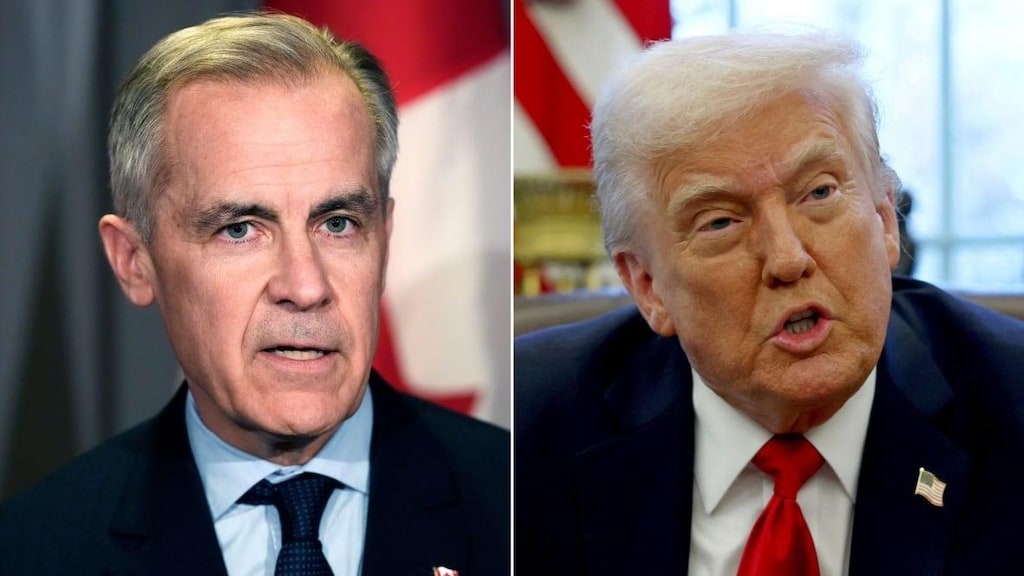
The United States has issued a hard-line ultimatum to Canada ahead of the review of North America’s most important trade deal, demanding sweeping changes across five key sectors. From dairy and digital media to alcohol, government procurement, and energy policy, Washington made clear that compliance was expected if the agreement was to survive. Instead of negotiating quietly, Canadian Prime Minister Mark Carney did something few expected: he publicly rejected all five demands without hesitation.
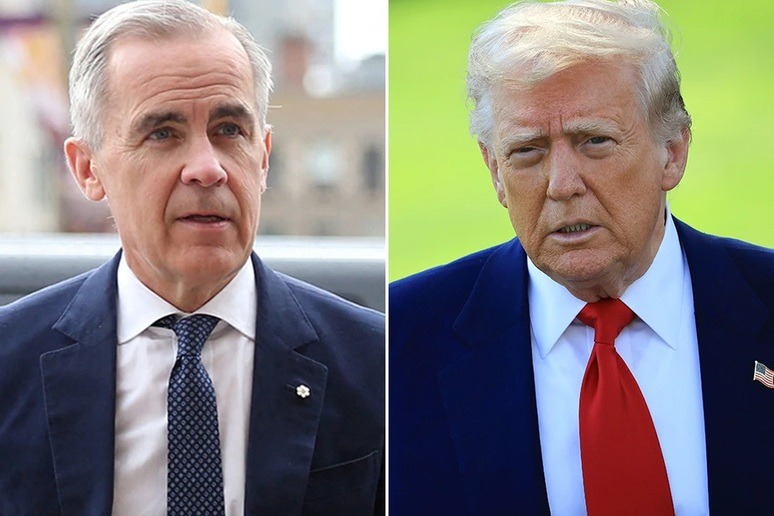
The demands, laid out openly by U.S. Trade Representative Jameson Greer, revealed how aggressively Washington sought to reshape the economic relationship. American officials framed the list as a condition for extending the trade pact another 16 years, but the scope went far beyond tariffs. Each demand targeted a pillar of Canada’s economic and cultural sovereignty, effectively asking Ottawa to surrender long-standing domestic protections.
The first flashpoint was dairy. U.S. producers have long pushed for broader access to Canada’s supply-managed dairy market, which tightly controls imports to protect farmers. Carney shut the door completely. He reiterated that supply management is not negotiable and underscored the message by responding in French, signaling directly to Quebec. Weeks earlier, Canada had already passed legislation permanently locking the system into law, making any concession legally impossible.
Digital media formed the second major battleground. Washington accused Canada’s Online Streaming Act and Online News Act of discriminating against American tech companies. Ottawa disagreed. Carney defended the laws as essential tools to protect Canadian journalism, culture, and creative industries from being overwhelmed by U.S. platforms. Cultural sovereignty, he made clear, would not be traded for market access.
The third and fourth demands—alcohol restrictions and government procurement—further exposed the imbalance. U.S. officials demanded Canada lift provincial bans on American alcohol imposed after U.S. tariffs, while those tariffs remained in place. Carney refused. On procurement, Washington criticized Canada for favoring domestic suppliers, despite enforcing its own “Buy American” rules across federal contracts. Ottawa dismissed the demands as hypocrisy dressed up as negotiation.
Energy was the fifth pressure point, but it backfired. While U.S. officials questioned provincial electricity rules, the broader reality favored Canada. The United States imports millions of barrels of Canadian oil every day and relies heavily on Canadian electricity during peak demand. Energy flows north-to-south are foundational to the U.S. economy, giving Ottawa far more leverage than the demands implied.
Perhaps most telling was what Washington did not demand: automobiles. North America’s auto industry is deeply integrated, with parts crossing borders multiple times before final assembly. Automakers have warned Congress that the trade agreement saves tens of billions of dollars annually. Carney understands that if the deal collapses, American manufacturers suffer first, making autos Canada’s quiet but powerful leverage.
By rejecting all five demands, Carney did not weaken Canada’s position—he clarified it. Canada now has alternatives: expanding access to China for agriculture, deeper ties with Europe, domestic procurement strategies, and control over critical minerals vital to U.S. clean-energy ambitions. As the trade review approaches, one reality is becoming impossible to ignore. Trump may be demanding everything, but Canada no longer needs to give in—and that shift could redefine power across North America.