CANADA’S QUIET GRAIN GAMBIT JUST LOCKED THE U.S. OUT OF A $780 BILLION AGRICULTURAL CORRIDOR
Canada has quietly executed one of the most consequential agricultural trade shifts in North American history, and Washington barely saw it coming. Triggered by renewed tariff threats from Donald Trump, Ottawa and Canadian agribusiness leaders moved decisively to reroute grain and fertilizer exports away from U.S.-controlled logistics. The result is a long-term structural pivot that could redirect up to $780 billion in trade through Canadian-owned infrastructure over the next decade.
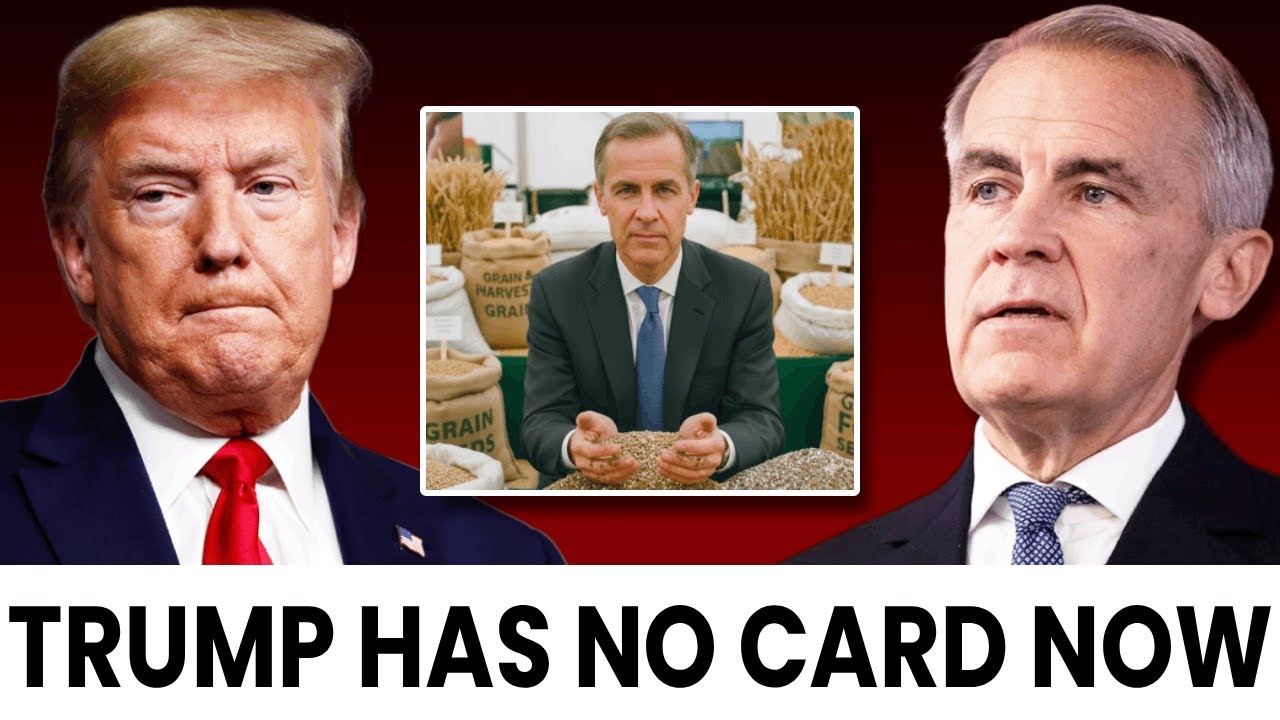
For decades, Canada’s vast agricultural output—wheat, canola, barley, and especially potash—flowed south into American rail networks and ports before reaching global markets. This arrangement enriched U.S. logistics firms while leaving Canadian farmers exposed to political risk, rising fees, and congestion. Trump’s proposal to impose tariffs of up to 25% on Canadian grain and fertilizer transformed that dependency from an inefficiency into a strategic liability.
At the center of Canada’s response is the long-neglected Port of Churchill on Hudson Bay. Once dismissed as obsolete, the Arctic deep-water port offers a shorter, cheaper route to Europe compared to Vancouver or U.S. terminals. By cutting days off shipping times and eliminating American intermediaries, Churchill provides exactly what modern supply chains value most: speed, cost control, and reliability.

Canada’s dominance in global fertilizer markets made the move especially powerful. The country is the world’s largest potash exporter, accounting for roughly 41% of global exports, a critical input for food production that supports nearly half the world’s population. Add Canada’s position as the third-largest wheat exporter, shipping to over 80 countries, and the leverage becomes undeniable. Control over logistics means control over outcomes.
The turning point came in March 2025 when Genesis Fertilizers announced it would reroute imports and exports through Churchill in partnership with Arctic Gateway Group. Phosphate that once entered through the United States would now bypass it entirely. What began as a single corporate decision quickly became proof of concept, showing that Arctic routes were not just viable, but superior under current economic and political conditions.
Grain is the much larger prize. Canada ships nearly 29 million tons annually through Vancouver alone, a port increasingly strained by congestion and cost overruns. Even diverting 15–20% of that volume north would reshape global trade flows. Over ten years, fertilizer, grain, specialty crops, and related exports moving through Churchill could realistically total $700–800 billion, locking in new patterns that are expensive and unlikely to reverse.
Washington has limited options to respond. Canada is not violating trade agreements or closing markets; it is simply investing in its own infrastructure and choosing to use it. Every shipment that bypasses U.S. ports permanently reduces American leverage. Once elevators, rail upgrades, and storage facilities are built around the northern corridor, economic logic—not politics—will keep them in use.
This shift signals something larger than agriculture. It demonstrates how tariff pressure can backfire, accelerating diversification instead of submission. A port once sold for $1 is now central to Canada’s economic sovereignty. And as Canadian grain and fertilizer move on Canadian terms, the era of unquestioned U.S. control over North America’s agricultural arteries is quietly coming to an end.