By XAMXAM
For decades, Canada’s defense relationship with the United States rested on an unspoken premise: alignment first, autonomy later. Shared airspace, shared command structures, and shared assumptions about trust made friction rare, if never absent. That premise is now under strain.
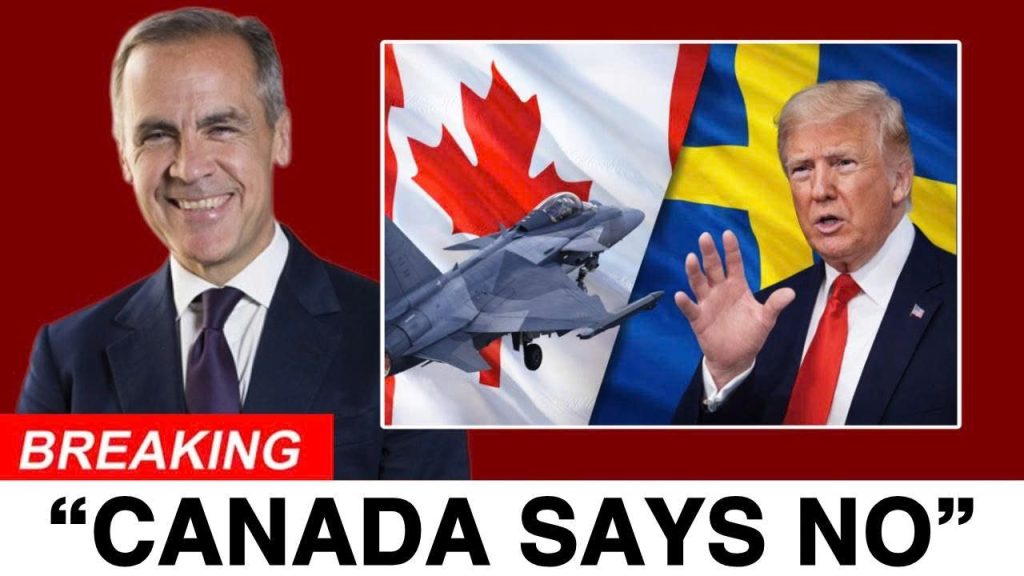
A dispute over fighter jets—seemingly technical, deeply political—has exposed fault lines in the bilateral relationship and raised a question Ottawa has long deferred: how much sovereignty is it willing to trade for security?
At the center of the controversy is Canada’s reconsideration of its commitment to the American-made F-35 fighter, produced by Lockheed Martin. Ottawa signed on in 2022 to purchase 88 aircraft at an estimated cost of nearly 28 billion Canadian dollars. Sixteen jets are already on order, with delivery expected to begin in 2026. But pressure is mounting inside Canada to halt the remaining purchases and pivot toward the Swedish-built Gripen E, offered by Saab.
What might once have been a routine procurement debate has become something more volatile. American officials have warned—privately and publicly—that reducing the F-35 order could force changes to NORAD, the binational air defense command that has anchored North American security for nearly seventy years. The implication is stark: if Canada does not maintain full interoperability through the F-35, the United States may increase its own military activity in Canadian airspace.
For Ottawa, the message sounded less like reassurance than pressure.
The backdrop matters. Former president Donald Trump, now once again looming over American politics, has revived rhetoric that treats allies transactionally and sovereignty casually. His past threats of tariffs, his public contempt for partners, and his recent musings about annexation have hardened Canadian public opinion. According to polls conducted late last year, roughly 72 percent of Canadians now favor the Gripen over the F-35—not because it is more lethal, but because it promises more control.
The Gripen offer is unusually expansive. Saab has proposed not only 72 fighter jets but also six GlobalEye early-warning aircraft built on Bombardier platforms, along with domestic assembly lines in Ontario and Quebec and an estimated 12,600 jobs. Most strikingly, the company has signaled a willingness to grant Canada access to key portions of the aircraft’s software source code, allowing Ottawa to maintain and upgrade the jets without foreign approval.
That concession goes to the heart of the dispute. The F-35 is often described as the most advanced fighter in the world, a flying network of sensors and data links. But its software is tightly controlled by Washington. Every upgrade, modification, or integration requires Pentagon approval. Critics in Canada argue that this effectively places a ceiling on sovereignty: the aircraft may fly under a Canadian flag, but it answers to American systems.
By contrast, Saab’s model emphasizes national autonomy within alliance structures. Brazil has already negotiated similar access for its Gripen fleet. Canadian defense analysts see this as a rare opportunity to reclaim industrial and technological agency lost over decades of dependence.
American officials counter that such autonomy comes at a cost. In evaluations focused on penetrating advanced air defenses, the F-35 dramatically outperforms the Gripen. Former Canadian military leaders have warned that operating two different fighter systems—F-35s and Gripens—would complicate logistics, training, and combat readiness, while weakening Canada’s contribution to NATO and NORAD.
Yet those warnings have not silenced domestic pressure. Mélanie Joly, speaking recently to business leaders, made clear that Canada now expects more from defense procurement than hardware. “We believe we can use military procurement to get more,” she said, signaling that economic and industrial returns are no longer optional extras.
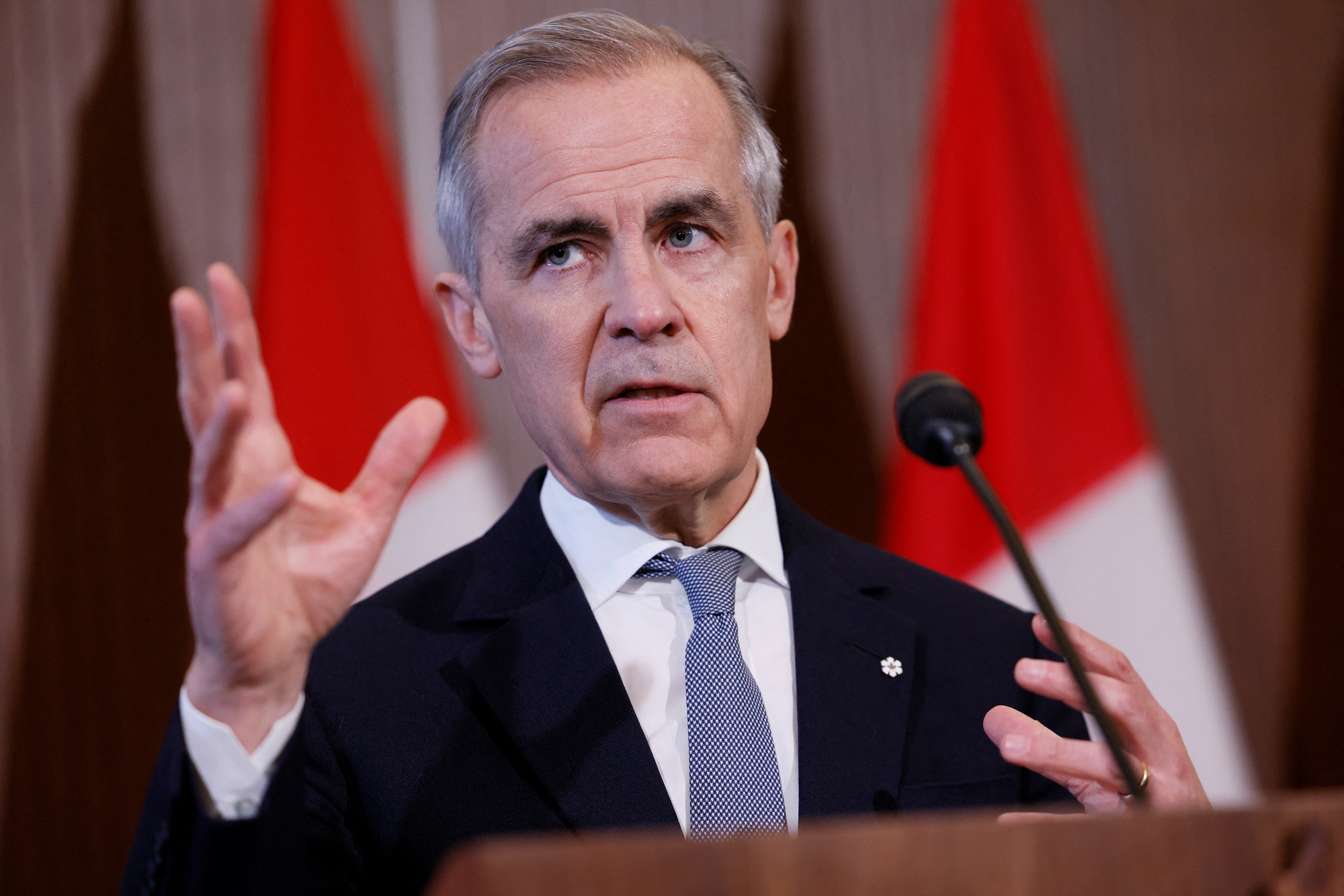
Prime Minister Mark Carney, leading a fragile minority government, faces competing imperatives. Backing down risks reinforcing a perception—widely shared among younger voters—that Canada remains a junior partner, expected to comply when Washington insists. Pushing too far risks real consequences for continental defense cooperation, particularly within NORAD.
There are no illusions in Ottawa about complete independence. The Gripen uses an American-made engine, meaning export licenses from Washington would still be required. Sovereignty, in this context, is relative, not absolute. But relative differences matter. The gap between needing approval for an engine and needing approval for every line of software is not trivial.
What makes this moment distinct is that the debate has escaped elite circles. It has become a proxy for broader anxieties: about trade wars, about technological dependence, about whether alliances still respect smaller partners’ agency. Canada’s aerospace sector has lined up behind the Gripen, warning that continued F-35 purchases without stronger industrial offsets could hollow out domestic capacity.
International observers are watching closely. If Canada successfully resists pressure and reshapes the terms of its procurement, it may offer a template for other midsized democracies navigating relationships with superpowers. If it does not, the lesson will be equally clear.
For now, Ottawa remains officially silent, its final assessment delayed, negotiations unfolding on parallel tracks. But the choice ahead is no longer framed simply as F-35 versus Gripen. It has become a referendum on how Canada defines security in the twenty-first century: as maximum military capability purchased at the price of dependence, or as a calibrated balance between alliance and autonomy.
Either way, the decision will echo well beyond the runway.