BREAKING: Trump Crosses a Dangerous Line in Canada — And Mark Carney Shuts It Down
After weeks of threats, tariffs, insults, and escalating pressure tactics, Donald Trump has crossed a new and far more dangerous line against Canada.
This time, it isn’t trade.
It isn’t rhetoric.
And it isn’t personal attacks.
It is interference.
Reports have now emerged that figures connected to the Trump administration have been engaging with Alberta separatist movements at the exact moment Canada is navigating a volatile trade confrontation with the United States. The implication is explosive: a foreign government entertaining internal separatist forces inside an allied democracy during a period of economic and political pressure.
And on this point, Prime Minister Mark Carney did not hesitate.
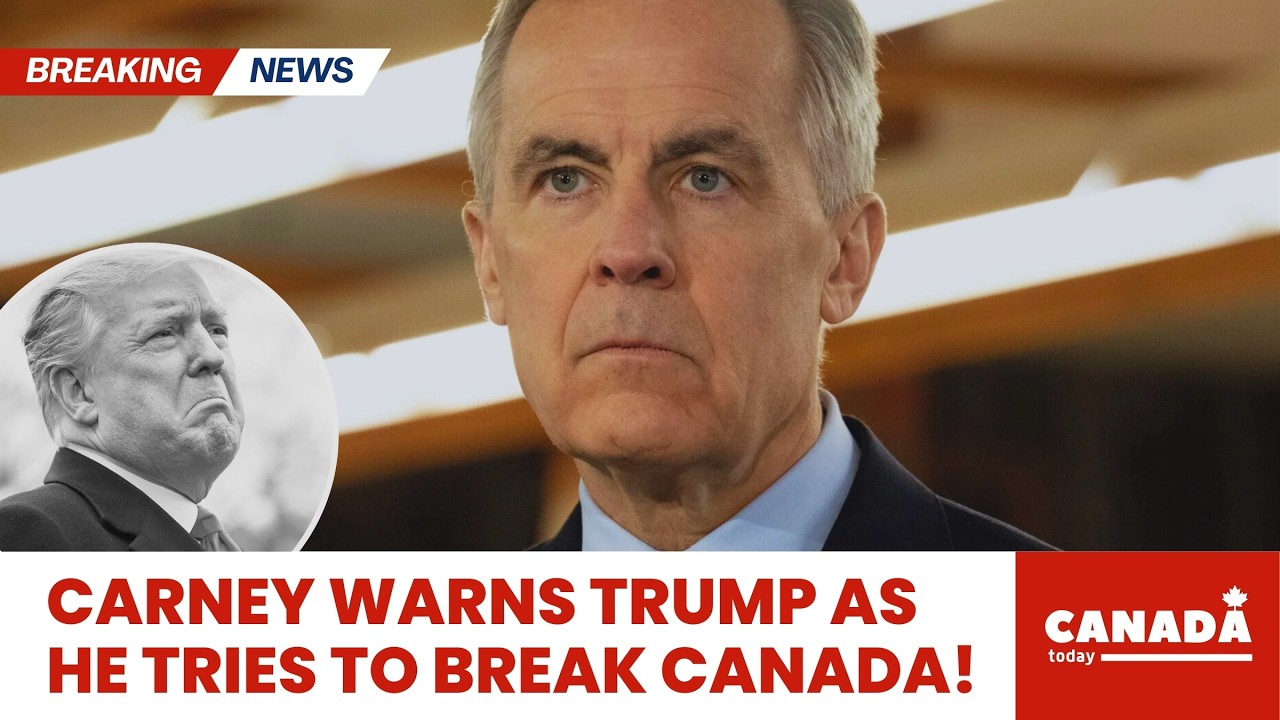
When asked directly whether the Trump administration’s meetings with Alberta separatists and comments by U.S. officials amounted to foreign interference, Carney did something both unexpected and devastatingly effective.
He shut it down — without inflaming it.
Rather than validate the separatists, attack Washington, or escalate the rhetoric, Carney reframed the entire issue. Calmly and deliberately, he stated that the governments that matter — the ones shaping Canada’s future — were already at the table: the federal government, provincial premiers, municipal leaders, and Indigenous partners.
That framing was not accidental. It stripped the separatist movement of relevance without ever naming it as a legitimate actor. And it sent a quiet but unmistakable message to Washington: you are talking to the wrong people.
The backdrop to this moment is deeply troubling. Reports confirmed that individuals tied to Trump’s orbit had met with Alberta separatist groups while Canada faces mounting economic pressure from U.S. trade actions. On its own, that raised alarms. But the situation escalated further when U.S. Treasury Secretary Scott Bessent appeared to openly entertain the idea of Alberta aligning with the United States, citing its natural resources, frustration over pipelines, and “independent” political culture.
That was no offhand remark. It was a signal.
Carney’s response drew a firm boundary. He stated clearly that discussions about Alberta’s democratic process belong to Albertans and Canadians alone. Not to foreign governments. Not to outside actors. Not even to allies — no matter how powerful.
Then he went further.
Carney confirmed that this issue would not remain a media talking point. It would be raised formally through diplomatic channels. Canada’s representative in Washington would address it directly. The U.S. ambassador in Ottawa would be confronted with it.
That shift matters. Because it signals seriousness.
This was no longer commentary. It was now a state-to-state issue.
What makes Carney’s response so effective is what he refused to do. He did not accuse the United States outright. He did not raise his voice. He did not threaten retaliation. Instead, he removed emotion and replaced it with procedure — the most powerful weapon in diplomacy.
That is how interference is contained without being amplified.
And it sends a message Trump understands very well: boundaries have been crossed, and they will be enforced quietly, firmly, and institutionally.
Former New Brunswick Premier Brian Gallant articulated what many were thinking but few were willing to say plainly. He called the meetings completely unacceptable and offered a comparison that instantly exposed the hypocrisy. Imagine if Canada were meeting with a movement advocating for California’s secession from the United States. Trump would explode.
That analogy lands because it reveals the double standard immediately.
Gallant also raised a deeper concern: this is not just about separatism. It is about a broader playbook — foreign actors amplifying internal divisions, exploiting frustration, and applying pressure where unity is weakest. That tactic is not theoretical. It has been deployed globally, repeatedly, and with destabilizing consequences.
This moment, then, is bigger than Alberta. It is bigger than one press conference.
What Trump’s side was testing was Canada’s cohesion.
Pressure only works when a country fractures. Leverage only exists when internal divisions are exploited from the outside. By entertaining separatist movements, the Trump administration wasn’t being subtle — it was probing for weakness.
Carney’s response closed that door immediately.
No panic.
No outrage.
No escalation.
Just authority.
And authority, when expressed calmly, is unmistakable.
The timing matters too. Premiers from across the political spectrum are meeting with the prime minister under a “Team Canada” framework during a moment of external pressure. Disagreements remain — as they always do in a federation — but they are being handled internally, not outsourced to foreign influence.
That unity is the deterrent.
Separatist movements only gain power when they are amplified. Carney refused to amplify them. Instead, he rendered them irrelevant.
The message going forward is now clear. Any attempt to exploit Canada’s internal political debates will be treated not as commentary, but as a sovereignty issue. Not as noise, but as interference.
Trump’s move was designed to destabilize.
Carney’s response created clarity.
And clarity is strength.
Donald Trump attempted to turn division into leverage. Mark Carney turned it into a dead end. No theatrics. No concessions. No panic.
Just a firm reminder — delivered calmly and unmistakably — that Canada decides Canada’s future.
And that line, once tested, was shut down.