Canada Signals a Strategic Break With Washington as It Expands Trade Ties With China
Ottawa — Canada is executing one of the most consequential shifts in its trade and foreign policy in decades, signaling a deliberate move away from economic dependence on the United States and toward a more diversified global strategy centered on China, Europe, and Asia.
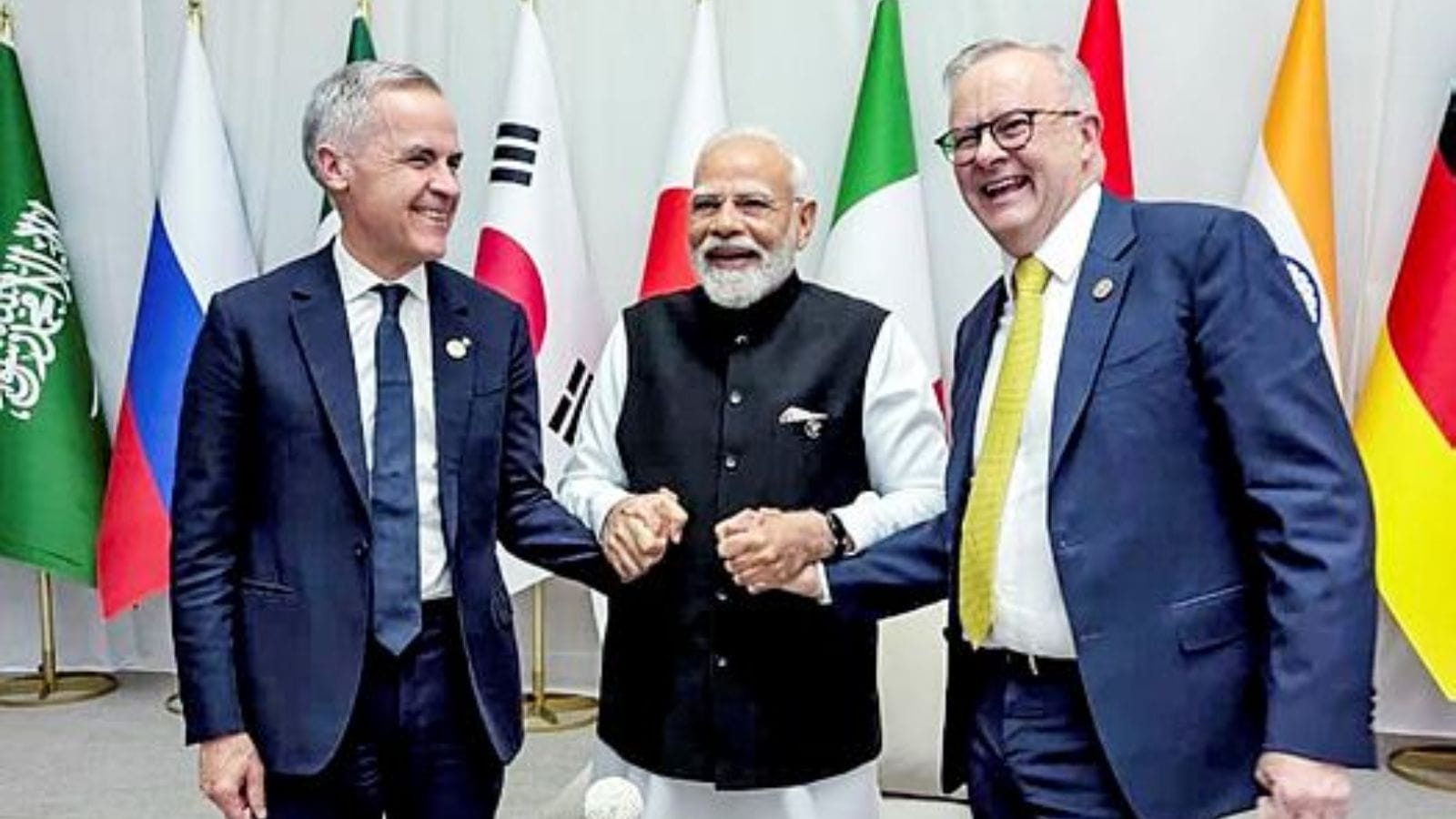
At the center of this pivot is a sweeping set of agreements announced during Prime Minister Mark Carney’s recent state visit to Beijing — a visit that has reverberated far beyond trade circles and into the heart of global geopolitics.
The message from Ottawa is increasingly clear: Canada no longer intends to organize its economic future around the assumption of a stable, predictable partnership with Washington.
A Trade Realignment Years in the Making
Under the new framework, Canada will gradually roll back tariffs on Chinese electric vehicles, allowing up to 49,000 EVs annually to enter the Canadian market at most-favored-nation tariff rates — roughly 6 percent. In return, China has agreed to ease tariffs on key Canadian exports, including canola, restoring access to a market worth billions of dollars to Canadian farmers.
While the EV quota represents less than three percent of Canada’s annual auto market, government officials argue that the significance of the deal lies not in volume, but in structure.
“This is about affordability, supply chains, and long-term investment,” Prime Minister Carney said during a press briefing in Beijing. “It’s about positioning Canada for the next phase of global trade.”
The agreement also opens the door to Chinese investment in Canadian vehicle manufacturing, particularly in lower-cost electric models priced under $35,000 — a segment largely underserved by North American automakers.
Energy at the Core of the Strategy
Perhaps even more consequential is Canada’s energy commitment to Asia. Carney confirmed that by 2030, Canada expects to produce 50 million tons of liquefied natural gas (LNG) annually, with the majority destined for Asian markets, especially China.
Canada exported its first LNG shipment to Asia last year and is now accelerating approvals and infrastructure investment. Officials describe the goal as becoming one of the world’s lowest-cost, lowest-risk, and lowest-carbon LNG suppliers.
Energy analysts note that the strategy positions Canada to benefit from long-term Asian demand while insulating itself from political volatility in the United States.
“This is a hedging strategy,” said one former Canadian trade negotiator. “Canada is reducing its exposure to American unpredictability.”
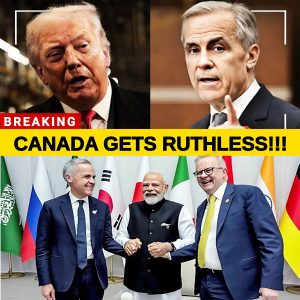
A Stark Contrast With Washington
The timing of Canada’s pivot has drawn attention in Washington, where former President Donald Trump has continued to embrace aggressive tariff rhetoric, even threatening economic penalties against countries that do not align with U.S. geopolitical ambitions — including remarks about imposing tariffs related to Greenland.
Trump has repeatedly described himself as the “tariff king,” framing trade as a zero-sum contest rather than a cooperative system.
Canadian officials, by contrast, have emphasized multilateralism, coalition-building, and sector-specific partnerships.
“The multilateral architecture that governed global trade for decades is eroding,” Carney said. “The question now is what replaces it.”
The “New World Order” — Defined Carefully
Carney’s reference to a “new world order” has sparked debate at home and abroad, though the prime minister has taken care to define the term narrowly.
In his view, the future of global trade will not be governed by a single dominant power or a single global institution, but by overlapping coalitions — bilateral, plurilateral, and regional agreements shaped by shared interests rather than ideology.
These coalitions may focus on clean energy, agriculture, digital trade, or financial systems, evolving independently rather than through institutions like the World Trade Organization or the International Monetary Fund.
“It’s not about agreeing on everything,” Carney said. “It’s about building functional systems where cooperation is possible.”
Domestic Stakes and Political Risks
At home, the shift carries both opportunity and risk. Canadian farmers, particularly in Western provinces, stand to benefit from renewed access to Chinese markets after years of strained relations. Auto sector communities, however, remain wary.
Industry leaders in Ontario and Quebec have warned that deeper integration with Chinese EV manufacturers could disrupt existing supply chains tied closely to the U.S. Midwest.
Carney has acknowledged those concerns, promising targeted investment, transition support, and domestic production partnerships.
“We’re not abandoning Canadian workers,” he said. “We’re expanding their future.”
Preparing for a Post-USMCA World
The strategy also reflects Ottawa’s growing skepticism that the USMCA (known in Canada as CUSMA) will survive its upcoming renegotiation intact. Trump has repeatedly signaled hostility toward the agreement, calling it unfair and disposable.
Rather than waiting for Washington to act, Canada appears to be preparing for a future in which preferential North American trade can no longer be taken for granted.
“This is not a pivot — it’s a contingency plan becoming reality,” said Charlie Angus, a longtime Canadian lawmaker and trade critic.
A Broader Global Pattern
Canada’s move mirrors a wider trend. Recent polling across Europe shows sharply declining public confidence in the United States as a reliable ally. Governments are increasingly seeking diversified trade relationships to reduce exposure to U.S. political swings.
In that context, Canada’s approach looks less radical than pragmatic.
“The era of automatic alignment is over,” said one European diplomat. “Countries are recalibrating.”
An Inflection Point
Whether Canada’s strategy succeeds will depend on execution: managing domestic political fallout, maintaining regulatory standards, and navigating tensions between economic opportunity and national security concerns.
But one thing is clear. Canada is no longer waiting for Washington to define the terms of its economic future.
Instead, it is writing its own — in Beijing, Brussels, and beyond.
And in doing so, it may be redefining its place in a rapidly fragmenting global order.