Questions About Trump’s Health Resurface as Doctors, Aides and Allies Offer Conflicting Signals
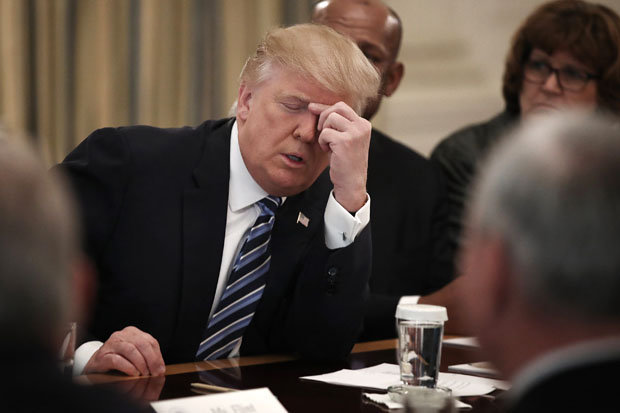
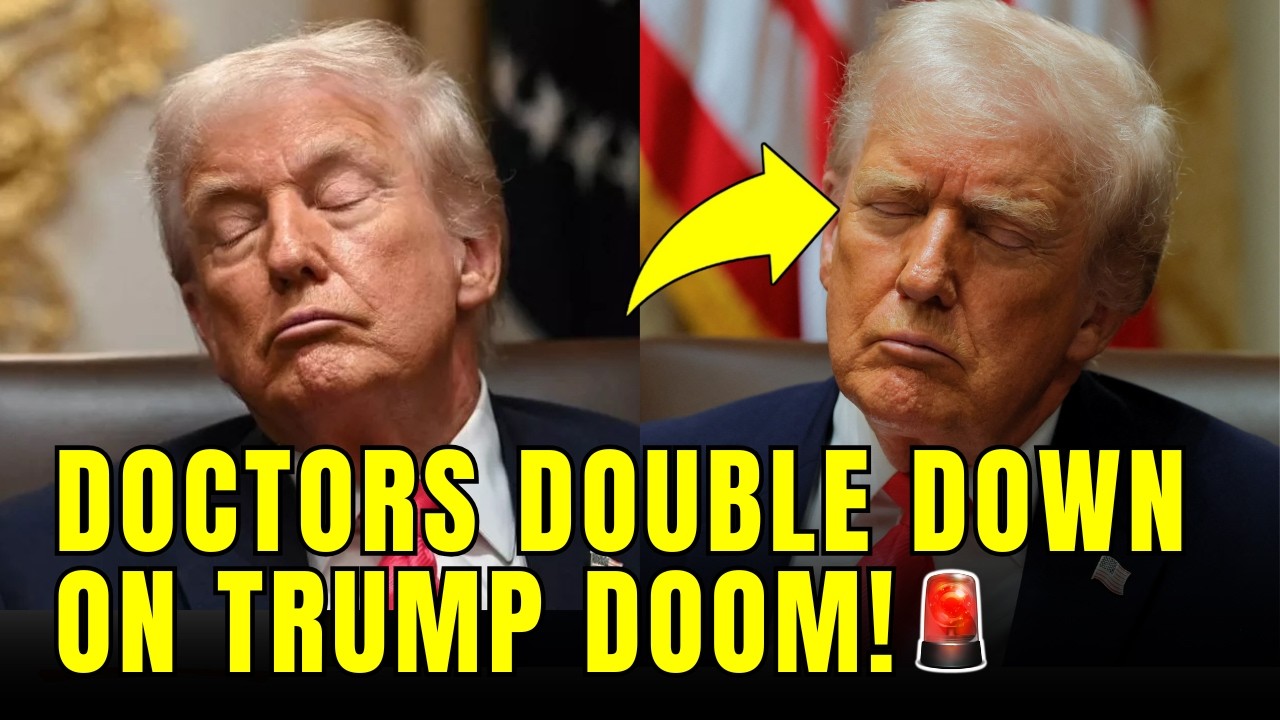
By the time the video clips began circulating widely on social media this week, the questions had already formed: Was former President Donald Trump nodding off at a public event? Was his gait slower, his speech altered, his posture more guarded than before?
For years, speculation about Mr. Trump’s health has appeared and disappeared in waves, often fueled by partisan commentary and viral footage. But a new round of debate has taken shape following remarks by cabinet officials, public statements by medical professionals, and renewed attention to Trump’s personal habits — reigniting a familiar and politically sensitive question in American life: How much does the public have a right to know about the health of its leaders?
The most recent catalyst came not from political opponents but from within Trump’s own orbit. Robert F. Kennedy Jr., now serving as Health and Human Services Secretary, spoke candidly during an appearance on Katie Miller’s podcast, describing the president’s eating habits in unusually blunt terms.
“The president eats really bad food,” Mr. Kennedy said, citing fast food, candy, and a steady intake of Diet Coke. He added, with a mix of admiration and disbelief, “I don’t know how he’s alive, but he is.”
Those remarks, quickly clipped and shared across X, TikTok, and YouTube, prompted rapid damage control from the White House. Press Secretary Karoline Leavitt later told Politico that while Mr. Trump supports Kennedy’s “Make America Healthy Again” initiative in principle, his personal habits are separate from the broader policy agenda.
“The president has his own personal habits,” Ms. Leavitt said, while emphasizing his support for public health reforms championed by the administration.
Still, the comments added fuel to a broader conversation already underway — one that expanded sharply when two physicians, neither involved in Trump’s care, publicly raised concerns based on their observations of his recent appearances.
Dr. Jonathan Reiner, a cardiologist who previously treated Vice President Dick Cheney, wrote on X that footage of Mr. Trump appearing to fall asleep during a White House event was medically concerning.
“Repeatedly falling asleep with a dozen people surrounding your desk is not normal,” Dr. Reiner wrote. “It needs to be evaluated.”
Soon after, Dr. Bruce Davidson, a professor at Washington State University’s College of Medicine, went further during a podcast interview, outlining what he described as a pattern of neurological signs that, in his view, could be consistent with a prior stroke.

Dr. Davidson cited videos showing Mr. Trump shuffling his feet, cradling his right arm, occasionally garbling words earlier in the year, and using his non-dominant hand for balance while descending stairs from Air Force One. He emphasized that hypersomnolence — excessive daytime sleepiness — is common among some stroke survivors.
“My impression is that President Trump has had a stroke,” Dr. Davidson said, stressing that his assessment was based solely on publicly available footage, not clinical examination.
Crucially, both physicians acknowledged the limits of their observations. Neither has examined Mr. Trump, reviewed his medical records, or spoken with his doctors. Their remarks, while widely shared online, remain conjecture — a distinction emphasized repeatedly by mainstream medical organizations when public figures are discussed.
The White House has dismissed the claims, noting that Mr. Trump has undergone routine medical evaluations and has been declared fit for office by his personal physicians in the past. No new medical disclosures have been released in response to the latest speculation.
This dynamic — vague official reassurances, external speculation, and intense public scrutiny — is not new. American presidents have long controlled the flow of information about their health, often revealing only what they deem necessary. Franklin D. Roosevelt concealed the severity of his paralysis. John F. Kennedy’s chronic pain and medication regimen were largely hidden. More recently, debates erupted over Ronald Reagan’s cognitive health and Joe Biden’s age-related stamina.
Mr. Trump, however, has cultivated a distinctive relationship with health transparency. He has repeatedly described himself as possessing “incredible genes,” boasting of stamina and strength while mocking political rivals as weak or impaired. At times, his administration released glowing physician letters filled with superlatives rather than clinical detail — documents that themselves became objects of ridicule and scrutiny.
Social media has intensified this cycle. Clips slowed down, zoomed in, or selectively edited spread rapidly, often stripped of context. Medical terminology is deployed by non-experts, while experts find their cautious language flattened into viral certainty.
“This is the danger zone,” said Dr. Arthur Caplan, a bioethicist at New York University, speaking generally about diagnosing from afar. “Public figures deserve privacy, but the public also deserves honesty. Speculation fills the vacuum when transparency is minimal.”
Supporters of Mr. Trump argue that the renewed focus is politically motivated, pointing out that similar scrutiny has not always been applied evenly across administrations. Conservative commentators have accused critics of weaponizing medical language to undermine legitimacy.
Critics counter that concerns about cognitive alertness and physical stamina are inherently relevant when the individual in question occupies the most powerful office in the world.
What remains absent from the debate is definitive information. No independent medical evaluation has been released. No detailed neurological assessment has been made public. And no evidence has emerged confirming the more serious claims circulating online.
In the absence of such clarity, Americans are left navigating a familiar tension — between skepticism and restraint, between the right to know and the risk of rumor.
As one former White House physician, speaking anonymously, put it: “Health becomes political not because of illness, but because of secrecy.”
For now, Mr. Trump continues to appear in public, deliver speeches, and project confidence. Whether the questions fade or intensify may depend less on viral clips or podcast remarks than on whether the administration chooses transparency over dismissal.
Until then, the question echoing across social media remains unanswered — not because it has been resolved, but because, once again, Americans are being asked to decide what to believe without all the facts.