As Legal Judgments Mount, Trump Confronts a Financial Reckoning With National Implications
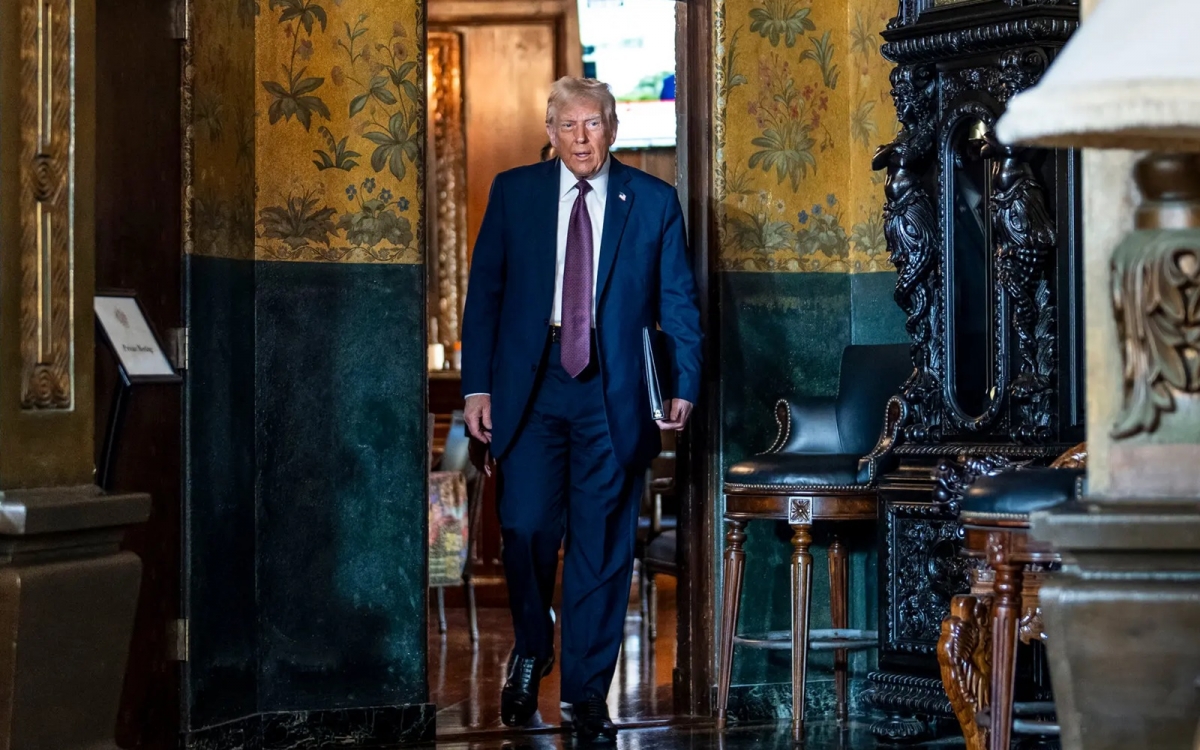
For decades, Donald J. Trump cultivated an image of boundless wealth — a gilded brand built on skyscrapers, golf courses and the insistence that he alone knew how money truly worked. That image is now under unprecedented strain, as a series of court judgments, mounting legal costs and tightening credit conditions converge on the former president and current Republican standard-bearer.
The pressure intensified after a sweeping civil fraud verdict in New York, which found that Mr. Trump and his company had for years exaggerated the value of assets to obtain favorable loans and insurance terms. The ruling, which carries hundreds of millions of dollars in penalties and interest, did not merely impose a fine. It challenged the core of Mr. Trump’s financial narrative — that his empire was as liquid, stable and self-sustaining as he claimed.
Court-appointed monitors are now embedded within the Trump Organization, reviewing transactions and reporting to the judge. According to legal filings and reporting by major outlets including The New York Times, Bloomberg and The Wall Street Journal, the company faces strict oversight at a time when it must also post substantial bonds to pursue appeals — bonds that typically require significant cash or collateral.
The result has been a flurry of scrutiny, not just from courts, but from lenders, political donors and party officials watching closely as Mr. Trump’s financial obligations collide with his role as a presidential candidate.
A Question of Liquidity
The central issue is not whether Mr. Trump owns valuable assets. He does. The question is whether those assets can be readily converted into cash quickly enough to satisfy judgments, bond requirements and ongoing legal bills — all while funding a national campaign.
Several financial analysts interviewed by U.S. media have noted that real estate wealth, especially in a high-interest-rate environment, is often illiquid. Properties with Trump’s name attached can be difficult to refinance, particularly after a fraud finding that directly implicated valuation practices. While Mr. Trump has repeatedly insisted, including under oath, that he possesses hundreds of millions of dollars in cash, his lawyers have acknowledged in court that securing bonds for appeals has proven challenging.
On social media, prominent legal commentators and business reporters have pointed to this gap — between claimed liquidity and practical access to funds — as the key vulnerability. “This isn’t about net worth on paper,” one former federal prosecutor wrote on X. “It’s about whether cash is available when the court demands it.”
Fundraising Under Strain
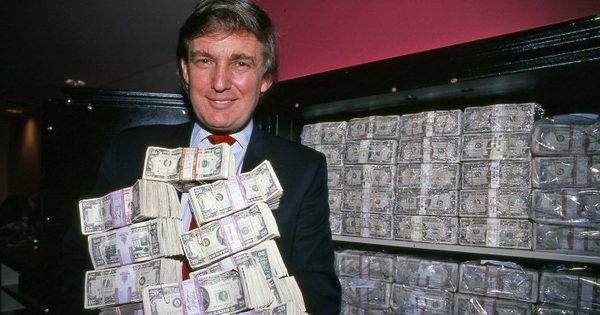
At the same time, Mr. Trump has leaned heavily on political fundraising to cover legal expenses. Disclosures show that political action committees aligned with him have paid tens of millions of dollars to law firms defending him in multiple cases. That spending has alarmed some Republican strategists, who privately worry that resources meant for down-ballot races are being diverted to a single candidate’s legal survival.
Publicly, party leaders have largely avoided the subject. The silence itself has been noted by political analysts on cable news and online platforms, where the conversation has shifted from defending Mr. Trump’s business acumen to debating how much financial risk the party is willing to absorb.
The National Security Dimension
Beyond politics, former intelligence and ethics officials have raised another concern: vulnerability. A candidate burdened by massive personal debt and urgent cash needs could, in theory, be exposed to foreign influence. U.S. law enforcement agencies have long treated financial distress as a counterintelligence risk factor, a point reiterated in academic and policy discussions resurfacing across American media.
There is no public evidence that Mr. Trump has sought or received improper foreign financial assistance. Still, the combination of legal judgments, fundraising dependence and ongoing access to sensitive information has prompted renewed debate about safeguards — and about whether existing disclosure rules are sufficient for presidential candidates.
A Brand Under Pressure
Economically, the Trump brand itself appears strained. Several tournament organizers and hospitality partners have distanced themselves from Trump-branded properties in recent years, and analysts note that reputational damage can translate into declining revenue long before formal foreclosures or asset seizures occur.
Court filings describe a company operating under intense scrutiny, with spending monitored and transactions reviewed — a scenario that business experts say can accelerate decline by limiting flexibility. “Once oversight and uncertainty set in, lenders and partners become cautious,” one restructuring specialist told a financial news outlet. “That can create a self-reinforcing cycle.”
Denial and Defiance
Mr. Trump, for his part, rejects the premise entirely. He has called the New York verdict politically motivated, dismissed reporting about his finances as “fake news,” and insisted that his wealth remains vast. On social media, he frames the legal cases as part of a broader conspiracy aimed at stopping his return to the White House.
That defiance resonates with supporters, many of whom continue to donate small sums in response to urgent appeals. Critics argue those appeals blur the line between political advocacy and personal financial rescue, an accusation Mr. Trump denies.
A Defining Test
Whether this moment proves to be a temporary crisis or a lasting reckoning remains uncertain. Appeals are pending. Asset sales are possible. Political fortunes can shift quickly.
But the convergence of legal accountability and financial reality has created a test Mr. Trump has rarely faced: one governed not by branding or bravado, but by balance sheets, court orders and deadlines that cannot be negotiated away.
For voters, the implications extend beyond one man’s finances. They touch on questions of transparency, risk and character — and on whether a candidate under such pressure can credibly claim to manage the world’s largest economy.
In business, as in law, numbers have a way of asserting themselves. However this chapter ends, it marks a turning point — not just for Donald J. Trump, but for the political movement and party that tied their future so tightly to his name.