Oil, Risk and Reality: Why Venezuela’s Vast Reserves Remain Out of Reach
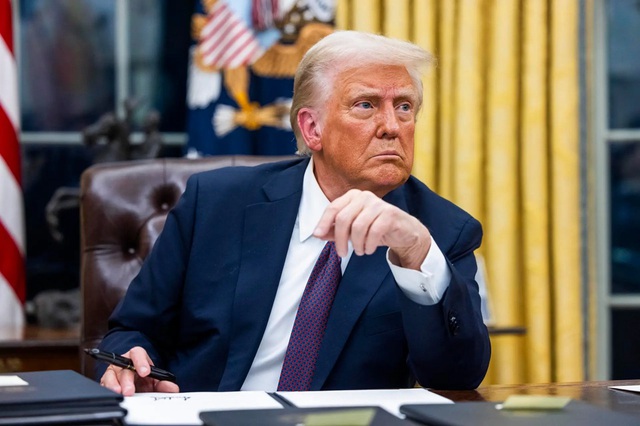
WASHINGTON — When President Trump convened the chief executives of America’s largest energy companies at the White House last week, the goal was straightforward: persuade them to invest heavily in Venezuela’s shattered oil industry and, in doing so, help ease pressure on global energy markets and U.S. gasoline prices.
What followed was a collision between political ambition and corporate arithmetic.
According to people familiar with the meeting, Darren Woods, the chief executive of Exxon Mobil, used a word rarely spoken directly to a sitting president: uninvestable. It was not rhetoric. It was a financial verdict.
Venezuela holds the world’s largest proven oil reserves — an estimated 303 billion barrels, more than Saudi Arabia. Yet production has collapsed to roughly one million barrels per day, down from more than 3.5 million in the late 1990s. The scale of the decline, and the reasons behind it, explain why even the promise of vast reserves has failed to lure back major oil companies.
A $100 Billion Ask
The administration’s proposal was ambitious. Officials urged U.S. and European oil companies to commit up to $100 billion to rebuild Venezuela’s oil infrastructure, restart production and eventually flood the market with new supply. The White House argued that American oversight of Venezuelan oil revenues and operations would mitigate political risk and allow companies to bypass dealing directly with Caracas.
In theory, the plan offered a grand bargain: investment in exchange for stability and long-term access.
In practice, executives saw unresolved liabilities.
Exxon Mobil and ConocoPhillips both lost billions of dollars in Venezuela after the government under Hugo Chávez nationalized foreign oil assets more than a decade ago. International arbitration courts later awarded Exxon approximately $1.6 billion and ConocoPhillips nearly $8.7 billion. Venezuela has never paid.
For executives with fiduciary duties to shareholders, the logic was unforgiving. Investing new capital in a country that still owes billions in unpaid judgments, and where past expropriations remain unresolved, represents a risk few corporate boards are willing to approve.
Infrastructure in Ruins
The skepticism extends beyond legal disputes.
Venezuela’s oil infrastructure has suffered years of neglect. Refineries operate far below capacity. Pipelines are corroded. Equipment has been stripped for spare parts. The skilled workforce — engineers, geologists and technicians — has largely emigrated.
Analysts at firms such as Rystad Energy estimate that restoring production to even two million barrels per day would require sustained annual investment of $8 to $9 billion for years. That figure assumes political stability, functioning institutions and enforceable contracts — conditions Venezuela does not currently offer.
“This is not a light-switch industry,” said David Goldwyn, a former State Department energy envoy, in public commentary. “You don’t fix decades of decay with one policy announcement.”
A Radical Proposal
The administration’s most controversial claim, according to participants, was that companies would not be dealing with Venezuela at all — but with the United States directly.
American authorities have already seized Venezuelan oil cargoes and established U.S.-managed mechanisms for selling crude, with proceeds held under American control. Officials argue this structure insulates companies from political risk and ensures transparency.
But legal experts note the novelty of the arrangement. Never before has the United States asserted de facto control over another country’s primary export industry without a formal international mandate.
Complicating matters further, President Trump recently signed an executive order restricting the ability of U.S. courts to seize Venezuelan oil revenues — a move intended to preserve diplomatic leverage but one that directly affects companies seeking to enforce arbitration awards.
For Exxon and ConocoPhillips, the message appeared contradictory: invest new capital, but relinquish established legal pathways to recover old losses.
Chevron’s Different Position

Chevron stands apart.
Unlike other U.S. majors, Chevron maintained a presence in Venezuela under special licenses during years of sanctions. Its infrastructure, workforce and joint ventures with the state oil company PDVSA remain partially intact.
Chevron executives indicated they could boost production relatively quickly — potentially doubling output from existing operations and expanding further within two years.
Yet analysts caution against extrapolating Chevron’s experience to others. Starting from zero, as Exxon or ConocoPhillips would have to do, involves rebuilding everything — from pipelines to security arrangements — in an uncertain environment.
What It Means for Gas Prices
The administration has framed Venezuelan investment as a path to lower gasoline prices for American consumers. Energy economists remain skeptical.
Even under the most optimistic scenario, Venezuelan production increases would take years to materially affect global supply. In the short term, infrastructure limits and capital constraints make rapid expansion impossible.
Claudio Galimberti, chief economist at Rystad Energy, has warned publicly that Venezuelan oil should not be expected to ease prices anytime soon. Markets, he notes, respond to immediate supply, not future promises.
Smaller Players, Bigger Risks
Treasury officials have suggested that smaller independent oil companies — less constrained by corporate governance and more accustomed to high-risk environments — may move faster than major multinationals.
Some independents have expressed interest, viewing Venezuela’s geology as irresistible.
But the risks are asymmetric. For a supermajor, a multibillion-dollar loss is survivable. For a smaller firm, it can be fatal. History offers cautionary lessons about enthusiasm outrunning institutional safeguards.
A Familiar Pattern
The Venezuela debate echoes earlier post-conflict energy efforts, including in Iraq after 2003. Despite U.S. military protection and massive international attention, it took more than a decade for Iraqi oil production to recover meaningfully — and that was with a recognized government and functioning ministries.
Venezuela’s institutional collapse is deeper.
The Likely Path Forward

In the coming months, companies are expected to continue technical assessments and negotiations without committing significant capital. Chevron may expand output modestly. Smaller firms may test the waters. Major multinationals will wait.
Legal challenges to the administration’s executive actions are likely, potentially extending uncertainty for years.
For consumers, the reality is sobering: Venezuelan oil will not bring quick relief at the pump.
The Bottom Line
Venezuela’s oil wealth remains real, but so are the risks that surround it. Markets, unlike politics, do not respond to ambition alone. They respond to enforceable contracts, institutional stability and credible returns.
Until those fundamentals change, the word spoken in the White House last week — uninvestable — is likely to define Venezuela’s oil future more accurately than any headline-grabbing promise.