A Rare Revolt Inside the Republican Party Tests the Limits of Presidential Power

Washington — For the first time in his presidency, President Donald Trump is not facing his most serious resistance from Democrats. He is confronting it from within his own party.
Last week, a bloc of Republican senators joined Democrats to advance a war powers resolution designed to limit the president’s ability to initiate military action without explicit congressional authorization. The vote was not symbolic. It was not close. And it was not subtle. It amounted to a clear message from lawmakers of both parties: the Constitution, not presidential instinct, governs the use of American military force.
The immediate trigger was Mr. Trump’s repeated public statements suggesting that military action against Greenland was a real option under consideration. The remarks, delivered without irony and without clarification, sent shock waves through Washington and across allied capitals. Greenland is not a disputed territory or an ungoverned expanse of the Arctic. It is part of the Kingdom of Denmark, a founding member of the North Atlantic Treaty Organization.
Threatening force against the territory of a NATO ally is not merely unconventional rhetoric. It raises profound constitutional and international questions about authority, alliance obligations, and the credibility of American commitments abroad.
The Senate response reflected that alarm.
Under the War Powers Resolution of 1973, Congress retains the authority to restrict presidential military action absent formal authorization. The law was enacted after the Vietnam War, when lawmakers concluded that unchecked executive discretion had led the country into prolonged conflict without democratic consent. It has rarely been invoked forcefully against a sitting president of the same party. That it was now speaks volumes about the depth of concern.
According to people familiar with the matter, Senator Susan Collins of Maine was among those who faced intense pressure from the White House after voting to advance the resolution. The president’s message, described as profane and confrontational, emphasized loyalty and consequences. Yet she and several other Republicans did not reverse their positions.
What distinguishes this episode from past intraparty disputes is not tone but substance. Republican senators are not objecting to messaging or tactics. They are drawing a constitutional line.
At stake is more than Greenland.
The island hosts Thule Air Base, a critical component of the United States’ early-warning missile defense system and Arctic security posture. For decades, American access to the base has rested on cooperation with Denmark and alliance trust, not coercion. Any perceived threat against Danish sovereignty would undermine NATO’s collective defense principle — the idea that an attack on one member is an attack on all.
NATO’s Article 5 has been invoked only once in its 75-year history, after the September 11 attacks, when European allies rallied behind the United States. Diplomats and security analysts warn that even rhetorical threats against an ally risk shattering the credibility of that guarantee.
While the war powers vote dominated headlines, it coincided with two other developments that together have intensified congressional unease.
The first was President Trump’s declaration of a national emergency related to Venezuelan oil assets, a move that grants the executive branch sweeping authority to centralize decision-making and bypass Congress. The administration framed the action as necessary to protect American energy security and counter hostile regimes. But energy experts note that Venezuela’s oil infrastructure has been severely degraded by years of mismanagement, sanctions, and underinvestment. Restoring it would require vast capital and a decade or more of sustained effort.
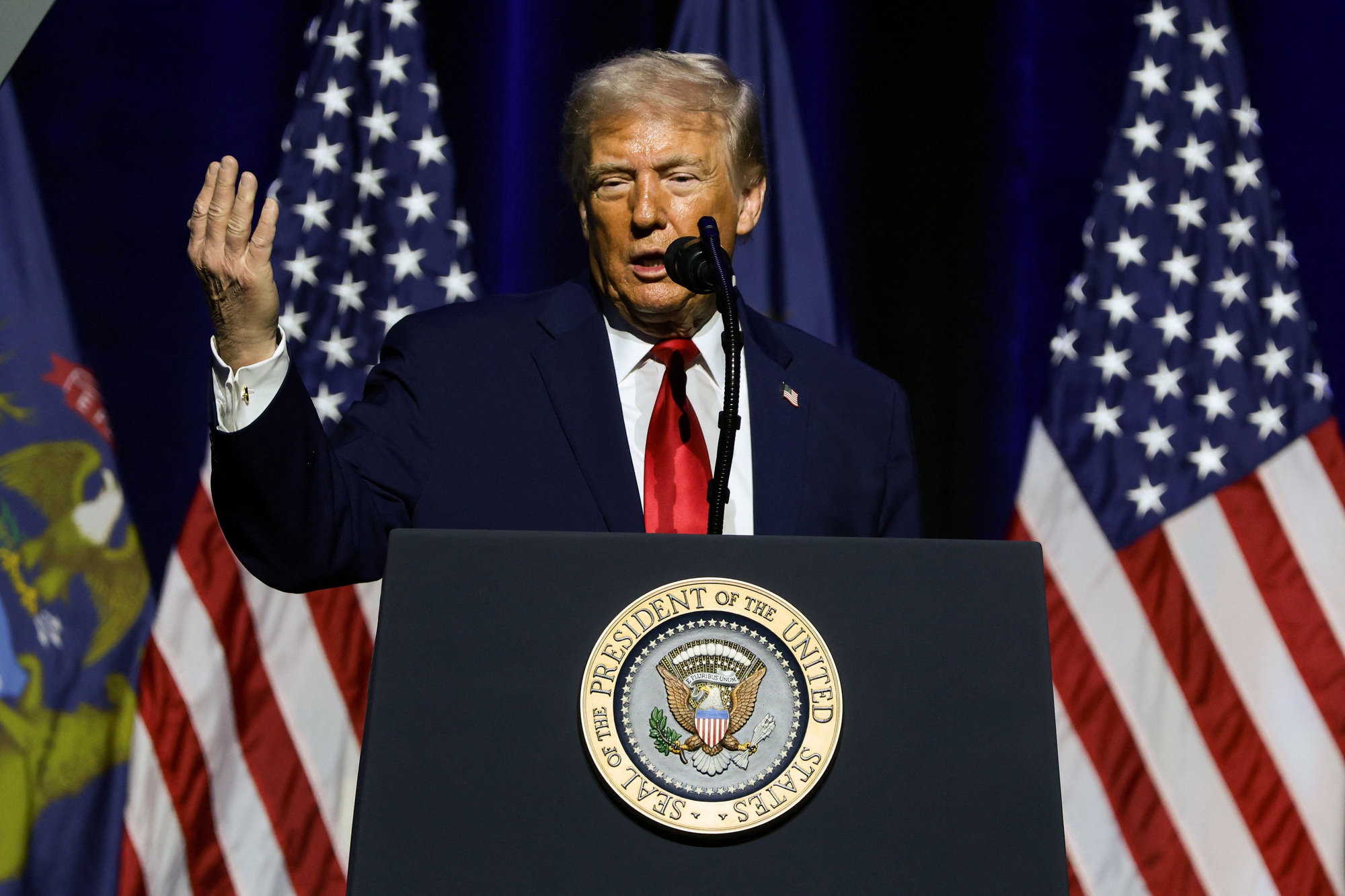
Critics question both the urgency and the beneficiaries of the emergency. Multinational energy firms with global operations are positioned to benefit far more directly than American consumers, while Congress is left sidelined from a debate with significant economic and geopolitical consequences.
The second development is a growing accountability dispute over delayed document disclosures and stalled Inspector General reviews. Several lawmakers, including Senator Sheldon Whitehouse of Rhode Island, have publicly questioned why promised transparency measures have failed to materialize months into the administration. The concerns focus on missed statutory deadlines, incomplete compliance, and oversight processes that appear to be slowing rather than advancing.
Taken together, the three fronts — military authority, emergency powers, and transparency — form a pattern that has unsettled even traditionally loyal Republicans.
Emergency declarations, constitutional scholars note, are not inherently illegitimate. But when they become routine, they shift the balance of power decisively toward the executive. Each invocation expands precedent. Each bypass of Congress weakens the legislative branch, regardless of which party controls the White House.
Republican senators are acutely aware of that reality. Several have privately acknowledged that the powers they tolerate today could be wielded tomorrow by a Democratic president with vastly different priorities.
Mr. Trump’s governing style has long relied on confrontation, spectacle, and pressure. When challenged, he escalates — rhetorically and politically. Allies become adversaries. Disputes become loyalty tests. That approach has often succeeded in silencing dissent within his party.
This time, it appears to be failing.
The reason may be less ideological than institutional. War planning triggers processes that cannot be easily reversed. Contingency discussions ripple through military commands. Allies begin hedging. Markets react. Once force is framed as an option, Congress must either assert its authority or accept irrelevance.
Economic implications are already visible. Financial markets have shown sensitivity to unpredictable policy announcements. Investors price uncertainty as risk. That risk raises borrowing costs, dampens investment, and ultimately affects household finances. Voters may not follow war powers debates closely, but they understand instability when it hits retirement accounts and grocery bills.
Internationally, allies are recalibrating quietly. European officials are reassessing the reliability of American commitments. Canadian leaders are monitoring Arctic security dynamics with renewed concern. Adversaries are amplifying the rhetoric. Russian state media has already portrayed the Greenland remarks as evidence of American imperialism and alliance hypocrisy.
These reactions are not hypothetical. They reflect the structural consequences of governance driven by impulse rather than process.
The coming months will determine whether this Republican resistance solidifies or collapses. Lawmakers who have already crossed the president face a stark choice. Retreat offers no guarantee of protection. Persistence carries political risk but preserves institutional authority.
In the near term, additional oversight hearings and legal challenges to emergency powers are likely. The White House is expected to respond with intensified rhetoric and appeals to partisan loyalty. Courts may be drawn into adjudicating the limits of executive authority, further testing the resilience of checks and balances.
The broader question extends beyond this presidency.
Can Congress reclaim its constitutional role in matters of war and national emergencies? Can transparency obligations be enforced without becoming partisan weapons? And can American governance reassert stability in an era dominated by spectacle?
Democracies rarely collapse in a single moment. They erode when norms are ignored, when procedures are bypassed, and when accountability is deferred in the name of expediency.
What is unfolding now is not simply a political drama. It is a stress test — of institutions, of alliances, and of the principle that power in the United States is constrained by law, not personality.
Whether that test is passed will depend less on headlines than on whether lawmakers are willing to hold the line when doing so is politically inconvenient.
The answer will shape not only this presidency, but the architecture of American power for years to come.