Golden Globes 2026: When Hollywood’s Jokes Collide With Political Silence
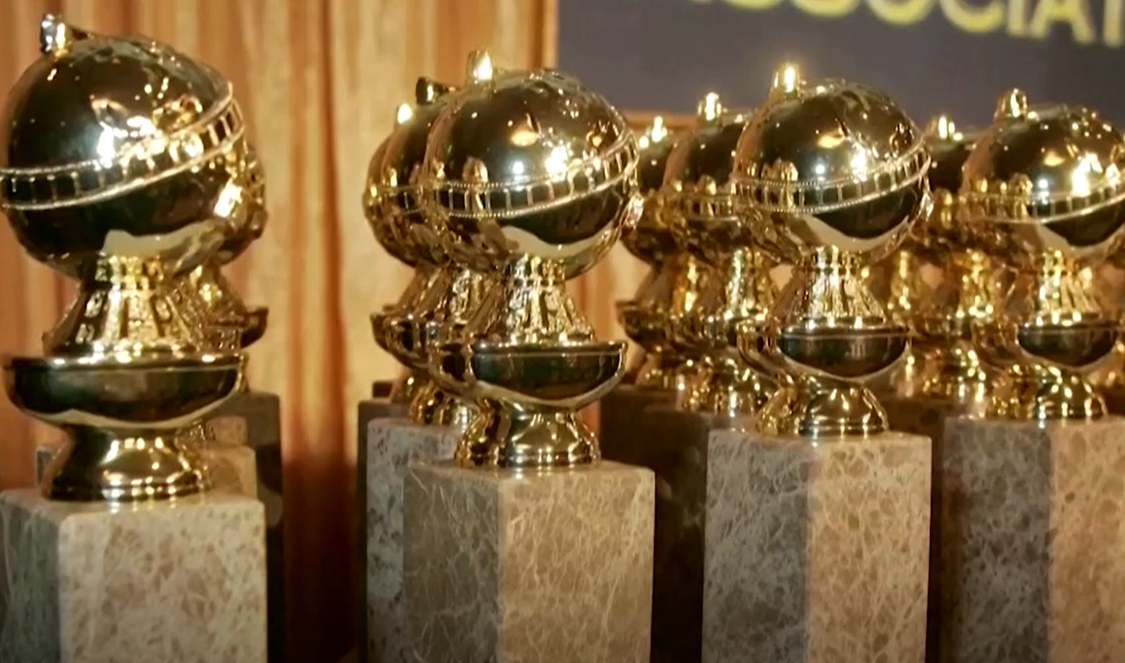
The Golden Globes have long existed in a strange space between prestige and parody, a ceremony that markets itself as a celebration of art while reliably revealing the anxieties of the moment. This year’s broadcast, arriving amid deep political unrest and an increasingly polarized media landscape, offered a familiar spectacle: celebrities trading jokes under studio lights while the country wrestles with consequences far beyond the ballroom.
Yet the 83rd Golden Globe Awards did something more pointed than usual. Through a series of carefully aimed jokes, conspicuous silences, and symbolic gestures, the ceremony became a referendum—not on films or television—but on the evolving relationship between celebrity, power, and political accountability.
A Room Aware of the World Outside
From the opening monologue, it was clear the audience was uneasy. Social media reactions before and during the broadcast captured the mood succinctly: “Hollywood pretending everything is normal while the country is on fire.” Many attendees appeared aware of that tension. Several wore “Be Good” pins in honor of Renée Good, a mother whose killing by a federal immigration agent has become a rallying point for activists and critics of the Trump administration.
The pins were small, understated, and unmistakably political. Photos of Wanda Sykes, Mark Ruffalo, and other high-profile figures wearing them spread quickly on X, Instagram, and TikTok, often accompanied by captions contrasting their quiet symbolism with the relative absence of sustained coverage on major broadcast networks.
CBS News, in particular, became a focal point of criticism. Screenshots of its homepage—showing limited or no prominent reporting on the Renée Good case—circulated widely, fueling accusations that the network has shifted its editorial priorities in a more conservative direction since recent leadership changes. Whether fair or not, the perception has taken hold online, and perception now often matters as much as fact.
Nikki Glaser’s Targeted Humor
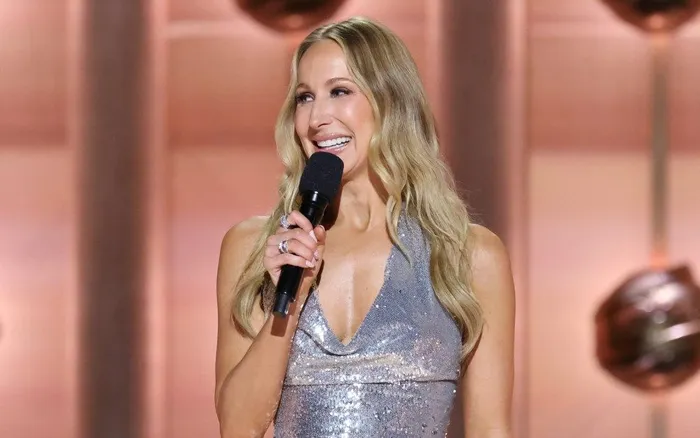
Host Nikki Glaser leaned into that discomfort rather than attempting to smooth it over. Her monologue avoided overt policy arguments, but her jokes landed with precision. A comment about “A-list celebrities” was paired with a camera cut to Bill Maher, a choice that immediately sparked speculation across social platforms.
Maher’s recent cordial relationship with President Trump—particularly a widely discussed private dinner—has unsettled many of his longtime fans. Once known as a fierce critic of conservative power, Maher has increasingly framed Trump as someone worthy of dialogue, emphasizing civility and personal charm over institutional consequences.
On social media, reactions were swift and unforgiving. Clips of the camera cut were replayed millions of times, often captioned with variations of “The camera knows.”
Wanda Sykes and the Limits of Neutrality
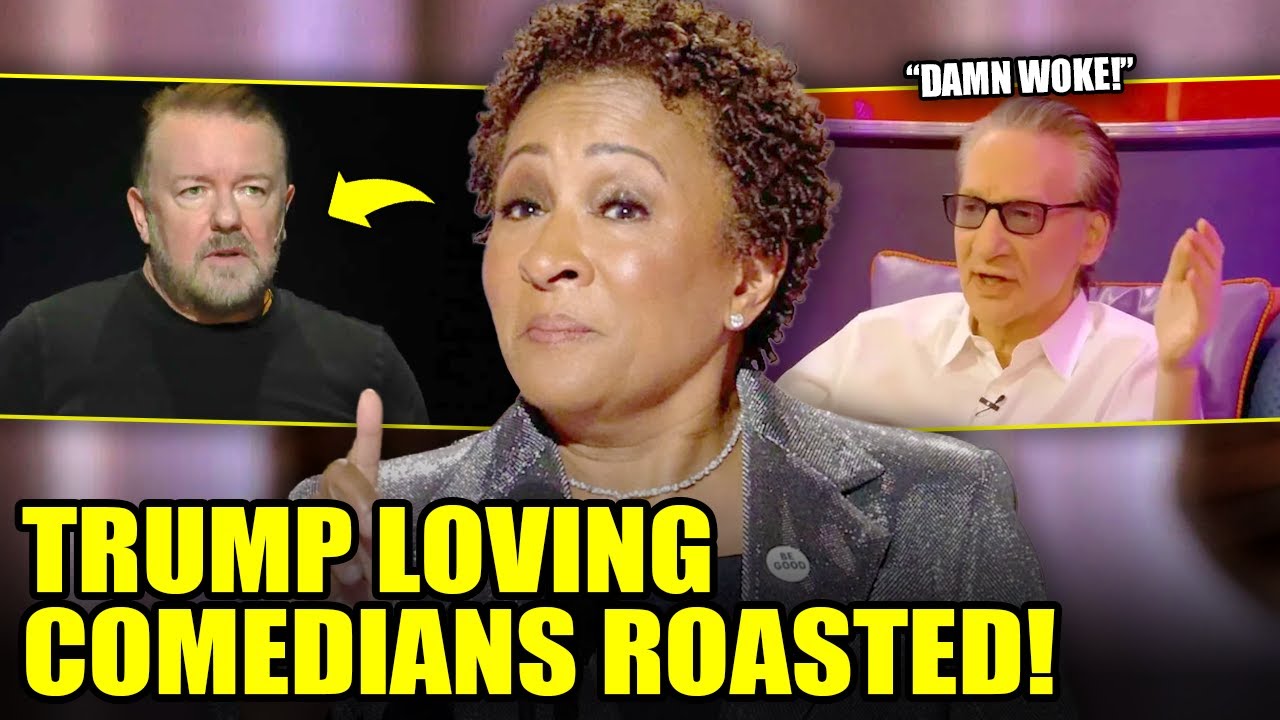
If Glaser’s humor set the stage, Wanda Sykes delivered the night’s most pointed moments. Wearing a Be Good pin, she spoke candidly on the red carpet about the Renée Good case, calling the federal government’s actions “rogue” and urging public protest. Her remarks contrasted sharply with Bill Maher’s own dismissal of the pins in a separate interview, where he suggested awards shows were “not the place” for such statements.
That tension came to a head when Sykes presented the award for Best Stand-Up Comedy on Television. Her line—“Bill Maher, you give us so much, but I would love a little less”—was brief, dry, and devastating. The camera lingered just long enough on Maher’s reaction to confirm what social media had already decided: the joke landed.
The moment was widely shared not because it was cruel, but because it punctured a long-standing assumption in American entertainment—that comedians who “tell it like it is” should be immune from criticism. Maher, a frequent defender of free speech absolutism, appeared visibly uncomfortable receiving a joke rather than delivering one.
Ricky Gervais, Absence, and Punching Down
Ricky Gervais was not in attendance, a fact he himself had preemptively explained by saying he “couldn’t be bothered” to leave home. But his absence became part of the show nonetheless.
Sykes joked that if Gervais won, she would accept on his behalf and thank “God and the trans community,” a line that drew laughter, applause, and immediate online reaction. For years, Gervais has defended controversial material about transgender people as boundary-pushing comedy, a stance that has earned him praise in conservative circles and criticism elsewhere.
On social media, the contrast was stark: Gervais, once celebrated for skewering powerful institutions, is now frequently accused of targeting marginalized groups instead. The Golden Globes joke reframed that critique in a way that was accessible, humorous, and difficult to dismiss as mere outrage.
Comedy, Power, and Selective Courage
What united these moments was not partisanship but selectivity. The night highlighted a growing frustration with public figures who frame themselves as fearless truth-tellers while avoiding sustained criticism of those in power.
The Trump administration loomed over the ceremony without being named constantly. Its presence was felt in what was joked about—and what was not. Online commentators noted that while some comedians eagerly challenge cultural norms or vulnerable communities, they have grown conspicuously quiet when it comes to executive authority, federal violence, or media consolidation.
This silence, critics argue, is not accidental. It reflects a media ecosystem in which access, ratings, and personal relationships increasingly shape editorial choices.
A Ceremony as Cultural Mirror
The Golden Globes did not resolve these tensions, nor did it pretend to. Instead, it functioned as a mirror, reflecting a moment when humor, activism, and institutional caution collide.
In the end, the most enduring images from the night were not trophies or gowns, but small acts of defiance: a pin, a joke, a pointed camera cut. They suggested that even in an industry often accused of self-absorption, there remains an awareness—however imperfect—of the stakes beyond the stage.
As one viral post summarized: “Hollywood can’t fix the country. But it can stop pretending not to notice what’s happening.”
That, perhaps, was the Golden Globes’ quiet achievement this year—not relevance through spectacle, but relevance through discomfort.