Clintons Refuse to Testify in Epstein Inquiry, Setting Up a New Legal and Political Confrontation in Washington
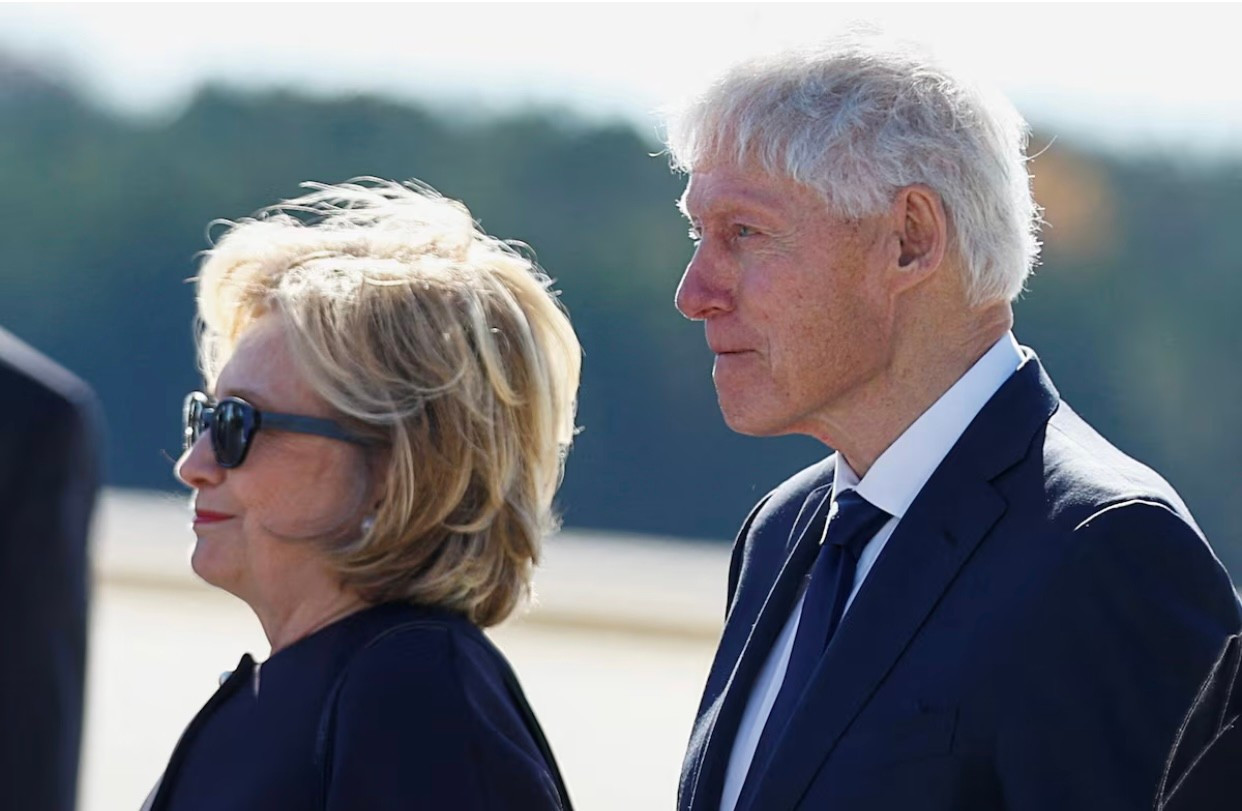
Washington — Former President Bill Clinton and former Secretary of State Hillary Clinton announced on Tuesday that they will not comply with subpoenas issued by the House Oversight Committee as part of its investigation into Jeffrey Epstein, opening a new legal and political confrontation between a Republican-controlled Congress and one of the Democratic Party’s most powerful families.
The decision came just hours before Mr. Clinton was scheduled to appear for a closed-door deposition, and one day before a similar appearance was planned for Mrs. Clinton. In a letter to Representative James Comer, the chairman of the Oversight Committee, the Clintons’ attorney characterized the investigation as politically motivated, calling the subpoenas an attempt to “embarrass political rivals at the direction of President Donald Trump.”
In a lengthy statement that read as both a legal defense and a political manifesto, the Clintons wrote: “Every person has to decide when they have seen or had enough and are ready to fight for this country, its principles, and its people, no matter the consequences. For us, now is that time.”
A Valid Subpoena — and a High-Stakes Gamble
Legal experts say the central issue is not the Clintons’ argument itself, but the timing of their refusal. By declining to appear without first obtaining a court ruling invalidating the subpoenas, Bill Clinton has assumed significant legal risk.
Ellie Honig, a former federal prosecutor and senior legal analyst for CNN, noted that, as of now, the subpoenas remain legally binding. “There is no court order saying these subpoenas are invalid,” Mr. Honig said. “We have a former president who did not show up for a required deposition. That opens the door to contempt proceedings.”
If the House Oversight Committee moves forward with a contempt vote, the matter could be referred to the Justice Department, now led by Attorney General Pam Bondi, for potential criminal enforcement. While such action would be extraordinary, it is not unprecedented. During the previous administration, figures such as Peter Navarro were prosecuted and imprisoned for contempt of Congress.
The Question of Legislative Purpose

At the core of the Clintons’ defense is the claim that the subpoenas lack a “valid legislative purpose.” House Republicans argue that the committee is examining potential legislation related to sex trafficking and exploitation. The Clintons counter that there is no meaningful connection between their testimony and future lawmaking.
However, constitutional scholars note that Congress has broad discretion to determine how it gathers information. Decisions about whether testimony is taken in writing, behind closed doors, or in public rest with Congress, not with witnesses. Notably, the subpoenas were approved unanimously by the committee, including Democratic members.
Epstein, Images, and an Unfading Shadow
Although Bill Clinton has not been accused of criminal wrongdoing related to Epstein, the release of new documents in recent months — including photographs showing Mr. Clinton with women whose faces were partially redacted — has renewed public scrutiny.
On platforms such as X (formerly Twitter), Reddit, YouTube, and Rumble, conservative commentators have circulated questions about Clinton’s travel history, social interactions, and knowledge of Epstein’s activities. At the same time, liberal commentators and Democratic strategists have argued that the focus on the Clintons diverts attention from Donald Trump’s own documented associations with Epstein.
A Calculated Political Move?
Some analysts suggest the Clintons’ refusal is as much political as it is legal.
By declining to testify, the Clintons have reignited a broader debate: Why has the Justice Department not released the full Epstein files? And who, if anyone, is being protected?
Mr. Clinton has previously called for the complete release of all Epstein-related documents, “without shielding anyone.” That message has been amplified across social media by prominent Democratic figures, increasing pressure on the Trump administration at a moment when it is already facing international crises and domestic controversy over executive power.
As one widely shared post on Substack and Threads put it: “As long as Bill Clinton is tied to the Epstein story, Donald Trump cannot escape it either.”
What Happens Next
The Oversight Committee now faces a strategic choice: move immediately toward a contempt vote, or wait for the Clintons to challenge the subpoenas in court. Each path carries political and legal risk.
If the courts ultimately side with Congress, the Clintons could be compelled to testify. If the courts invalidate the subpoenas, the committee’s investigative strategy could suffer a significant setback.
What is clear is that this confrontation extends far beyond the Epstein case itself. It has become a test of congressional authority, executive power, and partisan conflict in an increasingly polarized United States.
And while lawyers debate constitutional doctrines, one political reality remains unmistakable: the Epstein story is far from over — and no figure in Washington’s elite remains untouched by its reach.