A Supreme Court Ruling, a Social Media Firestorm, and Competing Narratives About Power and Accountability
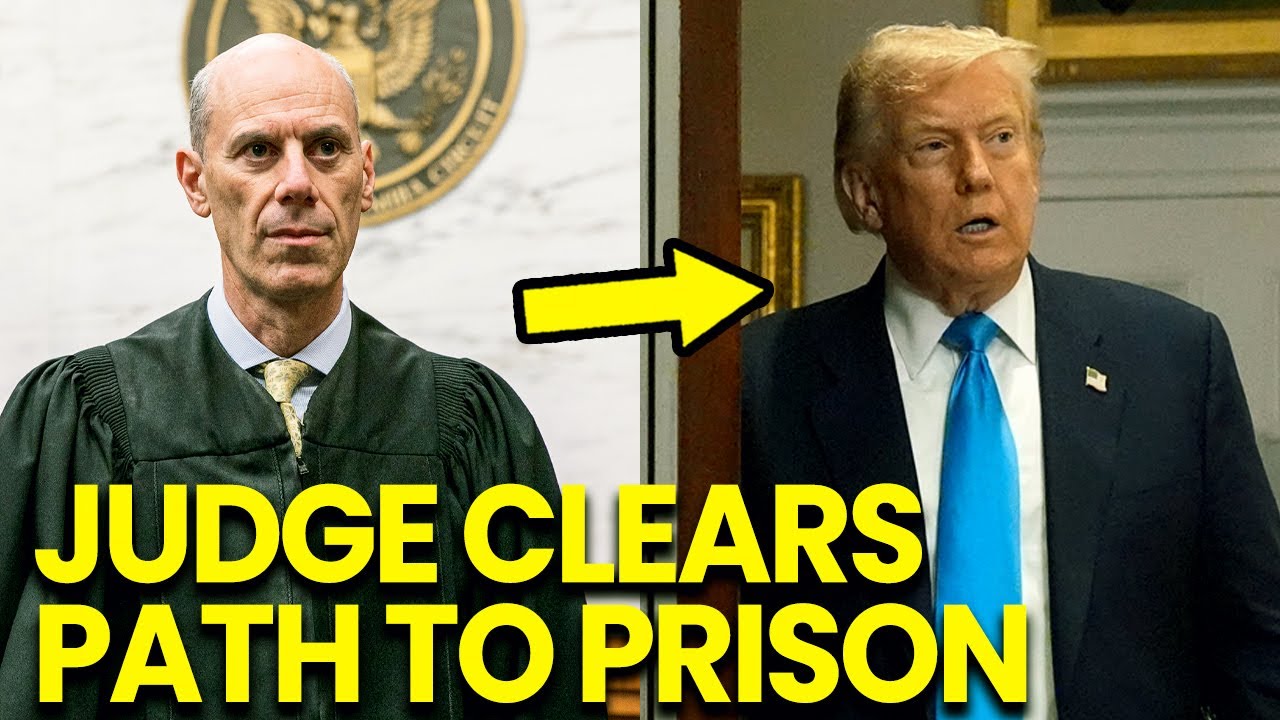
Washington — A sweeping Supreme Court decision curbing the ability of lower-court judges to issue nationwide injunctions has handed President Trump a major legal victory, reshaping the balance of power between the executive branch and the judiciary. Within hours, however, the ruling was engulfed by a parallel—and far more incendiary—narrative spreading across social media: claims that a federal judge had ordered President Trump’s immediate detention and cleared a “direct path to prison.”
The two developments are unrelated. But together they illustrate the degree to which America’s legal and political discourse has fractured—into one track grounded in court opinions and procedural law, and another driven by viral commentary, partisan influencers, and speculative claims that spread far faster than verified information.
What the Court Actually Did
The Supreme Court’s ruling, authored by Justice Amy Coney Barrett, addressed a long-running controversy over nationwide injunctions—orders by a single federal judge that can halt an executive policy across the entire country. Such injunctions have been used against presidents of both parties, but they have been particularly frequent during the Trump administration, which has relied heavily on executive orders to advance policy goals.
In its decision, the Court limited the circumstances under which lower-court judges may impose such sweeping blocks, holding that relief should generally be confined to the plaintiffs before the court. The justices did not decide the underlying constitutionality of President Trump’s executive order on birthright citizenship, the policy that provided the procedural vehicle for the case. Instead, they narrowed the judicial tools available while those constitutional questions are litigated.
White House officials quickly framed the ruling as a turning point. In conversations with reporters, administration lawyers described it as central to the president’s ability to govern through executive action, arguing that repeated nationwide injunctions had effectively stalled major parts of his agenda on immigration, federal spending, and administrative restructuring.
Legal scholars noted that the decision reflects a broader, bipartisan unease with the power of single judges to dictate national policy. “This is less about Trump specifically and more about institutional design,” said one constitutional law professor. “The Court is rebalancing authority, not endorsing the substance of any particular executive order.”
A Very Different Story Online
As coverage of the ruling unfolded on cable news, a separate narrative erupted online. Influential political accounts on platforms like X, YouTube, and Telegram circulated claims that a federal judge had validated evidence of systemic fraud by President Trump, ordered his immediate detention without bail, and set an arrest deadline within 24 hours. Some posts went further, asserting that the military and National Guard were being mobilized in anticipation of unrest.
None of these claims have been substantiated by court filings, public dockets, or official statements from the Justice Department. No federal judge has issued an order directing the immediate arrest or detention of the sitting president, and constitutional scholars across the political spectrum say such an action would raise unprecedented legal questions that would almost certainly trigger emergency review by higher courts.
Still, the claims spread rapidly, amplified by commentary tying them to real events—such as President Trump’s prior civil fraud judgment in New York, which resulted in hundreds of millions of dollars in penalties, and his administration’s aggressive rhetoric about law and order abroad.
“The posts are stitching together kernels of real information with a lot of invented procedural detail,” said Renee DiResta, a researcher who studies online misinformation. “It creates a narrative that feels authoritative, especially to audiences already primed to believe either imminent vindication or imminent collapse.”
Why the Confusion Resonates
The resonance of these claims reflects a deeper problem: the legal system is slow, technical, and opaque, while social media rewards certainty, urgency, and drama. In that environment, nuanced distinctions—between civil liability and criminal guilt, between trial-court findings and final judgments, between commentary and court orders—are easily lost.
It also reflects the extraordinary legal exposure surrounding President Trump. He remains entangled in multiple civil and criminal proceedings, some involving alleged financial misconduct predating his presidency. Judges in those cases have issued sharply worded opinions criticizing his credibility and business practices, language that is often lifted out of context online to suggest far more sweeping conclusions.
At the same time, the Supreme Court’s decision limiting nationwide injunctions has heightened anxieties among Trump’s critics, who fear that executive power is expanding faster than judicial oversight. That anxiety, experts say, can make dramatic claims about sudden accountability feel emotionally plausible, even when they are procedurally implausible.
Experts Urge Caution
Former federal prosecutors and judges interviewed emphasized that while no individual—including a president—is above the law, the path from adverse judicial findings to incarceration is long and heavily safeguarded by due process.
“There is no mechanism by which a trial judge simply orders the immediate detention of a sitting president based on civil findings,” said a former U.S. attorney. “Any criminal proceeding would involve indictment, arraignment, motions practice, and extensive appellate review.”
Even in the event of a criminal conviction, sentencing and custody decisions would be subject to layers of legal scrutiny. “The idea of a surprise, next-day arrest is not how the federal system works,” the former prosecutor said.
The Broader Stakes
What is real, and consequential, is the Supreme Court’s recalibration of judicial power. By limiting nationwide injunctions, the Court has made it easier for presidents—this one and future ones—to implement contested policies while legal challenges proceed. Supporters argue that this restores democratic accountability by preventing individual judges from acting as national veto points. Critics warn that it weakens a crucial check on executive overreach.
Overlaying that substantive debate with unverified claims of imminent arrest, analysts say, risks inflaming tensions at a moment when public trust in institutions is already strained.
“This is how democratic erosion can look—not just through formal decisions, but through information chaos,” said a political scientist who studies institutional legitimacy. “When people no longer know what is real, every court ruling becomes a potential spark.”
A Test of Restraint
As the legal battles continue, the gap between verified judicial action and viral political storytelling is likely to widen. For news organizations, the challenge is to report aggressively while resisting the gravitational pull of sensational claims. For the public, it is to distinguish between what courts have actually done and what partisans say they have done.
The Supreme Court has spoken clearly on one issue: the limits of nationwide injunctions. Everything else circulating online—especially claims of immediate imprisonment—remains, at least for now, a reflection not of the docket, but of a polarized information ecosystem struggling to keep pace with the rule of law.