Jerome Powell, Donald Trump, and an Unprecedented Confrontation Between the White House and the Federal Reserve
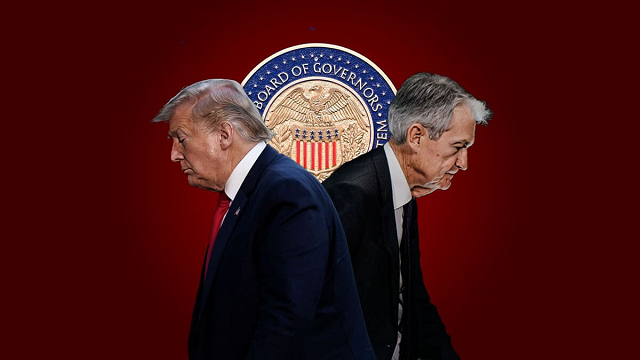
Washington — For decades, the relationship between the White House and the Federal Reserve has been governed by an unwritten but fundamental principle: the independence of monetary policy must be protected from political pressure. This week, that principle moved to the center of national debate after Federal Reserve Chair Jerome Powell publicly accused the administration of President Donald Trump of using criminal legal threats as a tool of political coercion.
In a video statement released and rapidly circulated across major U.S. social media platforms, Mr. Powell said that the Department of Justice had served the Federal Reserve with grand jury subpoenas related to his testimony before the Senate Banking Committee last June. That testimony addressed, in part, a multi-year project to renovate historic Federal Reserve office buildings—an effort that, according to the Fed, had already been disclosed repeatedly to Congress.
Mr. Powell categorically rejected the idea that the investigation was driven by legitimate oversight concerns.
“This is not about my testimony last June, nor about Congress’s oversight role,” Mr. Powell said. “It is the consequence of the Federal Reserve setting interest rates based on our best assessment of what serves the public, rather than following the preferences of the president.”
A Long-Running Conflict Comes to a Head
Tensions between Mr. Trump and Mr. Powell have simmered for years. Throughout his presidency, Mr. Trump has repeatedly attacked the Fed chair for refusing to cut interest rates as aggressively as the president demanded. Mr. Trump has frequently blamed Mr. Powell for slowing economic growth, high housing costs, and job losses in manufacturing—claims that many economists have described as misleading or unsupported by data.
One particularly striking moment, widely shared on television and social media, occurred during a recent in-person exchange between the two men over the cost of renovating the Federal Reserve’s headquarters. When Mr. Trump accused the Fed of allowing costs to balloon into the billions, Mr. Powell immediately corrected him, explaining that the president was improperly including a separate, previously completed building in his calculation.
For many observers, the exchange was notable not only for its substance but for its symbolism: a senior government official publicly contradicting the president in real time—an increasingly rare sight in modern Washington.
Legal Threats and Institutional Boundaries
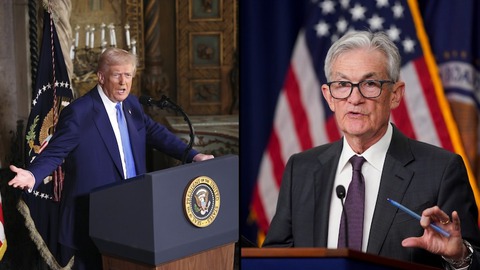
In recent months, Mr. Trump has repeatedly floated the idea of suing Jerome Powell for “incompetence” and has openly discussed removing him before the end of his term. Legal scholars across the political spectrum have warned that such actions would likely exceed presidential authority and undermine the statutory independence of the Federal Reserve.
Mr. Powell’s video response marked an extraordinary escalation. Rarely has a sitting Fed chair directly accused an administration of attempting to weaponize the justice system to influence monetary policy.
“The question before us,” Mr. Powell said, “is whether interest rates will continue to be set based on evidence and economic conditions, or whether monetary policy will be directed by political pressure and intimidation.”
He emphasized that he had served under both Republican and Democratic administrations and had sought to carry out the Fed’s dual mandate—price stability and maximum employment—“without political fear or favor.”
Political Shockwaves
The response was immediate. Within hours, commentary flooded platforms such as X, YouTube, and Substack. Progressive commentators framed Mr. Powell’s remarks as a rare act of institutional resistance, while conservative voices accused him of politicizing the Fed and shielding bureaucratic excess.
Some Republican officials, speaking privately to reporters, expressed concern that an open legal war between the White House and the Federal Reserve could further unsettle already volatile markets. Wall Street analysts, while cautious in public statements, noted that any perceived erosion of the Fed’s independence could trigger significant market instability, affecting bond yields, equities, and the U.S. dollar.
A Sign of Political Weakness?
Beyond the immediate legal and economic implications, many analysts view the episode as revealing something deeper about the current state of power in Washington. Mr. Trump, once known for enforcing strict loyalty within his party, now faces growing public dissent—even from figures he appointed himself.
The confrontation also comes amid a series of political challenges for the administration, including economic headwinds, internal divisions, and renewed scrutiny of unrelated controversies that have dominated headlines and social media discourse.
In that context, Mr. Powell’s decision to speak publicly is widely seen as deliberate. Rather than handling the matter quietly behind closed doors, he chose to frame the issue as a fundamental threat to institutional independence and democratic governance.
An Unusual Moment in American Governance
The Federal Reserve has long been criticized from both the left and the right, and Mr. Powell himself has faced sharp questioning over regulatory decisions and inflation policy. Even some of his defenders stress that this moment should not be read as an endorsement of all Fed actions.
Still, the gravity of his warning has resonated.
“Public service sometimes requires standing firm in the face of threats,” Mr. Powell said in closing.
Whether the legal threats ultimately materialize remains uncertain. What is clear, however, is that this episode represents a departure from normal political conflict. It raises fundamental questions about presidential power, the rule of law, and the durability of independent institutions in an era of intense polarization.
For Washington—and for global financial markets watching closely—the clash between Jerome Powell and Donald Trump is no longer a personal feud. It is a test of the system itself.