Venezuela, Oil, and a Weekend That Shook the Global Order
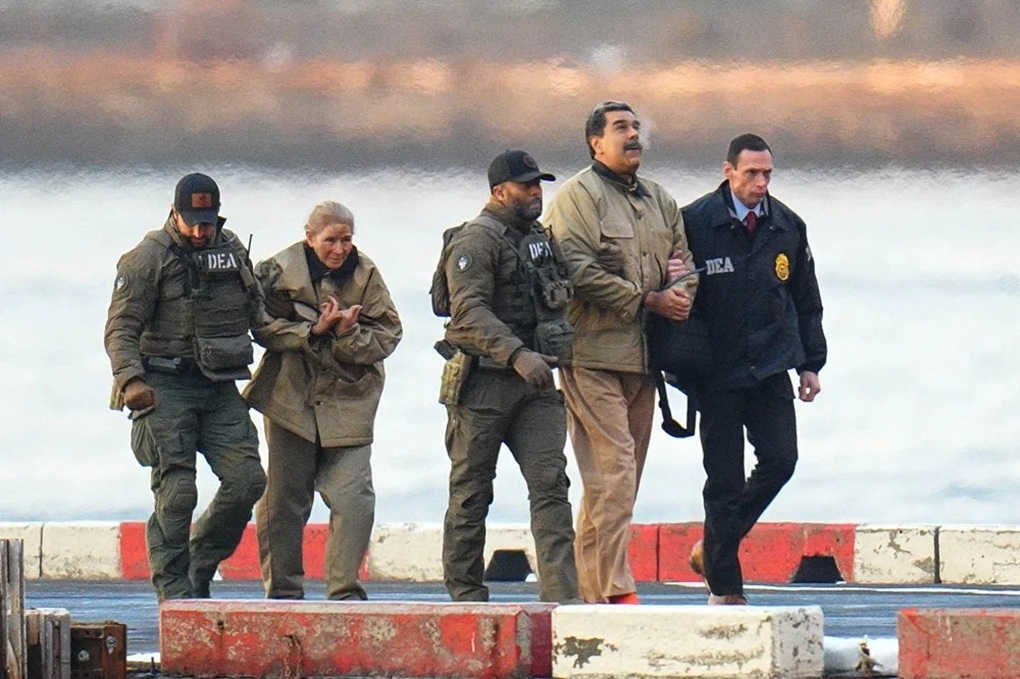
New York — In less than 72 hours, a rare and extraordinary event unfolded: the sitting president of Venezuela was taken into U.S. custody, removed from his presidential palace, and brought before a federal judge in New York. There was no declaration of war. No congressional debate. No United Nations resolution. And for most Americans, it all happened during an otherwise ordinary weekend.
If fully confirmed, the operation would represent one of Washington’s boldest interventions in the Western Hemisphere since the U.S. invasion of Panama in 1989. Yet what makes the episode most consequential is not only its speed or secrecy, but the far-reaching economic and geopolitical implications now coming into focus, particularly those involving oil, the U.S. dollar, and the post–Cold War international order.
A highly controversial arrest
According to federal indictments released by the U.S. Department of Justice and a series of statements posted by President Donald Trump on Truth Social, the administration has framed the operation as an act of international law enforcement against what it calls a “narco-state.” Venezuelan officials, however, have denounced the action as the “kidnapping of a head of state” and a grave violation of national sovereignty.
Videos and images that spread rapidly on X (formerly Twitter) showed Nicolás Maduro appearing in a federal courtroom in Manhattan, where he pleaded not guilty. His attorneys argued that he should be considered a prisoner of war. The court rejected that claim.
The incident sent shockwaves through foreign capitals, even as official reactions from many governments remained notably cautious.
Oil enters the picture
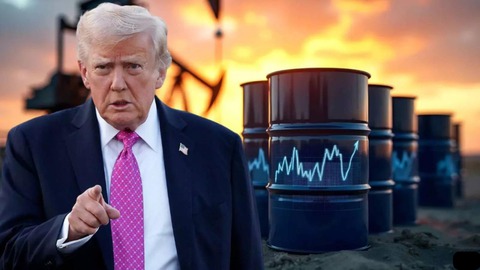
Just days after the arrest, the White House confirmed that Venezuela had agreed to supply between 30 and 50 million barrels of oil to the United States in an initial phase, with the possibility of further deliveries. CNBC, citing unnamed U.S. officials, reported that shipments could continue “indefinitely.”
Venezuela holds an estimated 303 billion barrels of proven crude oil reserves, the largest in the world, according to OPEC data. For years, much of that oil had been effectively locked out of global markets by U.S. sanctions, driving production down from more than two million barrels per day to well under one million.
For energy analysts, the timing of military action and oil agreements is difficult to ignore.
“You can’t separate resources from what’s happening here,” said Sarah Miller, a geopolitical analyst at a Washington think tank. “The question isn’t whether oil matters, but how central it is.”
A familiar pattern?
Across U.S. social media — particularly among independent analysts and political commentators on YouTube — comparisons quickly emerged to historical precedents: Iran in 1953, Iraq in 2003, Libya in 2011. In each case, critics argue, prolonged economic sanctions and diplomatic isolation were followed by military intervention or regime collapse, and then by the re-opening of resource access to Western companies.
U.S. officials reject those comparisons, insisting Venezuela is a unique case driven by drug trafficking, human rights abuses, and humanitarian concerns. Still, even some scholars aligned with mainstream U.S. foreign-policy thinking concede that the signal sent to the rest of the world is unmistakable.
“Hearing a U.S. president publicly state that he will ‘control’ another country’s oil revenues is highly unusual in modern diplomatic language,” said Professor Michael Trent of Columbia University. “It reflects a shift in how American power is being articulated.”
Consequences for global markets
Economically, Venezuela’s potential return to the global oil market at scale could exert downward pressure on prices in the medium to long term. That would benefit American consumers but pose serious challenges for oil-dependent economies such as Russia, Iran, and Nigeria.
At the same time, the prospect that Venezuelan oil will once again be sold primarily in U.S. dollars is widely seen as reinforcing the so-called “petrodollar” system — a cornerstone of American financial dominance for the past five decades.
“The message to other countries is clear,” said a Wall Street energy strategist. “Challenging the system can come at a very high cost.”
International law and a dangerous precedent
Human rights organizations and international legal experts have raised concerns that the episode could establish a troubling precedent. If the capture of a sitting head of state without explicit authorization from the United Nations becomes normalized, it could further erode already fragile international norms.
“Even U.S. allies are watching this very closely,” said a European diplomat. “No one wants to live in a world where raw power completely replaces rules.”
What lies ahead for Venezuela?
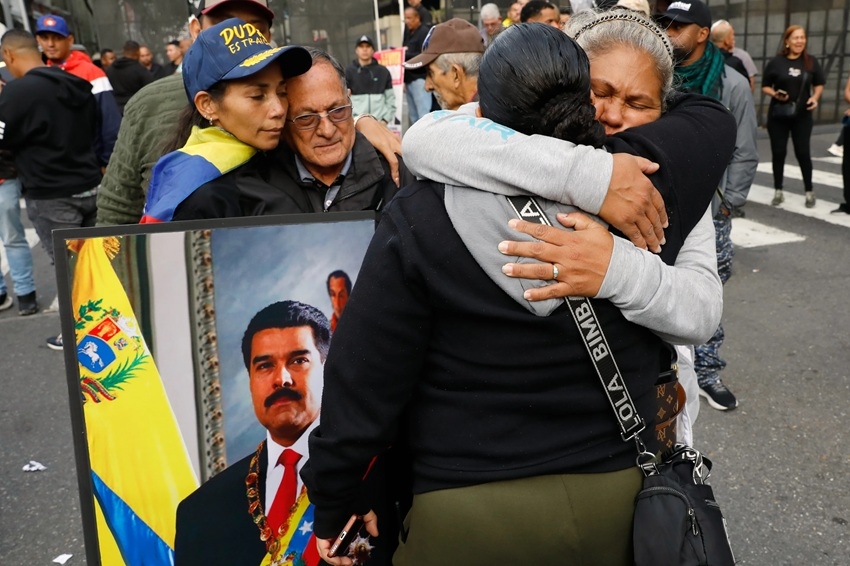
For Venezuelans, the future remains deeply uncertain. U.S. officials speak of “reconstruction,” “$100 billion in investment,” and “economic stabilization.” History, however, suggests that the path from intervention to prosperity is rarely straightforward.
Libya, Iraq, and Afghanistan were once promised similar outcomes.
In the United States, most consumers may experience the impact of these events only through small fluctuations at the gas pump. But at the global level, what unfolded over a single weekend in Caracas and New York may be reshaping the balance of power for years to come.
The larger question is no longer just about Venezuela, but about who comes next, and how the world will respond if this model is repeated — or challenged.