Trump’s Weekend Struggles: Venezuela Oil Pitch Falters, Courts Block Funding Freezes, and Domestic Backlash Grows
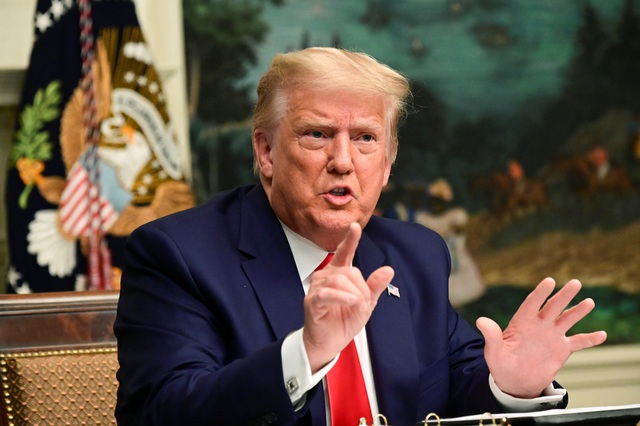
WASHINGTON, D.C. — What was meant to be a display of presidential resolve on a winter Saturday has instead underscored the deep challenges and contradictions facing Donald Trump’s administration. Over the past 48 hours, the president confronted rebukes from global oil executives, legal setbacks at home, and rising political tensions that expose both the limitations of his policy proposals and the sharp partisan divides shaping American governance in 2026.
An Oil Strategy at Odds With Industry Reality
In the ornate East Room of the White House on Friday, President Trump held court before a gathering of energy executives and media, touting what he described as a bold energy initiative: a plan to attract at least $100 billion in private investment from U.S. oil companies into Venezuela’s vast, but long-neglected, petroleum sector. The country, home to the world’s largest proven oil reserves, has been roiled by economic collapse and political upheaval for years. Trump sought to cast the effort as both a geopolitical triumph and an economic boon for American energy consumers. (Fox Business)
But the reception was markedly cooler than the White House press release suggested. Executives from leading firms, particularly ExxonMobil, made starkly clear that the president’s vision clashed with commercial realities.
Darren Woods, Exxon’s chief executive, described Venezuela as “uninvestable” under current conditions, warning that “significant changes” to legal protections and the country’s investment framework are necessary before any meaningful capital would flow. Chevron’s vice chairman provided a relatively upbeat note, saying the firm could expand production from its existing joint venture with Venezuela’s state oil company. But no firm made any commitment approaching the scale Trump promoted. (Business Insider)
At the meeting, Trump insisted that the $100 billion would come from “our giant oil companies” and not the federal government, while also promising “total safety” and security guarantees for operations in Venezuela — a nation where decades of nationalization and political instability have sapped investor confidence. (BostonGlobe.com)
Treasury Secretary Scott Bessent, speaking separately, openly acknowledged the gap between presidential rhetoric and industry appetite, noting that major oil companies “are not interested” in committing big capital on the timeline Trump has suggested. (Forbes)
The administration has sought to bolster Trump’s pitch by tightening U.S. control over Venezuelan oil flows. In a related executive action, the president signed an order designed to protect Venezuelan oil revenue held in U.S. accounts from seizure during legal disputes, part of a broader effort to make Venezuela’s oil assets more attractive and secure for future commercial use. (Reuters)
Yet oil industry skepticism aligns with concerns among energy analysts that the plan may not only fall short of its lofty investment targets but could also strain relations with foreign markets, complicate existing disputes over assets like Citgo, and introduce regulatory uncertainty. (Yahoo Tài Chính)
Legal Roadblocks and Domestic Backlash
Trump’s weekend unfolded against a backdrop of sharp domestic pushback, particularly in Democratic-led states where his administration attempted to cut funding for social programs.
On Friday, a federal judge in the Southern District of New York blocked the Trump administration’s effort to freeze roughly $10 billion in federal child care and family assistance funds for five states — California, Minnesota, Illinois, Colorado, and New York — rejecting the executive’s justification and issuing a temporary order to maintain the status quo while litigation proceeds. (AP News)
Administration officials had claimed that alleged fraud and improper benefits to undocumented immigrants justified the funding freeze, but the judge said the states demonstrated they would suffer irreparable harm if the suspension were allowed to continue. (ABC News)
Simultaneously, the U.S. Department of Agriculture independently suspended roughly $130 million in federal funding to Minnesota, citing alleged fraud connected to COVID-era food programs. The move drew immediate criticism from state leaders, who called it politically motivated and harmful to vulnerable residents relying on essential services. (The Guardian)
These controversies have injected fresh political energy into protests and public debate, with critics on social media and across the political spectrum accusing the administration of weaponizing federal power against states that differ with its policy views.
A Shifting Political Terrain
Behind the policy battles, political skirmishes are playing out on multiple fronts.
Opposition figures and grassroots activists argue that Trump’s aggressive posture toward blue states — from funding freezes to immigration enforcement actions — amounts to presidential overreach and punitive politics. Protests have erupted in urban centers, with demonstrators pressing for protection of social services, immigrant rights, and political accountability.
Simultaneously, Trump’s critics are leveraging legal judgments like the child-care funding block to cast doubt on his administration’s judgment and effectiveness. On social platforms frequented by political commentators and activists, users seized upon the weekend’s events to call attention to what they see as erratic policy-making and disregard for judicial checks on executive power.
Meanwhile, the oil investment push — a high-profile centerpiece of Trump’s foreign economic agenda — quickly became a symbol of the broader disconnect between administration promises and institutional realities. Industry skepticism has become a talking point for critics who argue that Trump overstates both his influence over private markets and his understanding of global investment dynamics.
Economic Realities: Hiring Slowdown and Consumer Woes
Compounding political pressures are headlines about the state of the U.S. economy. Data released this week from the Bureau of Labor Statistics shows that hiring has slowed across many sectors, with fewer industries adding jobs compared with a year ago. While unemployment remains low by historical standards, the shift has economists warning of a possible “hiring recession,” where labor market dynamism weakens even without a formal rise in joblessness. Analysts point to tight labor supply, sectoral imbalances, and global headwinds as contributing factors.
Amid these broader economic concerns, Trump has made other consumer-focused proposals aimed at addressing cost-of-living issues, including a high-profile call to cap credit card interest rates at 10% — a legislative proposal that would require cooperation from Congress and a broader effort to build bipartisan support.
Critics say that while the rhetoric appeals to voters feeling squeezed by debt and living costs, such proposals lack a clear path to enactment and risk unintended consequences, such as reduced access to credit for some consumers.
Looking Ahead
As the political calendar heats up toward the 2026 midterm elections, Trump’s weekend serves as a microcosm of the challenges that lie ahead.
Foreign policy ambitions clash with market skepticism. Legal setbacks provide political fuel for opponents. And domestic disputes over social funding and executive authority highlight the enduring tensions of a deeply polarized nation.
Whether Trump’s Venezuela oil gambit evolves into a transformative strategy or becomes another footnote in a turbulent presidency may depend not only on negotiations with oil companies but on broader questions of political legitimacy, economic direction, and public confidence — all of which are being contested in real time.