Tens of Thousands Rally in Minneapolis After Fatal ICE Shooting; Federal Presence Deepens Political Divides
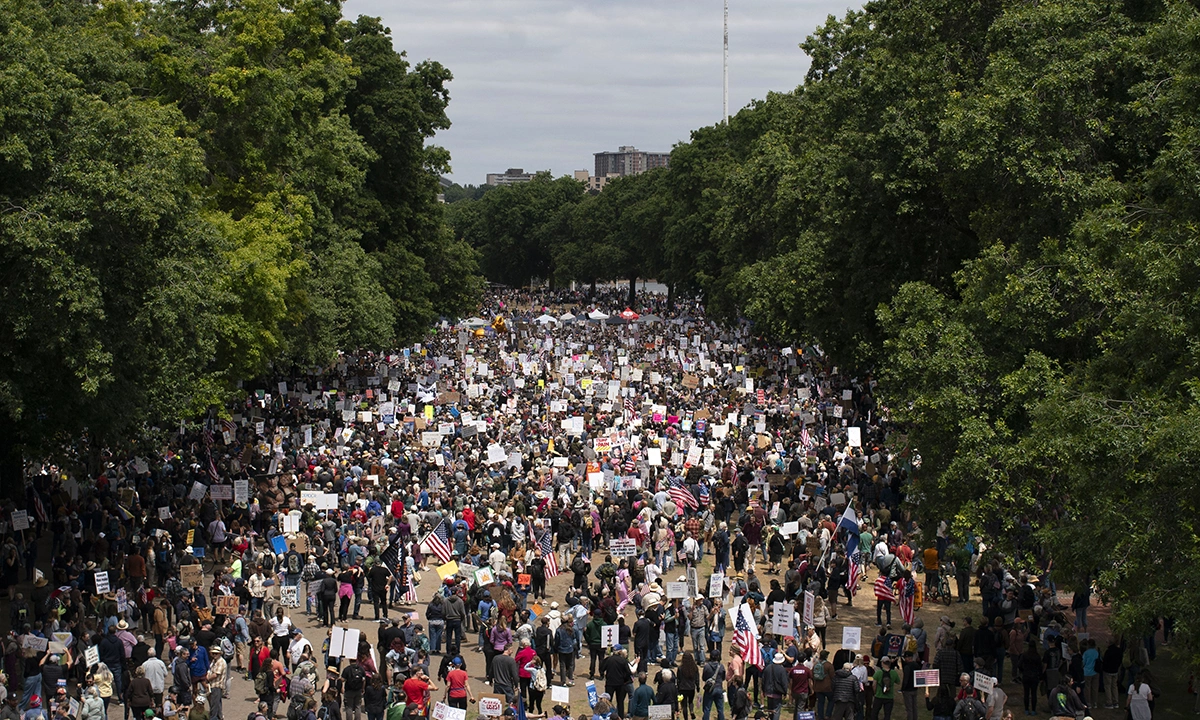
MINNEAPOLIS — Tens of thousands of people have taken to the streets of Minneapolis and cities across the United States in the wake of the fatal shooting of Renee Nicole Good, a 37‑year‑old Minneapolis woman, by an agent of U.S. Immigration and Customs Enforcement (ICE) earlier this week. What began as local protests over immigration enforcement has rapidly grown into one of the largest shows of public outrage over federal law enforcement action in recent years, drawing comparisons to past demonstrations over policing and civil rights.
The protests, which have remained mostly peaceful, reflect deepening national tensions over immigration policy, federal authority and political leadership — tensions that critics say are intensified by rapid deployment of federal agents and conflicting narratives from local and national officials.
A Fatal Encounter and Rising Outrage
The unrest began on January 7 after an ICE agent shot and killed Good in south Minneapolis during a large‑scale immigration enforcement operation by the Department of Homeland Security (DHS).
According to federal officials, the agent opened fire after Good’s vehicle “weaponized” against officers, a claim that has been sharply disputed by city leaders and activists. Video footage shared publicly shows agents approaching a vehicle, which then reverses and drives away before shots are fired. Critics say the footage contradicts the federal narrative and raises questions about the use of deadly force. (Reuters)
Good — a mother of three, community volunteer and poet — was not herself facing any charges, and Minneapolis officials have repeatedly described her as uninvolved in the enforcement action. (Wikipedia)
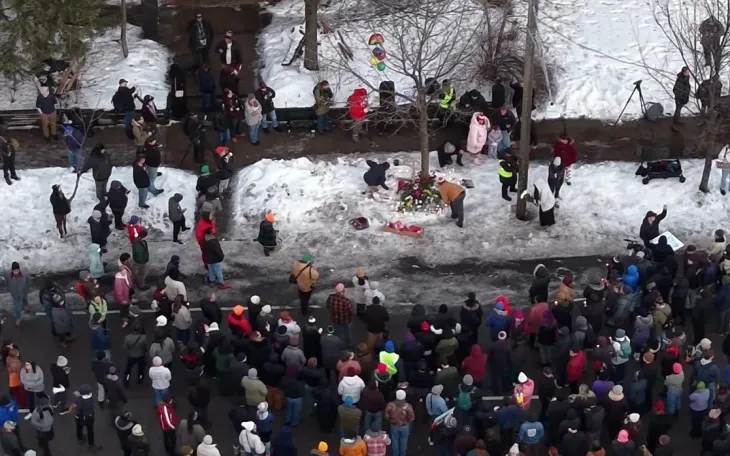
Her death ignited immediate public outrage. At a memorial near the scene of the shooting, candles and chalk‑written tributes to Good were placed by local residents. A widely shared video showed a Department of Homeland Security officer kicking over a memorial candle while dismissing a protester’s question with an expletive, an image that further inflamed public sentiment. (People.com)
Protests Spread Nationwide
By Saturday, demonstrations had swelled in Minneapolis, with thousands marching through the city chanting slogans such as “ICE out for good” and “Justice for Renee.” Organizers reported that over 1,000 related protests were planned across the country, from New York and Philadelphia to Seattle and Tucson. (Reuters)
In Minneapolis, the protests have largely remained peaceful, though there have been isolated incidents of property damage and dozens of arrests as police sought to manage the crowds. The city’s mayor and police chief have acknowledged the first amendment rights of demonstrators while warning against obstruction of traffic and violence. (ABC News)
Social media platforms like Reddit and other networks have been flooded with firsthand accounts and live streams of demonstrations and federal actions. Some posts depict protesters surrounding federal vehicles and chanting, while others include unverified claims about federal agents’ behavior toward civilians. These grassroots accounts, though varied in tone, underscore the intensity of public engagement. (Reddit)
A Federal Response and Political Schism
The federal government has defended its actions, with Homeland Security officials backing the ICE officer involved and describing the broader enforcement operation as a lawful effort to detain individuals with serious criminal records. White House and DHS statements have emphasized the danger faced by law enforcement officers and the need to uphold immigration law. (Fox News)
President Trump took to social media soon after the shooting, characterizing Good as a “very disorderly” individual who ran over an ICE officer. However, that description has been challenged by local officials and contradicted by video evidence, prompting accusations from Minnesota leaders that the administration is spreading misinformation. (Wikipedia)
The political divide has deepened with Republican officials warning that confronting federal agents could lead to arrests and prosecution, while Democratic lawmakers have condemned the shooting and the federal response. U.S. Attorney General Pam Bondi publicly warned protesters against attacking federal agents, emphasizing the seriousness of obstruction charges under federal law. (Fox News)
In a move that has further upset local officials, the Minnesota Bureau of Criminal Apprehension withdrew from the investigation after federal authorities, including the FBI and U.S. Attorney’s Office, assumed control. State investigators said they lacked access to evidence and were unable to ensure a transparent inquiry. (FOX 9 Minneapolis-St. Paul)
Local Leaders Demand Transparency
City and state leaders have insisted on accountability and transparency in the investigation. Minneapolis Mayor Jacob Frey and Minnesota Governor Tim Walz have both criticized the handling of the case and questioned federal narratives. Mayor Frey has described attempts to characterize the incident as self‑defense as misleading, and the governor has expressed skepticism about the fairness of the federal investigation. (The Washington Post)
Three Democratic members of Congress — including Rep. Ilhan Omar — were reportedly denied entry to the Whipple federal building to inspect an ICE facility near where the shootings and rallies occurred. Congressional visits to detention centers are standard oversight activities, and the refusal drew condemnation from lawmakers who labeled the move an obstruction of congressional authority. (The Guardian)
Human Impact and Broader Debate
For many residents of Minneapolis, the protests represent more than political disagreement; they reflect deep concerns about everyday safety and civil liberties. Social media accounts from locals describe tense encounters between federal agents and neighborhood residents, including ICE agents allegedly threatening residents during a peaceful demonstration. (Reddit)
The broader public debate has quickly touched on longstanding national questions: the role and reach of federal law enforcement inside U.S. cities, immigration enforcement priorities, and the balance between public safety and civil rights.
Advocates for stricter immigration enforcement argue that federal operations are necessary to uphold the rule of law and protect communities from individuals with violent criminal histories. Critics counter that the deployment of thousands of agents, particularly far from the U.S. border, is militaristic and disruptive, and that such tactics drive distrust and fear rather than safety.
A Flashpoint in an Election Year
The protest movement comes at a politically charged moment, with national attention on immigration policy already heightened amid election year debates. The shooting and subsequent demonstrations have become a rallying point for progressive groups calling for the abolition of ICE and a reevaluation of federal enforcement priorities.
Conversely, conservative commentators and officials have used the incident to underscore the challenges faced by law enforcement nationwide and to frame protests as part of broader unrest aimed at undermining public institutions.
What’s Next
As demonstrations continue, local organizers have planned further rallies and marches, emphasizing calls for justice and systemic change. Meanwhile, state and federal investigations into the shooting are ongoing, their outcomes likely to influence public opinion and political momentum in the weeks ahead.
For many in Minneapolis and beyond, the death of Renee Nicole Good has intensified long‑standing debates about justice, governance and the role of federal authority — debates that now play out at rallies, in courtrooms and across social media platforms nationwide.