Washington’s defense establishment is quietly alarmed as Sweden’s Saab JAS 39 Gripen emerges as a disruptive force in the global fighter jet market. While it does not outgun or out-stealth the U.S. F-35, the Gripen is shaking the foundations of America’s $1.7 trillion fighter jet ecosystem by offering something far more unsettling to Pentagon planners: a radically cheaper, more independent, and operationally resilient alternative.

At first glance, the Gripen poses no direct combat threat to the F-35. U.S. analysts openly acknowledge that America’s fifth-generation fighter remains superior in stealth, sensor fusion, and advanced weapons integration. In a head-to-head dogfight, the F-35 would likely prevail. Yet the Pentagon’s concern lies not in raw performance, but in the philosophy behind Sweden’s aircraft—one that questions whether air superiority truly requires extreme cost and centralized control.
Designed around Sweden’s Cold War doctrine of survival and self-reliance, the Gripen prioritizes practicality over perfection. It can operate from short stretches of highway, be serviced by a six-person crew in minutes, and remain combat-ready even when traditional airbases are destroyed. This dispersed, low-infrastructure model directly challenges the assumption that modern air power must depend on massive bases, complex logistics, and constant manufacturer oversight.
The economic contrast is even more striking. According to publicly available data, the F-35 costs between $35,000 and $47,000 per flight hour, while the Gripen operates at roughly $8,000 per hour. That gap allows air forces to fly more missions, train pilots more frequently, and sustain higher readiness rates. Gripen fleets reportedly maintain 80–90% mission availability, compared to significantly lower readiness figures often associated with the F-35 program.
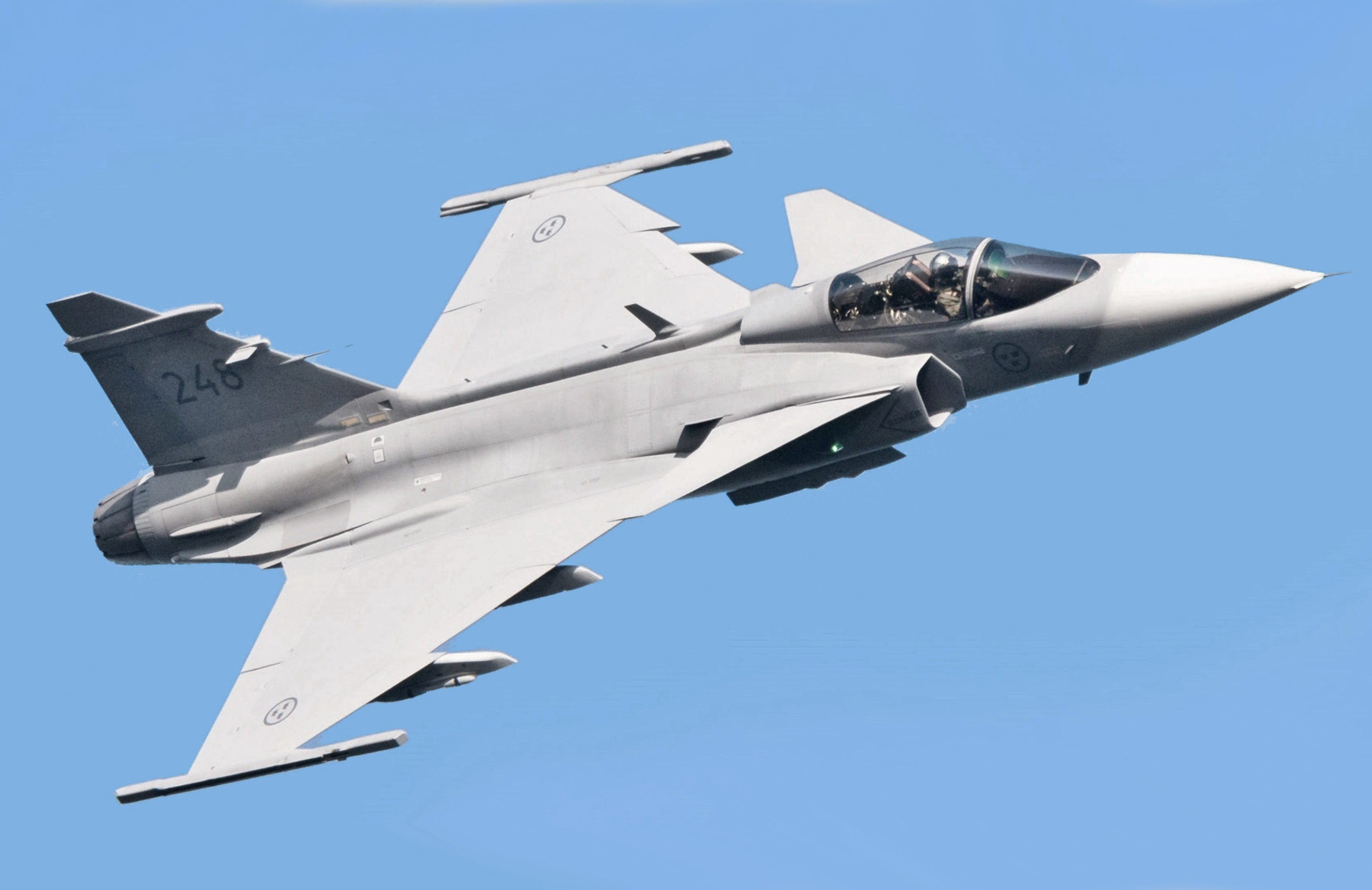
Beyond cost and reliability, Saab’s export strategy amplifies Washington’s unease. Unlike U.S. fighter sales, which typically involve deep dependence on American software, approvals, and supply chains, Gripen deals emphasize technology transfer and local industry participation. Countries like Brazil assemble the aircraft domestically, building national expertise and reducing long-term reliance on foreign control—an approach that quietly reshapes strategic independence.
Ultimately, the Gripen does not threaten America’s fighter jets in the skies—it threatens the model behind them. It proves that credible air power can be achieved through affordability, autonomy, and operational readiness rather than maximum technological complexity. As more nations weigh cost, capability, and sovereignty, Sweden’s Gripen is forcing the Pentagon to confront a difficult reality: the future of air power may be defined less by who has the best jet, and more by who can sustain and control it.