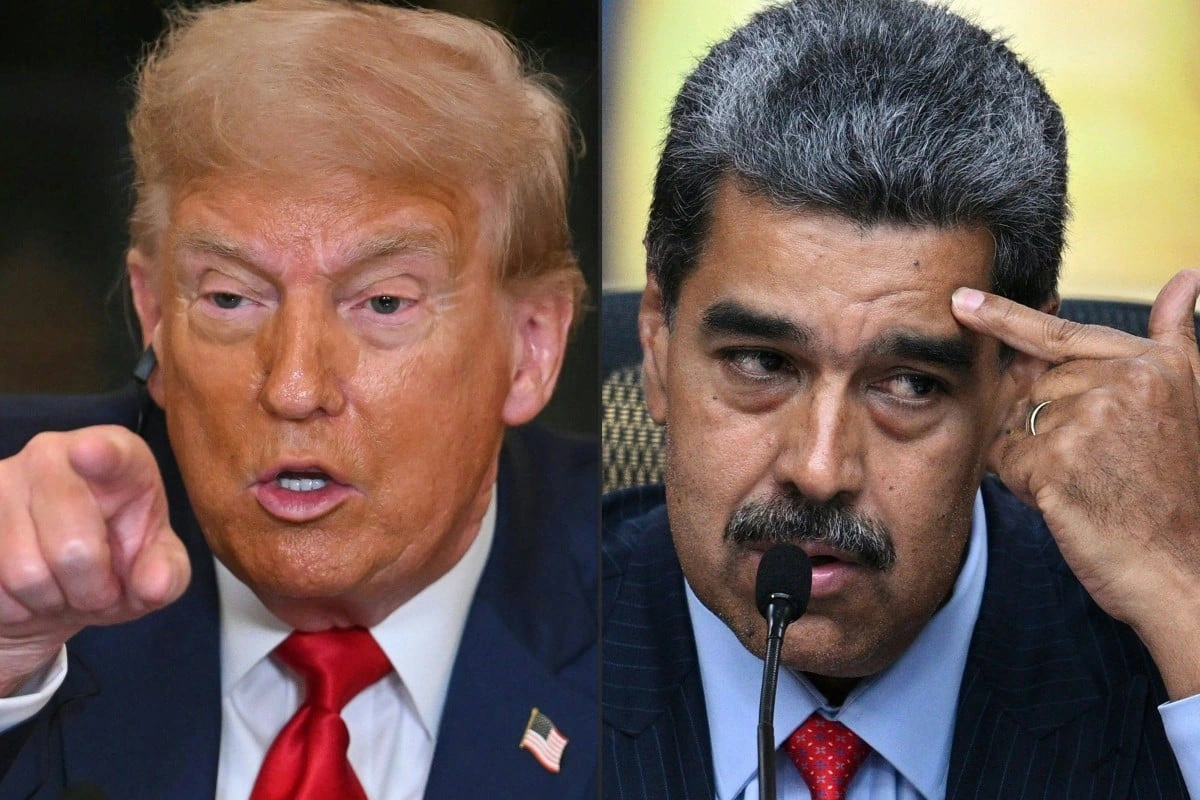
A political firestorm erupted after Fox News—long seen as Donald Trump’s media stronghold—unexpectedly challenged his Venezuela military operation, triggering what insiders describe as intense backstage fury. The backlash followed a chaotic media cycle in which Trump’s team struggled to explain why U.S. forces captured Venezuela’s leader and bombed key targets while insisting it was not a war. The contradiction stunned viewers and fueled bipartisan alarm, marking a rare and damaging rupture between Trump and his most reliable media ally.

The turning point came when Fox News contributors broke script on air. Cat Timpf sharply questioned the administration’s logic, arguing that bombing a country and seizing its leader fits the very definition of regime-change war—the same type of intervention Trump spent years condemning. Her blunt analogy went viral, resonating with voters who remember Trump’s decade-long attacks on endless wars. For many conservatives, the whiplash was impossible to ignore.
The damage deepened when Senator Rand Paul, one of the GOP’s most influential constitutional conservatives, publicly labeled the operation an “act of war.” Appearing on Fox News, Paul argued that bombing another nation’s capital and removing its president requires explicit congressional authorization, directly contradicting White House messaging. His remarks carried unusual weight, signaling that opposition was no longer limited to Democrats or fringe critics—but had reached the core of Republican leadership.
Behind the scenes, sources say Trump was furious that Fox allowed such dissent to air. For years, the network functioned as a protective echo chamber, softening internal criticism while reinforcing Trump’s narratives. This time was different. The dissent was clear, sustained, and came from trusted conservative voices, undermining efforts to frame the Venezuela action as a limited law-enforcement operation tied to drug trafficking rather than a full-scale military intervention.
Compounding the crisis, Fox News polling revealed growing voter dissatisfaction, with over 70% of respondents saying the U.S. economy is in poor condition and a majority blaming Trump. Analysts say the combination of foreign-policy confusion, constitutional concerns, and economic anxiety is eroding Trump’s grip on conservative audiences. Meanwhile, Democrats continue flipping GOP-held seats in key states, reinforcing the perception that Trump’s chaos is becoming a political liability.
Taken together, the episode marks a critical inflection point. Trump’s war agenda is no longer shielded by friendly media or unquestioned party loyalty. As Fox News fractures, senior Republicans speak out, and voters grow uneasy, the Venezuela operation has become more than a foreign-policy controversy—it is a stress test for Trump’s authority, credibility, and control over the Republican Party. Whether this rupture can be repaired may define the next chapter of American politics.