Washington — A federal court’s decision to halt a closely watched prosecution tied to Donald Trump has sent tremors through the legal and political establishment, raising uncommon questions about prosecutorial conduct, public commentary by government officials and the durability of judicial norms under intense political pressure.
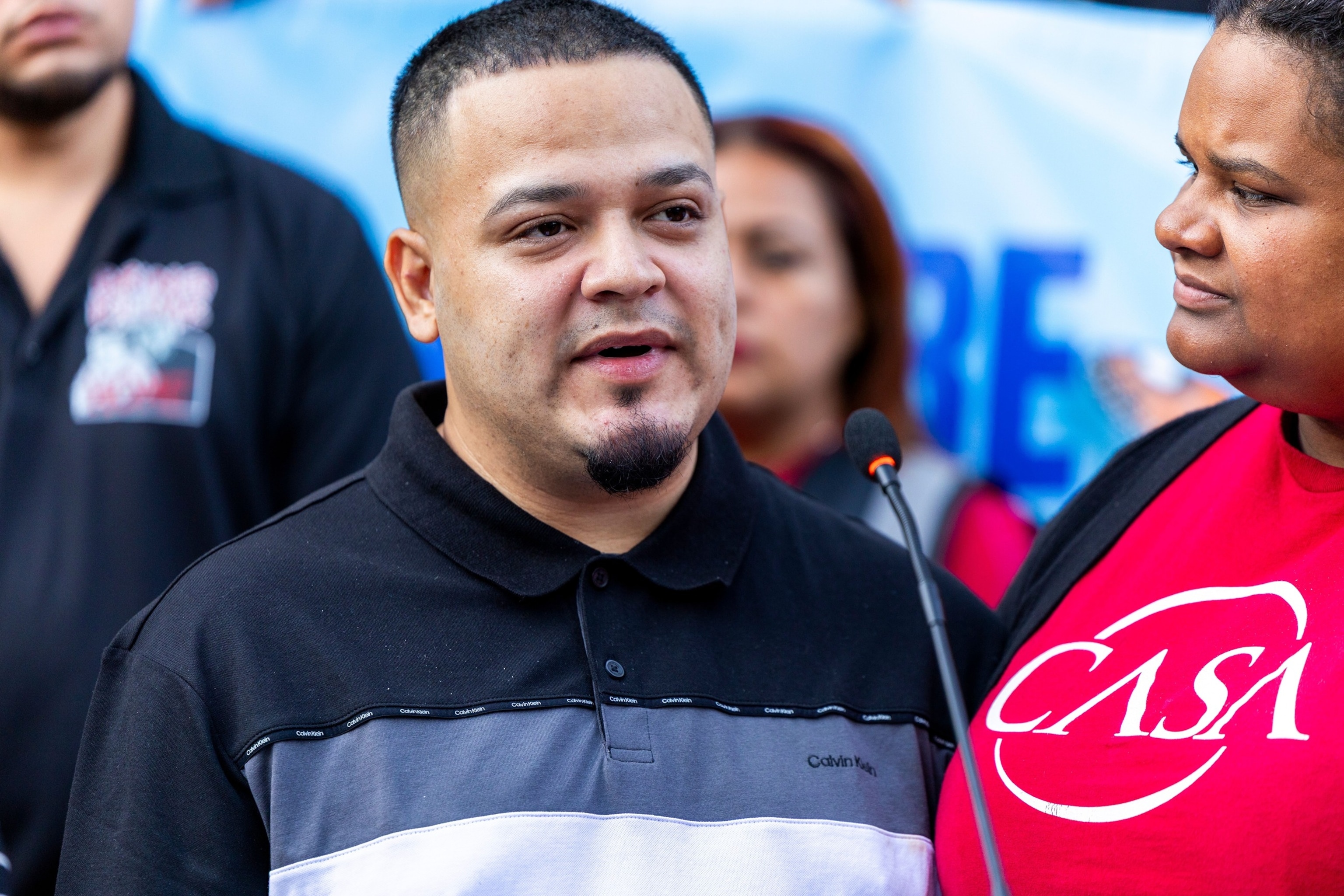
In a sharply worded ruling, judges concluded that extraordinary public statements made during the case — including attacks on the presiding judge and commentary about the defendant, Kilmar Abrego Garcia — risked undermining the presumption of innocence and the integrity of the proceedings. The court ordered the trial scrapped, scheduled evidentiary hearings to examine what occurred, and signaled that sanctions could be imposed.

The decision does not determine guilt or innocence. Instead, it reflects a judgment about process — and about whether actions by lawyers and officials associated with the case crossed lines designed to protect fairness.
According to the court, public remarks attributed to figures aligned with the defense and to officials connected to Department of Homeland Security created a climate that threatened to prejudice jurors and intimidate the judiciary. Federal rules generally restrict extrajudicial statements by parties and government officials precisely to avoid such outcomes.
Judges emphasized that those restrictions are not technicalities. They are guardrails, meant to ensure that trials are decided by evidence presented in court, not by campaigns waged online.
Former federal prosecutors said the ruling was unusual in its severity. “Courts are reluctant to derail trials,” said one former Justice Department official. “When they do, it usually reflects a conclusion that the damage to fairness cannot be cured by lesser measures.”
The ruling also points to a broader institutional concern. The Justice Department’s credibility rests on its ability to operate above politics, even — and especially — in cases that attract intense public scrutiny. When judges question whether that standard has been met, the effects can ripple far beyond a single prosecution.
Supporters of Mr. Trump quickly denounced the court’s action as excessive, arguing that judges have grown overly sensitive to public criticism and that robust debate is inevitable in high-profile cases. They contend that halting a trial over speech risks encouraging defendants to seek dismissal whenever political commentary becomes heated.
Critics counter that the court’s decision underscores a basic principle: power comes with responsibility. When government officials or their allies publicly disparage defendants or judges, they argue, the imbalance of authority magnifies the harm.
The court’s focus on potential sanctions reflects that concern. Sanctions, if imposed, could range from reprimands and fines to more serious professional consequences. Judges ordered evidentiary hearings to determine who authorized the statements at issue, whether rules were knowingly violated and how the conduct affected the proceedings.
Legal scholars note that such inquiries are designed not to punish speech per se, but to protect the judicial process. “The First Amendment allows criticism of judges,” said a constitutional law professor. “But participants in a case accept constraints that ordinary commentators do not. That’s the price of preserving due process.”
The case also highlights the challenges courts face in the digital age. Statements that once might have reached a limited audience now spread instantly across platforms, amplified by partisan media and political campaigns. Containing that impact — or undoing it — can be nearly impossible once it occurs.
For the Justice Department, the episode arrives at a delicate moment. The department has sought to portray itself as insulated from politics, even as it operates in a polarized environment. Judicial findings that suggest politicized behavior risk eroding that claim, regardless of how the underlying allegations are ultimately resolved.
The court was careful to cabin its ruling to conduct, not motive. It did not assert that prosecutors acted in bad faith, nor did it adjudicate the merits of the case. Still, by scrapping the trial, the judges made clear that adherence to rules is not optional — even when the stakes are high.
Whether the prosecution can be revived remains uncertain. In some instances, cases halted for misconduct can be refiled with new teams and stricter controls. In others, the loss of momentum and credibility proves fatal. Much will depend on what the forthcoming hearings reveal.
Beyond the immediate legal consequences, the episode has fueled a wider debate about trust in institutions. For critics of the system, the ruling is evidence that political pressure can distort justice. For defenders, it is proof that checks still function — that courts are willing to intervene when lines are crossed.
Both interpretations point to the same underlying reality: the justice system depends on restraint as much as authority. Trials are not simply contests to be won; they are processes to be protected.
As Washington digests the court’s decision, one lesson is already clear. In an era of relentless commentary and instant amplification, the boundaries that safeguard due process are easier to breach — and harder to repair. Whether sanctions are imposed or not, the collapse of the case stands as a reminder that credibility, once compromised, can derail even the most consequential proceedings.