Washington — The defining economic story of North America as 2025 gives way to 2026 is not a single deal or summit, but a series of adaptations — some visible, others less so — by countries that chose adjustment over confrontation. Faced with a renewed cycle of tariffs and uncertainty under former President Donald Trump, both Canada and Mexico moved decisively to protect their interests. The result has been a measurable shift in trade flows and leverage that is now reshaping the regional balance.
Mexico’s recalibration has been the most striking. Under President Claudia Sheinbaum, Mexican exports to the United States rose by more than 9 percent year over year, according to trade data cited by analysts. Auto exports dipped modestly, reflecting sector-specific pressures, but non-automotive goods surged, up roughly 17 percent. That growth filled gaps left by higher tariffs on Chinese imports, effectively redirecting supply chains rather than shrinking them.

The mechanics were straightforward. While Mexico faced higher tariffs than in previous decades, its effective tariff rate — roughly 4 percent — remained far below China’s, which exceeded 30 percent on many categories. For U.S. importers weighing cost and reliability, the choice was pragmatic. Mexico’s proximity, established logistics, and preferential treatment under the United States-Mexico-Canada Agreement (USMCA) made it the path of least resistance. An estimated $500 billion in goods flowed north in 2025, part of a trade relationship approaching $1 trillion.
Mexico’s strategy was not purely defensive. Sheinbaum coupled trade diplomacy with symbolic assertions of sovereignty, rejecting calls for U.S. military intervention against drug cartels while emphasizing cooperation on shared problems like fentanyl and firearms trafficking. At the same time, she imposed a 25 percent tariff on Chinese cars, a move that protected Mexico’s auto industry, aligned with U.S. industrial concerns, and signaled that Mexico would not serve as a backdoor for tariff evasion.
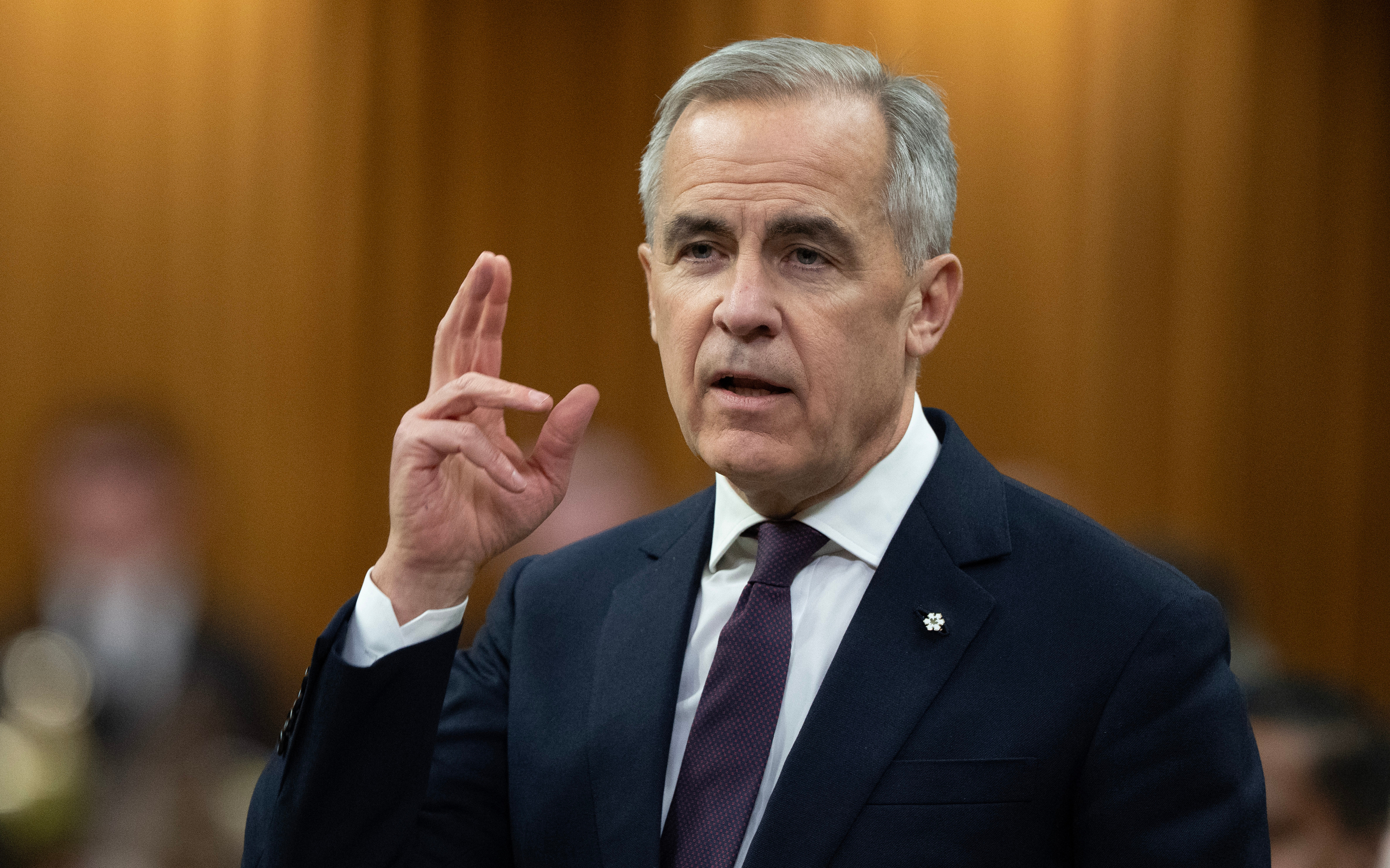
Canada’s response followed a different path, shaped by a more trade-dependent economy. Roughly two-thirds of Canadian output is tied to trade, and nearly three-quarters of its exports still go to the United States. For Prime Minister Mark Carney, a former central banker, that concentration posed a clear risk in an era of erratic U.S. trade policy.
Carney’s answer has been diversification — not as a slogan, but as a governing priority. His government has reoriented cabinet portfolios toward trade, signaling that market access now outranks most domestic debates. Canada has accelerated outreach to India, Southeast Asia and parts of Europe, seeking incremental gains that collectively reduce dependence on a single buyer. Officials describe the effort as building “multiple baskets” for Canadian exports rather than replacing the U.S. market outright.

The contrast between Mexico and Canada underscores a broader lesson of the tariff era. Protectionism rarely collapses trade; it redirects it. Countries that adapt fastest — by lowering relative costs, offering stability or expanding alternatives — often gain share even as overall uncertainty rises. Those that wait for clarity risk losing ground.
For the United States, the outcomes are mixed. Tariffs reduced some Chinese imports, a stated objective, but much of that trade resurfaced via Mexico. American consumers saw fewer empty shelves, but supply chains became more regional rather than domestic. U.S. leverage shifted as well. When partners have credible alternatives, pressure loses force.
Carney and Sheinbaum adopted distinct tones in dealing with Washington. Sheinbaum mixed firmness with selective accommodation, while Carney emphasized partnership without submission. Both approaches avoided open confrontation. Neither sought to “win” the news cycle. Instead, they focused on outcomes — exports secured, industries protected, exposure reduced.
Economists note that such strategies tend to outlast political cycles. Supply chains, once rerouted, do not easily revert. Contracts signed in 2025 will shape trade in 2027 and beyond. Investments made in ports, rail and manufacturing capacity create their own momentum.
The implications extend beyond economics. Trade resilience has become a form of geopolitical insurance. Countries less vulnerable to a single partner’s whims can pursue independent policy without immediate retaliation. In that sense, Canada and Mexico’s responses to Trump’s tariffs were as much about sovereignty as about growth.
Whether the United States adjusts its approach remains uncertain. Tariffs remain politically popular in some quarters, even as their secondary effects become clearer. What is already evident is that neighbors who once appeared reactive have learned to be anticipatory.
As one trade official put it privately, “You don’t beat uncertainty by arguing with it. You beat it by routing around it.”
By that measure, Canada and Mexico have done more than endure a turbulent trade period. They have quietly improved their positions — not by outmaneuvering the United States rhetorically, but by making themselves indispensable in practice.