The political confrontation now gripping Britain did not begin with riots or arrests, but with a number—589,900—and a promise that immediately split the country in two. When Nigel Farage escalated his long-running immigration rhetoric into a concrete mass-deportation proposal, the move was framed by supporters as decisive, overdue, and uncompromising. Critics, however, saw something else entirely: a high-risk political gamble designed to force a reckoning with the state, the courts, and the limits of executive power. That reckoning arrived swiftly when Keir Starmer publicly rejected the plan, drawing what his allies described as a “red line” around legality, human rights, and institutional authority.
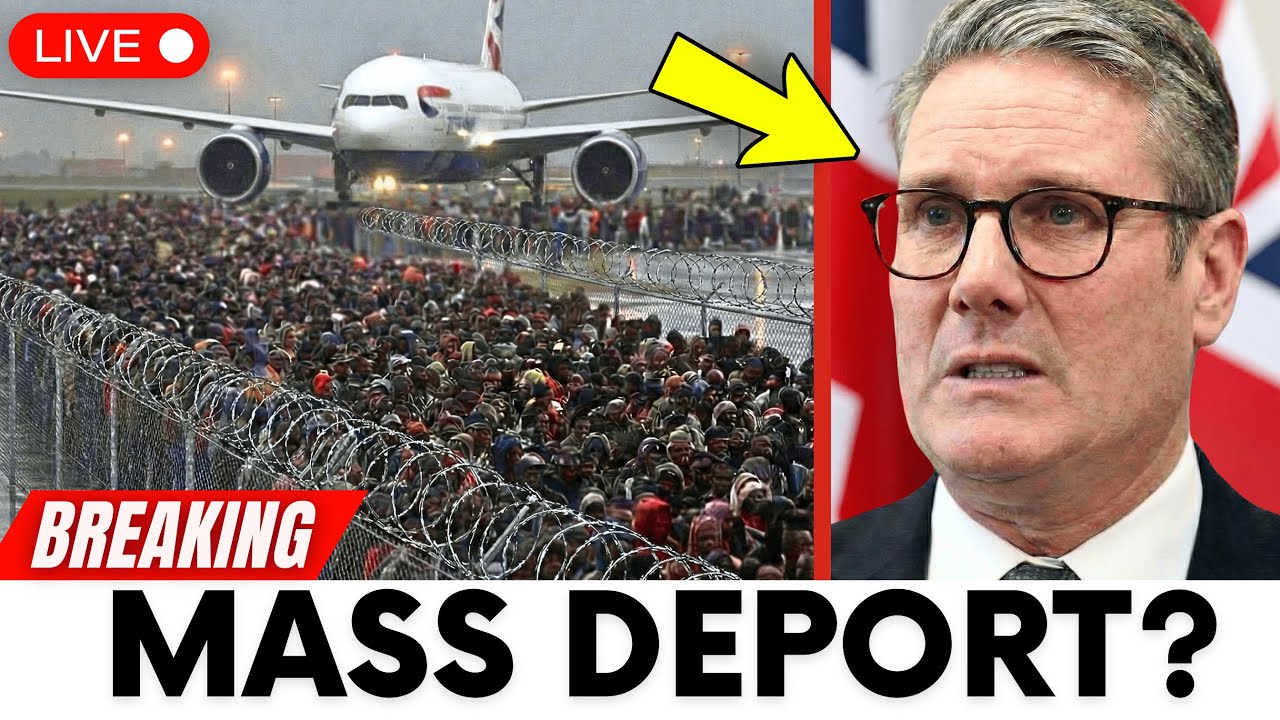
At the center of the controversy is perception rather than verified outcome. Farage’s proposal, which envisioned large-scale detention, rapid removals, and the use of military and naval assets, was never implemented. Yet it was powerful precisely because of what it symbolized. To supporters, it represented a restoration of control after years of visible strain on the asylum system, housing, and public services. To opponents, it signaled an authoritarian turn that risked breaching legal norms and inflaming social divisions. The clash between these narratives quickly became more important than the technical feasibility of the plan itself.

Starmer’s rejection transformed the episode from policy debate into political theater. By labeling the proposal unworkable and unacceptable, the government reframed Farage’s confidence as overreach. Parliamentary resistance, legal warnings, and public statements from senior officials converged to send a clear signal: there were institutional boundaries that populist pressure could not simply bulldoze. For Farage’s critics, this was proof that the state still had guardrails. For his supporters, it was evidence that those same institutions were insulated from public anger and unwilling to confront hard realities.
The fallout played out across streets, screens, and social platforms. Demonstrations, counter-demonstrations, viral clips, and heated commentary amplified a sense of national embarrassment and volatility. Analysts cautioned against treating the unrest as a direct consequence of any single policy proposal, instead pointing to a deeper accumulation of frustration—over migration, policing, cost-of-living pressures, and trust in authority. In this framing, the blocked deportation plan became a lightning rod rather than a root cause, drawing together multiple grievances into one explosive symbol.
Crucially, none of the sweeping claims attached to the proposal—about crime reduction, instant deterrence, or economic savings—were established as fact. They circulated as projections, interpretations, and political talking points, embraced by one side and dismissed by the other. This ambiguity allowed both camps to harden their positions. Supporters argued that even the refusal to try demonstrated weakness. Opponents countered that the plan’s very design revealed a disregard for due process and social cohesion.

What emerged was a broader struggle over sovereignty and narrative control. Farage’s allies framed the rejection as proof that Britain’s elected leaders were constrained by courts, conventions, and international frameworks. Starmer’s camp insisted that those constraints were not foreign impositions but pillars of the constitutional order. The dispute thus shifted from immigration numbers to a more fundamental question: who ultimately defines the limits of power in modern Britain?
Politically, the episode altered the balance of momentum. Farage succeeded in forcing the issue onto the national agenda, mobilizing supporters and dominating headlines. Yet the institutional pushback exposed vulnerabilities in translating provocation into policy. For Starmer, the stand carried risks of its own, including accusations of detachment from public fear and anger. Still, the refusal positioned his government as a gatekeeper of stability at a moment when many voters perceived chaos.
In the end, the blocked deportation push did not resolve Britain’s immigration dilemma. Instead, it crystallized it. The country is left with sharper lines, louder voices, and a lingering sense that neither side has fully answered the other. What remains is a political landscape where symbolism carries as much weight as substance, and where the next confrontation may hinge less on numbers than on which narrative the public ultimately believes.