Capitol in Turmoil: Mike Johnson Faces Internal Revolt as Republicans Turn on Their Own Speaker
House Speaker Mike Johnson is facing the most serious crisis of his political career—not from Democrats, but from inside his own party. Behind closed doors, Republican lawmakers are increasingly questioning whether Johnson is fit to lead, as frustration over his leadership style, public missteps, and unwavering loyalty to Donald Trump reaches a breaking point.
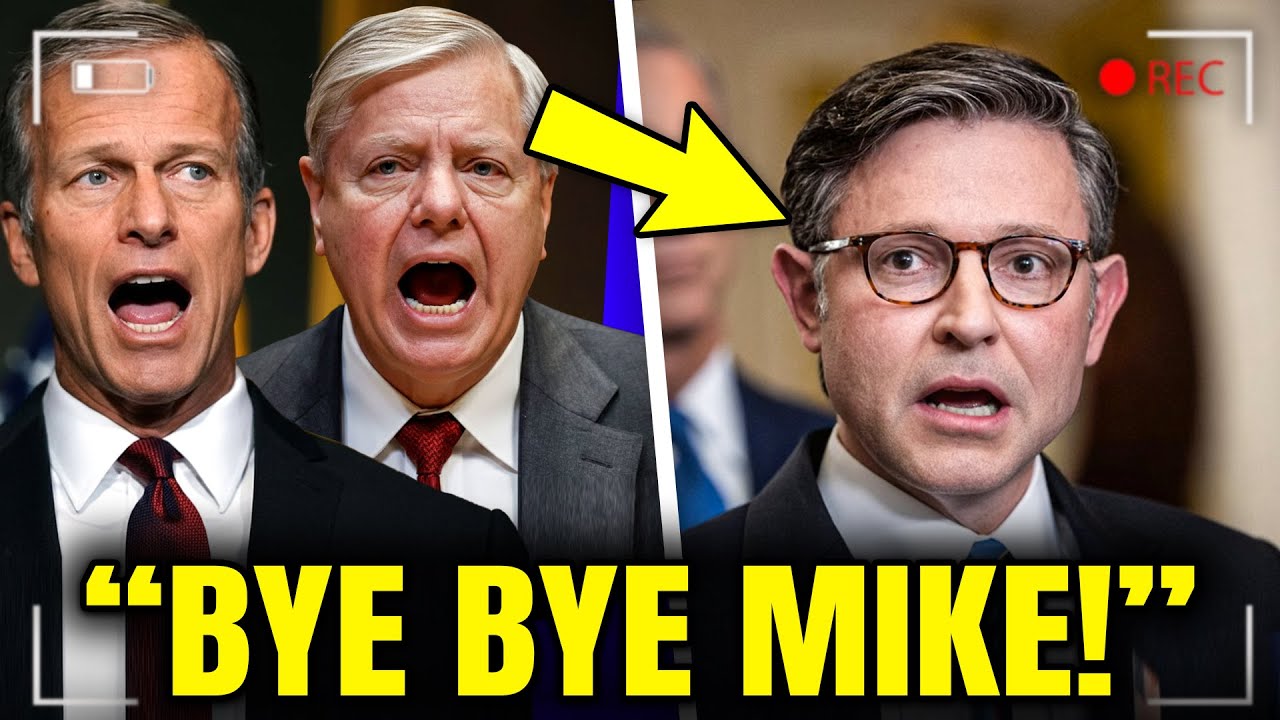
For months, Johnson was seen as a rising conservative figure: a constitutional lawyer, disciplined, media-friendly, and fiercely loyal to Trump. That loyalty, once his greatest strength, is now rapidly becoming his greatest liability. As pressure mounts in Congress, many Republicans believe Johnson has failed to balance allegiance to Trump with the independent leadership required of a Speaker of the House.
The immediate trigger for the backlash has been Johnson’s repeated pattern of dodging questions in public appearances. When asked about controversial issues—including alleged misconduct by Trump-aligned officials, changes within federal agencies, and inflammatory presidential statements—Johnson has frequently responded with variations of “I don’t know,” or claimed he hasn’t reviewed the details. What might once have been seen as caution is now being interpreted as incompetence or deliberate avoidance.

That perception has fueled anger within the Republican caucus. Lawmakers privately describe Johnson as well-meaning but ineffective, a leader so focused on avoiding offense that he ends up alienating nearly everyone. Several prominent Republicans have reportedly lost confidence in his ability to manage the House, unify the party, or project authority during a critical election cycle.
The discontent has grown serious enough that discussions about removing Johnson as Speaker are no longer hypothetical. While ousting a sitting Speaker is rare and procedurally difficult, recent history—most notably the removal of Kevin McCarthy—has shown it is possible when party unity collapses. According to multiple reports, Johnson may not currently have the votes needed to survive a no-confidence challenge if one were formally introduced.

Adding to his troubles, Republicans have increasingly broken ranks on key votes, sometimes siding with Democrats on legislation Johnson opposed. These defections have weakened his grip on the chamber and exposed how fractured the GOP has become under his leadership. Even when Johnson technically holds the gavel, his ability to enforce party discipline appears to be slipping away.
Insiders suggest that Johnson’s deep alignment with Trump has boxed him into an impossible position. By deferring constantly to Trump and avoiding confrontation, he has effectively surrendered congressional authority—yet he still bears responsibility for managing the House. Critics argue that you cannot hand over power to an outside political force and still expect to command respect within Congress.
As midterm elections approach, the stakes are rising fast. A weakened or divided Speaker damages Republican bargaining power, legislative productivity, and public image. Some analysts warn that continued chaos could accelerate GOP losses, potentially handing control of the House to Democrats sooner than expected.
Even Johnson himself has acknowledged the strain. In a recent podcast appearance, he described his role as closer to a “mental health counselor” than a legislative leader, juggling nonstop crises and internal drama. Observers say that candid admission only reinforced concerns that the speakership—and perhaps the House itself—has been diminished under his watch.
Several scenarios now loom. Johnson could survive but remain deeply weakened. He could be ousted in a dramatic leadership revolt. Or he could choose to step aside before the pressure becomes unbearable. Regardless of the outcome, one reality is clear: Mike Johnson is no longer untouchable.
His struggle is emblematic of a deeper Republican dilemma—whether loyalty to Trump outweighs effective governance. For now, the party appears trapped between those two forces, and the Speaker is paying the price. In Washington, power can vanish quickly, and Johnson’s grip on it is slipping fast.