Washington — Speaking on the Senate floor after a contentious Judiciary Committee hearing, Senator Dick Durbin delivered a sweeping critique of Attorney General Pam Bondi, accusing her of transforming the United States Department of Justice into a political instrument that shields allies of former President Donald Trump while intimidating communities and resisting congressional oversight.
The remarks were notable not for rhetorical flourish but for their structure. Durbin framed his argument around process rather than verdicts, emphasizing what he described as repeated refusals by the attorney general to answer basic oversight questions. Oversight, he argued, is not optional or partisan but a constitutional obligation — one that depends on transparency from those who wield the government’s most coercive powers.
Durbin began by contrasting Bondi’s opening statement at the hearing — in which she warned against “playing politics with law enforcement powers” — with what he characterized as her record in office. In his telling, the attorney general’s conduct represented the very betrayal of public trust she claimed to oppose. He described her testimony as defensive and dismissive, marked by personal attacks on senators rather than factual explanations of departmental decisions.
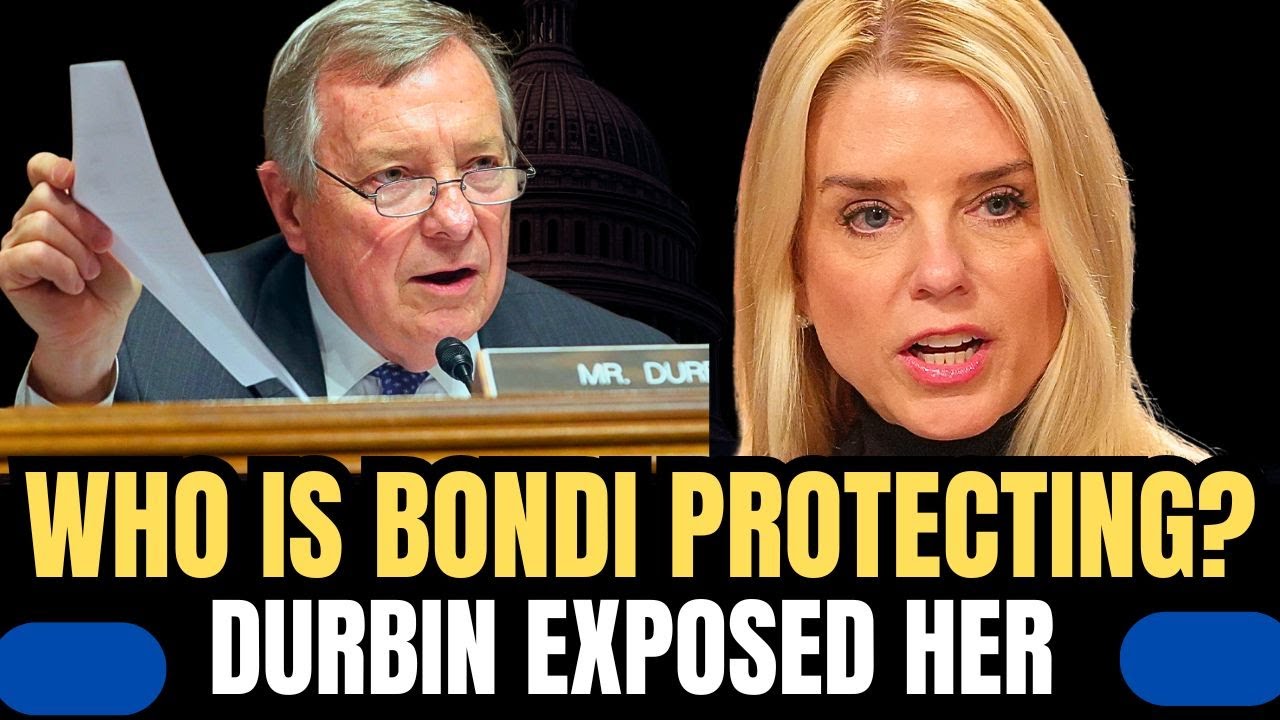
Central to Durbin’s critique was the use of federal force in Chicago, the city he represents. He cited a recent Immigration and Customs Enforcement operation in the South Shore neighborhood, alleging that heavily armed agents descended on an apartment building without individualized warrants, detaining residents — including women, children and U.S. citizens — for hours. Durbin argued that such actions, if accurately described, cut to the heart of the Fourth Amendment’s protections against unreasonable searches and seizures.
The Justice Department has defended its enforcement efforts as lawful and necessary. But Durbin’s concern was less about a single operation than about precedent. When law enforcement relies on broad shows of force rather than individualized probable cause, he warned, public safety can give way to fear — and constitutional boundaries blur.
Durbin also raised questions about the domestic deployment of National Guard troops, asking whether Bondi had been consulted by the White House before such actions were taken. He said she refused even to confirm whether a conversation had occurred. For Durbin, that refusal was itself revealing. The domestic use of military or quasi-military force has a fraught history in the United States, and transparency about its legal justification, he argued, is essential to preventing abuse.
Another thread in Durbin’s remarks concerned the department’s handling of records related to Jeffrey Epstein. Bondi previously stated publicly that an Epstein “client list” was “sitting on her desk,” creating expectations of disclosure. Months later, Durbin said, she declined to discuss the matter at all. He cited a whistleblower allegation — unproven but serious — claiming that F.B.I. agents were instructed to flag references to Mr. Trump in Epstein files. If true, Durbin said, such instructions would amount to political protection rather than neutral law enforcement.

Durbin was careful not to assert guilt by association. His focus remained on integrity and process: whether investigations are conducted — and explained — without regard to political consequence. Even the appearance of interference, he argued, corrodes trust, particularly for survivors who have waited years for accountability.
Underlying all of Durbin’s points was a broader claim about silence. Repeatedly, he said, the attorney general’s response to oversight inquiries was simply, “I’m not going to discuss this with you.” That posture may be legally defensible in narrow circumstances, but as a governing norm it is unsustainable, he argued. A Justice Department that does not explain its actions risks forfeiting the confidence that grants it legitimacy.
Supporters of Bondi counter that prosecutorial discretion requires restraint, that closed investigations cannot be litigated in public hearings, and that aggressive questioning can veer into insinuation. From that perspective, Durbin’s critique risks politicizing law enforcement by demanding disclosures that could compromise due process.
But constitutional scholars note that the tension between oversight and independence is inherent — and necessary. “The rule of law depends on both,” said one legal expert. “Independence without accountability becomes unanswerable power. Oversight without restraint becomes interference.”
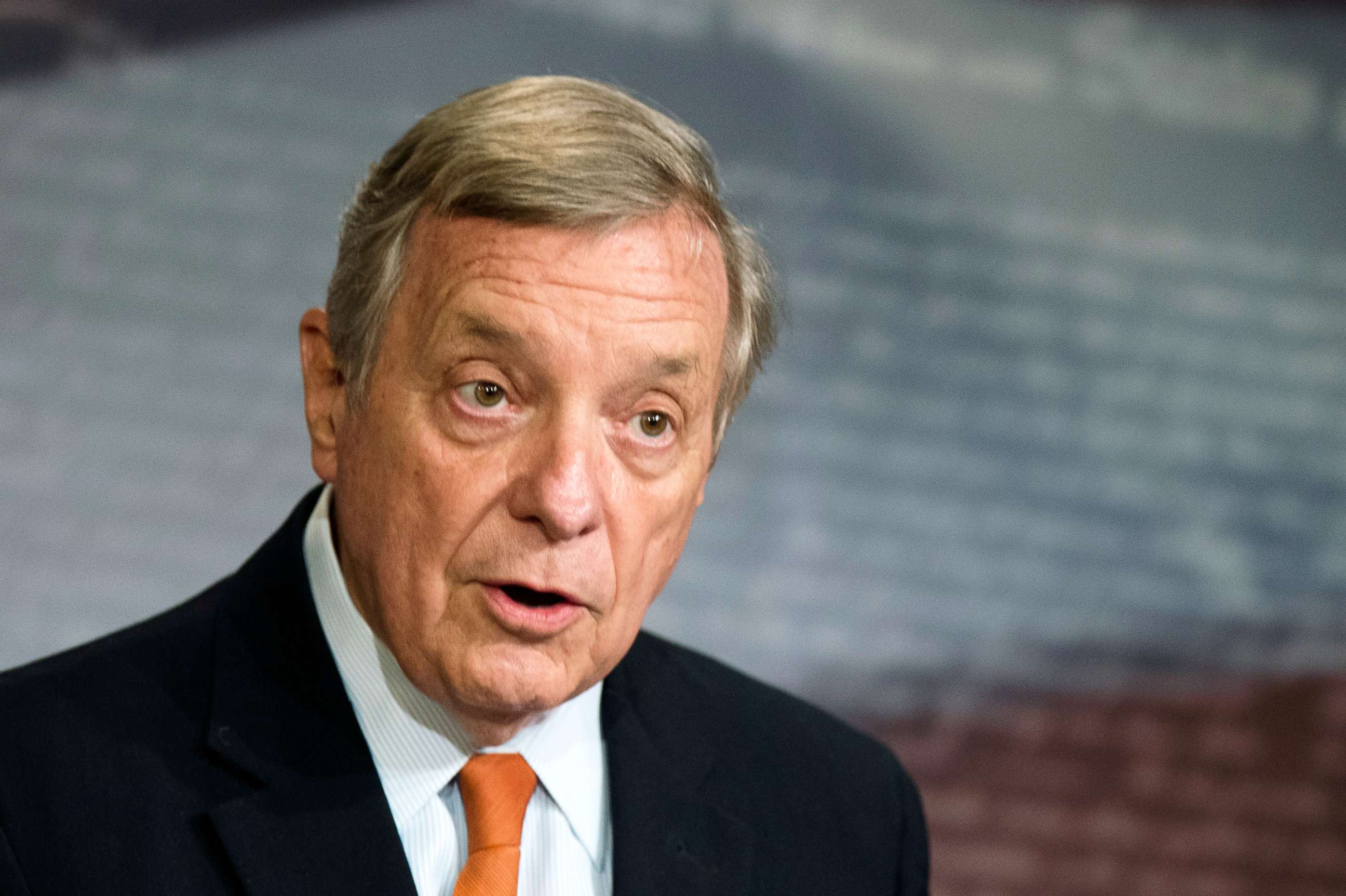
Durbin’s warning extended beyond partisan lines. A Justice Department willing to shield allies and deploy force without clear explanation, he said, can just as easily turn its power on ordinary citizens. History offers ample examples of institutions that drift from justification to abuse once accountability weakens.
The speech did not resolve the factual disputes it raised. It did, however, clarify the stakes. Oversight hearings are not courts, and senators are not prosecutors. Their role is to ask how power is exercised — and whether constitutional guardrails still hold.
In Durbin’s telling, the danger is not a single decision or official, but a pattern in which silence replaces explanation and loyalty eclipses law. Whether one accepts that diagnosis or not, the questions he posed — about force, transparency and accountability — are likely to persist. In a democracy, the durability of justice depends not only on outcomes, but on the willingness of those in power to explain themselves.