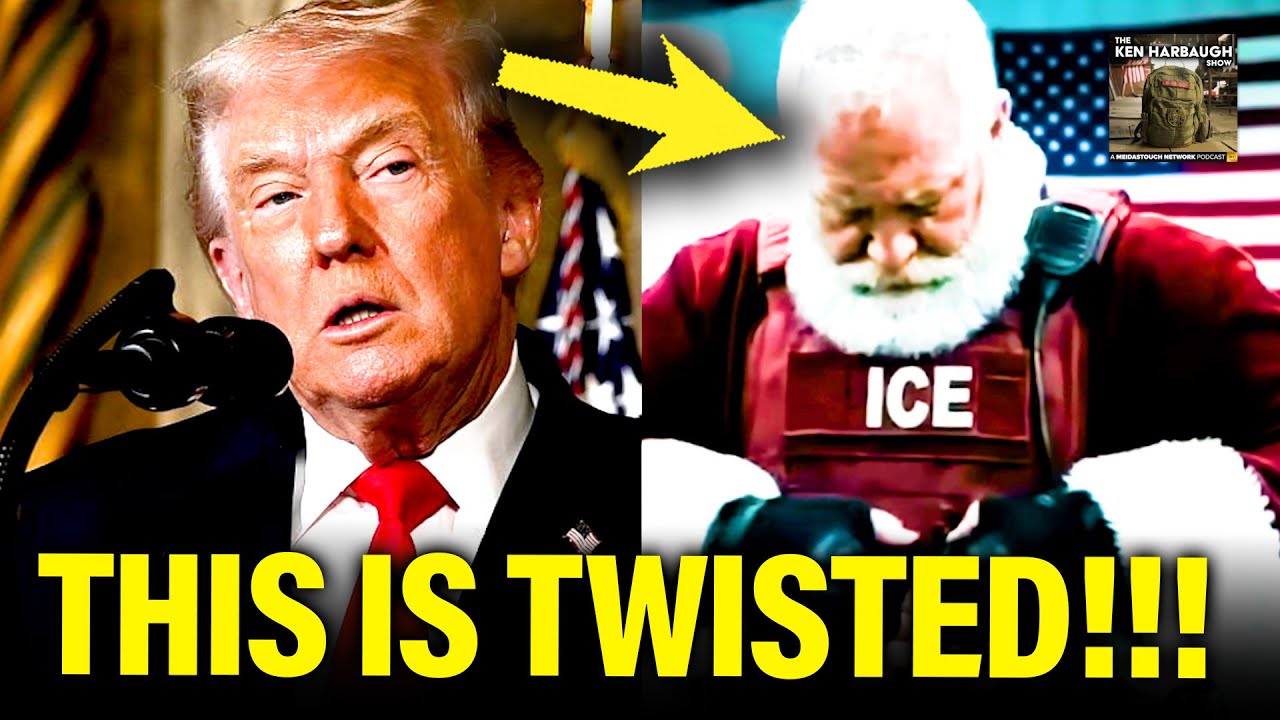
Washington — The video was brief, visually jarring and unmistakably seasonal: a muscular Santa Claus figure, set against Christmas imagery, paired with messaging about deportation. It was released by government agencies tasked with immigration enforcement and quickly circulated online. For some viewers, it landed as a provocation. For others, it crossed a line.
Within hours, religious leaders, legal scholars and civil-rights advocates were asking a question that went beyond taste or tone: what happens when the power of the state appropriates religious symbolism to justify coercive policy?
The backlash was swift, but it was not limited to political opponents of the administration. Instead, it emerged most forcefully from within faith communities themselves — including clergy who argued that the video inverted the meaning of the holiday it invoked. Christmas, they said, commemorates the birth of a child whose family fled violence and state persecution. Using that imagery to promote deportation policy, critics argued, was not merely ironic. It was a distortion.
The controversy has become a focal point in a larger debate about the relationship between religion and power in American public life. For years, faith language has been deployed by politicians across the spectrum. What feels different now, some religious leaders say, is the explicit fusion of state authority, religious symbolism and punitive messaging.
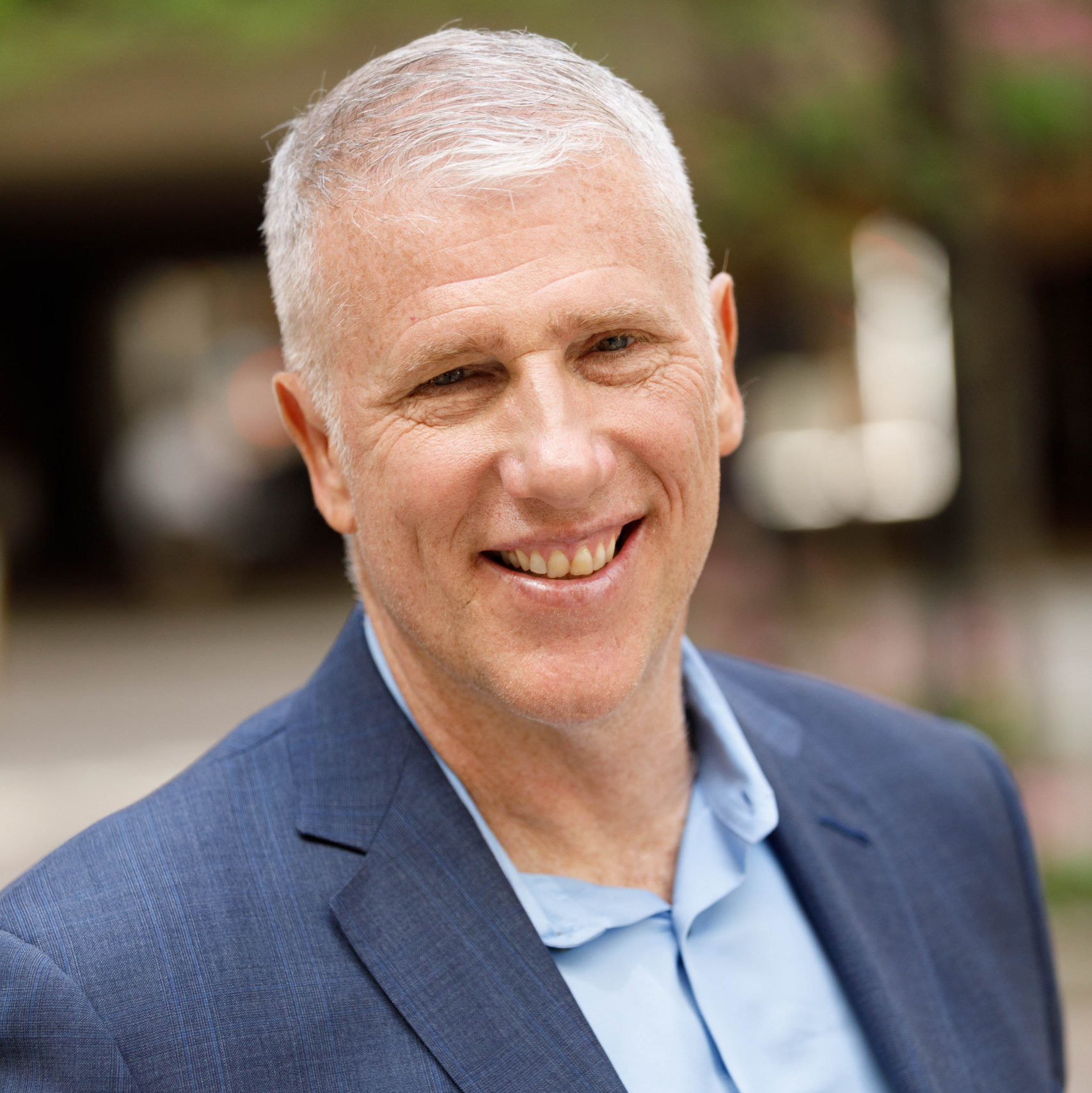
“This is not about disagreement over immigration policy,” said Paul Brandeis Raushenbush, a Baptist minister and the president and chief executive of Interfaith Alliance. In a recent interview, he described the moment as a “spiritual crisis,” arguing that cruelty had become normalized and then retroactively justified through selective readings of scripture.
Mr. Raushenbush and others have pointed to biblical passages frequently cited in debates over immigration — including verses in Matthew and Leviticus that emphasize hospitality toward strangers — to argue that the moral tradition being invoked by the government runs counter to the policies being promoted. In their view, the issue is not whether religion belongs in public life, but whether it is being used honestly.
The administration has defended its broader immigration agenda as lawful and necessary, emphasizing border security and enforcement of existing statutes. Officials have not offered a detailed explanation for the creative choices behind the holiday-themed video, and agencies involved declined to comment on its religious symbolism. Supporters of the approach argue that critics are overreading intent and that the message was aimed at deterrence, not theology.
But the reaction suggests something deeper is at play.
For many religious Americans, the episode has reinforced concerns about what scholars describe as “Christian nationalism” — a movement that blends a narrow interpretation of Christianity with claims about who truly belongs in the nation. The term is contested and often imprecise, but it has become shorthand for a political project that uses religious identity as a marker of legitimacy and exclusion.
Mr. Raushenbush was careful to distinguish that project from religion writ large. While white evangelical voters have supported former President Donald Trump at high rates, he noted, they represent a minority of both the American public and the country’s religious population. Many religious communities, including conservative ones, have resisted the use of faith as a tool of state power.
That resistance has taken concrete forms. Faith leaders have challenged immigration raids conducted at or near houses of worship. Interfaith coalitions have organized legal support for migrants. Religious organizations have sued the federal government over policies they argue infringe on religious freedom rather than protect it.
In one such case, the Interfaith Alliance sought records related to an “anti-Christian bias” task force announced by the administration, arguing that its composition and mandate reflected a narrow, exclusionary understanding of religious freedom. When the government declined to provide detailed information, the group pursued litigation.
“These actions tell us something important,” Mr. Raushenbush said. “When religion is used as a justification for state violence or exclusion, many people of faith push back — not despite their beliefs, but because of them.”
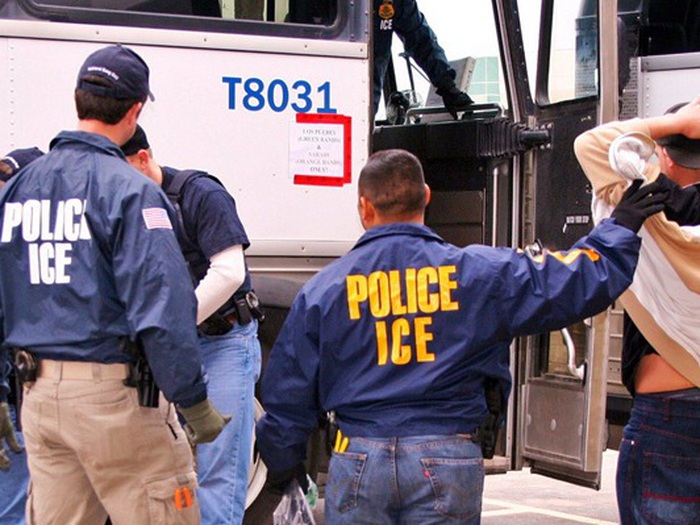
The Santa video has also drawn attention to the moral burden placed on those tasked with enforcing immigration policy. Clergy who work with law-enforcement families say they increasingly hear from officers wrestling with what ethicists call “moral injury” — the psychological harm that occurs when individuals are asked to carry out actions that conflict with their core values.
That dynamic complicates a narrative often presented in political debate: that faith communities uniformly support hard-line enforcement. In reality, the religious response has been fractured, with many leaders urging compassion even as policy grows more punitive.
The tension echoes earlier moments in American history when religious institutions were divided over the exercise of state power. Scholars frequently cite the role of churches during slavery, segregation and the civil-rights movement as evidence that faith has been mobilized both to uphold injustice and to challenge it. The lesson, they argue, is not that religion inevitably bends toward power, but that it is contested terrain.
What worries critics now is not disagreement — which is inevitable in a pluralistic society — but the blurring of lines between religious authority and government coercion. When scripture appears in official messaging alongside threats of deportation, they say, it risks turning faith into an arm of the state.
That risk is not merely symbolic. Public trust in both religious institutions and government has been eroding for years. Polls show declining affiliation with organized religion and deep skepticism toward political leadership. Episodes like the Santa video, critics argue, accelerate that erosion by making both institutions appear cynical.
Even some who support stricter immigration enforcement have questioned the tactic. Former officials and conservative commentators have warned that overt religious messaging from the state invites legal challenges and alienates constituencies that might otherwise be sympathetic.
For now, the administration appears unlikely to reverse course publicly. But the episode has already had an effect: it has galvanized religious leaders who see the current moment as a test of whether faith will be used to sanctify power or to restrain it.
Mr. Raushenbush and others argue that the answer will shape not only immigration policy, but the moral tone of American democracy. “This is about who we say we are,” he said. “Not as partisans, but as a people.”
As Christmas and other holidays pass, the imagery will fade. The question it raised will not. In a country defined by both religious freedom and deep diversity, the use of sacred symbols by the state remains a flashpoint — one that reveals how fragile the boundary between belief and power can be, and how fiercely many Americans are willing to defend it.