Ottawa — The holiday message was neither theatrical nor confrontational. There were no sharp lines drawn, no opponents named, no promises made. And yet, in a political environment increasingly shaped by anxiety and polarization, its restraint may explain why it has lingered so visibly in Canada’s public conversation.
The remarks, delivered in a calm, measured tone, emphasized family, service, faith and shared responsibility. They acknowledged hardship without dramatizing it and unity without minimizing division. In another moment, such a message might have passed as routine seasonal fare. This year, it has been read as something more: a signal of the kind of leadership many Canadians say they are missing.

The response speaks less to the novelty of the words than to the context in which they arrived. Canada is navigating overlapping pressures — affordability, housing scarcity, economic uncertainty, climate risk and geopolitical instability — at a time when political discourse in many democracies has grown louder and more performative. Against that backdrop, calm has acquired an unusual power.
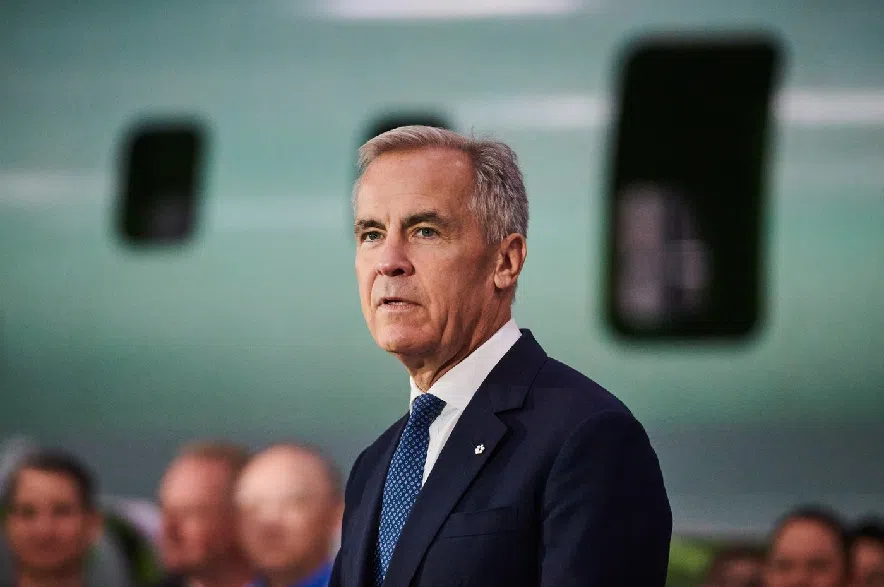
The figure at the center of the reaction is Mark Carney, the former governor of the Bank of Canada and the Bank of England, whose public interventions in recent years have been infrequent but closely watched. Mr. Carney is not an elected official, nor has he declared an intention to seek office. But his record — steering institutions through financial crisis and advocating long-term economic resilience — has made him a touchstone in debates about competence and credibility.
What distinguished the holiday message was not policy specificity but tone. It framed leadership as stewardship rather than spectacle, responsibility rather than reaction. It spoke of service, forgiveness and generosity — language rooted in Christian tradition but presented as inclusive, extending to Canadians “of all traditions.” The emphasis was not on identity, but on obligation: to care for those in need, to recognize shared vulnerability, to choose unity over fragmentation.
Political analysts note that such framing aligns with a broader appetite among voters for seriousness. After years in which outrage has often been rewarded with attention, there are signs of fatigue. Surveys consistently show declining trust in institutions and growing frustration with what respondents describe as short-termism in public life. In that environment, steadiness can read as strength.
Mr. Carney’s appeal, where it exists, has never been charismatic in the conventional sense. It is rooted in credibility earned during moments of stress. During the 2008 financial crisis and its aftermath, he was credited with helping stabilize markets without inflaming panic. His approach favored preparation over reassurance, evidence over emotion — traits that do not trend easily online but resonate in retrospect.
Supporters argue that the challenges now facing Canada require that same sensibility. Artificial intelligence is reshaping labor markets. Energy transitions are altering regional economies. Climate risk has moved from abstraction to lived experience. Global debt levels and geopolitical tensions are rising simultaneously. These are problems, economists note, that resist slogans. They demand planning, coordination and patience.
The holiday message did not enumerate these challenges explicitly, but it gestured toward them by emphasizing foresight and responsibility. It rejected fear as a governing strategy, suggesting instead that leadership’s role is to lower the temperature — to create space for rational decision-making rather than to exploit uncertainty.
Critics might argue that such language risks vagueness, that reassurance without policy detail can feel insufficient. But supporters counter that the moment called less for answers than for orientation — a reminder of what leadership is meant to do. In that sense, the message functioned as a contrast rather than a proposal.

There is also a cultural dimension to its reception. Canada’s political identity has long been tied to moderation and institutional trust. While that self-image has been tested in recent years, it has not disappeared. Appeals to cooperation, fairness and evidence still carry weight, particularly when delivered without condescension or alarmism.
The invocation of Christian themes — light after darkness, service over self — was notable not for its religiosity but for its restraint. The message did not seek to divide along faith lines or to privilege belief over pluralism. Instead, it used familiar language to articulate broadly shared values: care for the vulnerable, humility in power, responsibility for one another.
For some observers, that approach highlights a distinction between leadership as performance and leadership as practice. Governing, they argue, is not an exercise in constant visibility. It is a discipline of preparation, often invisible until tested. The holiday message, in this reading, was less about persuasion than about reassurance — an assertion that seriousness still has a place in public life.
The broader political implications remain uncertain. Mr. Carney has not positioned himself as a candidate, and Canada’s electoral calendar offers no immediate test. Yet the attention the message received suggests an undercurrent worth noting. Support, where it exists, is described by backers as steady rather than fervent — built on trust rather than identification.
Trust, political scientists note, is slow to build and quick to erode. It depends on consistency, truthfulness and a willingness to prioritize long-term outcomes over short-term gain. In an age of rapid feedback loops, those qualities can appear dull. But during periods of uncertainty, they can also become scarce — and therefore valuable.
The holiday season, by design, invites reflection. It creates a pause in which citizens step back from daily pressures and consider direction rather than tactics. Messages delivered in that window can resonate differently, particularly when they resist the dominant rhythms of outrage and acceleration.
For many Canadians, the message landed as a reminder rather than a revelation: that the country’s challenges, while real, are not insurmountable; that unity remains possible; that leadership need not be loud to be effective. It suggested that Canada is not broken or beyond repair, but waiting — for seriousness, for preparation, for a recommitment to values that prize responsibility over noise.
Whether that sentiment translates into political change remains to be seen. But the response itself is telling. In a divided and uncertain world, a quiet appeal to competence and care drew attention precisely because it did not demand it.
As one observer put it, “Calm doesn’t shout. It endures.”