Federal Judge Orders Removal of Trump’s Name from Kennedy Center Amid Legal Challenge and Renewed Epstein Scrutiny
WASHINGTON — In a swift and unexpected ruling on Wednesday, a federal district judge in Washington ordered the immediate removal of President Trump’s name from the facade of the John F. Kennedy Center for the Performing Arts, granting a preliminary injunction in a lawsuit brought by Representative Joyce Beatty, Democrat of Ohio. The decision, issued by Judge John D. Roberts — no relation to the chief justice — halts what critics have called an unlawful rebranding of the national cultural landmark, just days after the Trump-appointed board voted to add the president’s name alongside that of the assassinated 35th president.
The ruling injects fresh turmoil into an already contentious episode, coming as renewed attention to Jeffrey Epstein’s ties to powerful figures — including past associations with Mr. Trump — has resurfaced through the Justice Department’s ongoing release of files related to the late financier and convicted sex offender. While the Epstein documents have yielded few new revelations about the president, the timing has amplified public and political scrutiny of the Kennedy Center controversy, with some Democrats suggesting the renaming effort was a distraction from lingering questions about Mr. Trump’s social circle in the 1990s and early 2000s.
The Kennedy Center, established by Congress in 1958 and formally named in 1964 as a living memorial to President John F. Kennedy, has long stood as a bipartisan symbol of American arts and culture on the banks of the Potomac River. But since Mr. Trump’s return to office, the institution has undergone a dramatic transformation. In February, the president purged much of the existing board, installing loyalists and appointing himself chairman — an unprecedented move for a sitting president. He later replaced the center’s longtime president with Richard Grenell, a former ambassador and staunch ally.
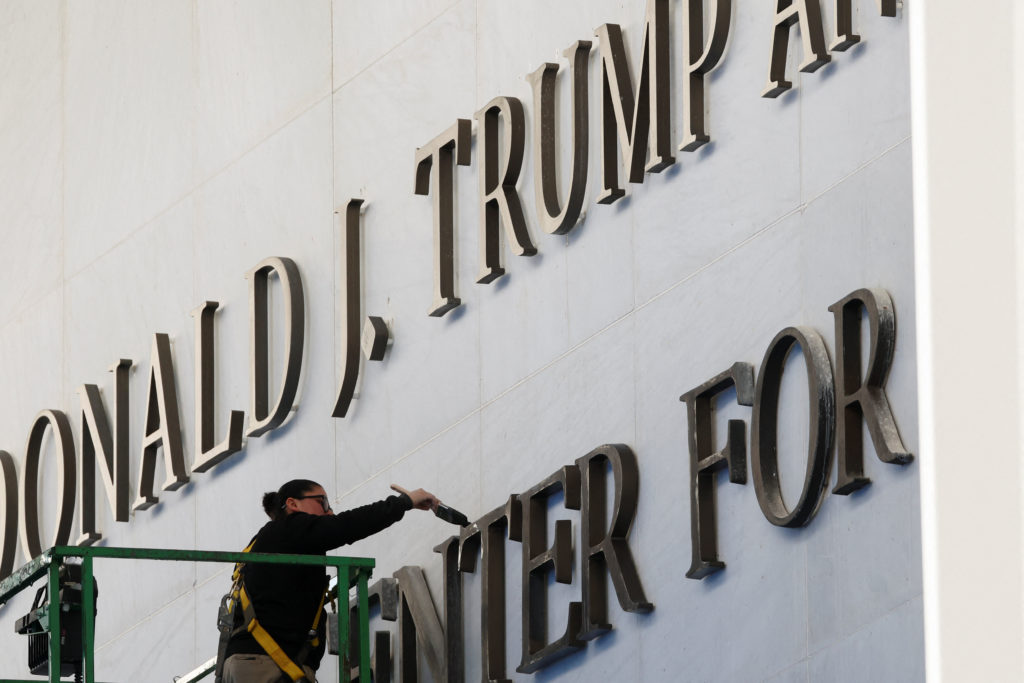
The board’s Dec. 18 vote to rechristen the venue the “Donald J. Trump and John F. Kennedy Memorial Center for the Performing Arts” was announced with fanfare by White House press secretary Karoline Leavitt, who cited Mr. Trump’s purported role in “saving the building” through financial and reputational revitalization. New signage appeared almost overnight, prompting outrage from Kennedy family members, including Jack Schlossberg, a grandson of the former president, who decried it as an erasure of legacy.
Ms. Beatty, an ex-officio board member as a congressional appointee, filed suit two days later, arguing that federal law vests sole authority to rename the center in Congress. In her complaint, she described the board meeting — held virtually and, unusually, at a private residence in Palm Beach, Fla. — as rigged, claiming her microphone was muted when she attempted to object. “This is a flagrant violation of the rule of law,” Ms. Beatty said in a statement, echoing sentiments from legal experts who noted precedents requiring congressional approval for changes to federally designated memorials.
Judge Roberts, in a 28-page opinion, agreed that Ms. Beatty had demonstrated a likelihood of success on the merits, writing that the board’s action “appears to contravene the plain text of the statute establishing the center as the John F. Kennedy Center for the Performing Arts.” He ordered the signage removed pending a full trial, cautioning that irreparable harm could occur to the institution’s historical integrity. The Justice Department, representing the administration, vowed an immediate appeal, with a spokesman calling the ruling “judicial overreach into cultural stewardship.”
The decision landed amid heightened chatter about the Epstein case, as the Justice Department continued staggered releases of documents under a new transparency law signed by Mr. Trump himself. Recent batches included photographs and flight logs mentioning prominent figures, though Mr. Trump’s appearances were largely in previously public materials from social events decades ago. The president has repeatedly denied any wrongdoing, emphasizing a fallout with Epstein years before the financier’s 2008 conviction.
Insiders at the Kennedy Center described a tense atmosphere in recent weeks. Major donors, wary of politicization, have reportedly withheld pledges, and attendance at events has dipped, with nearly half of tickets for some performances going unsold. Board members loyal to Mr. Trump defended the renaming as recognition of his investments in renovations and programming shifts away from what they called “woke” content. Yet even some Republican lawmakers expressed private unease, with one senior aide noting that linking the move to the Epstein furor — however tangentially — risked unnecessary backlash.
Public reaction online was swift and polarized. Supporters hailed the original renaming as a bold affirmation of Mr. Trump’s cultural impact; detractors flooded social media with memes superimposing the president’s name over historical monuments. Kennedy family statements condemned the episode as disrespectful to a national memorial born from tragedy.
As workers prepared to dismantle the new lettering under court order, the episode underscored the broader tensions of Mr. Trump’s second term: a drive to imprint his legacy on public institutions colliding with legal safeguards and bipartisan traditions. With appeals looming and Congress unlikely to act soon on formal renaming legislation, the Kennedy Center’s marquee — for now — will revert to honoring only one president.
The fallout continues to unfold, with potential implications for other Trump-initiated rebrandings, including recent moves involving federal buildings and initiatives. For a venue dedicated to the performing arts, the real drama, it seems, is playing out offstage.