By XAMXAM
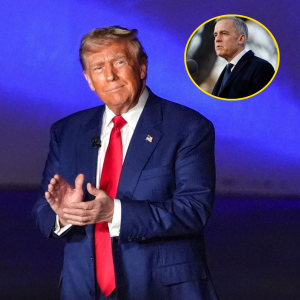
The moment unfolded in real time, unfiltered and unmistakably modern. During a televised press appearance in Florida, Donald Trump turned toward the cameras and delivered a withering critique of Keir Starmer, Britain’s Labour leader. Within seconds, what had been a routine exchange hardened into a political spectacle, reverberating across Washington, Westminster, and the digital platforms that now function as the world’s largest amplifiers of power.

Television has long been a stage for political theater, but this encounter underscored how little distance now exists between domestic messaging and international consequence. Trump’s comments were not hedged by diplomatic language or softened by ambiguity. They were direct, personal, and designed for maximum visibility. In an era when authority is increasingly asserted through attention rather than office, the distinction between a former president and a sitting one can blur quickly.
Starmer, who has built his public image around legal precision and measured restraint, found himself cast into a role he did not choose: the target of an American political narrative playing out live before a global audience. Trump accused him of weakness on borders, crime, and Britain’s post-Brexit trajectory—claims familiar to British voters, but newly potent when delivered from across the Atlantic with the force of Trump’s media presence.
What made the moment consequential was not only its content, but its context. The remarks came at a time when Britain’s political landscape is unsettled, with voters expressing fatigue over economic strain, migration pressures, and questions of national direction. Trump’s intervention, though external, landed squarely within those domestic anxieties, reinforcing themes already circulating in British political debate.
For Starmer and the Labour Party, the immediate challenge was one of response—or the lack of it. The absence of an instant rebuttal allowed Trump’s framing to dominate headlines and social feeds for hours, then days. In modern politics, silence is rarely neutral. It creates a vacuum that others are quick to fill, and in this case, opponents did so with enthusiasm.
Figures on the British right, including Nigel Farage, seized on the remarks as validation of long-standing critiques of Labour’s leadership and worldview. Brexit-era arguments about sovereignty and alignment with Brussels were revived, now bolstered by an American voice with proven influence among populist voters. Even politicians uneasy with Trump’s style privately acknowledged the reach of his words.

Yet the episode was not merely a problem for Labour. It also raised uncomfortable questions about the future of the so-called “special relationship” between the United States and the United Kingdom. For decades, that relationship has rested on shared strategic interests, institutional continuity, and a degree of diplomatic restraint. Trump’s public dismissal of a potential British prime minister suggested a different model—one in which alliances are conditional, transactional, and openly shaped by ideological alignment.
Political analysts noted that Trump’s attack appeared less spontaneous than strategic. It signaled to British voters—and to Washington observers—that a Starmer-led government might face a colder reception from an America increasingly skeptical of centrist liberalism abroad. In that sense, the clash functioned as a warning shot, not just to Starmer, but to any leader perceived as out of step with the populist-nationalist current reshaping parts of the West.
The media response magnified the impact. Clips circulated endlessly, stripped of nuance and replayed for effect. Commentators dissected tone and posture as much as policy. Polling in the days that followed suggested a measurable dip in Starmer’s personal ratings, particularly among older voters and those in politically volatile constituencies. Perception, once formed, proved difficult to dislodge.
At the same time, critics of Trump framed the episode as foreign interference, an inappropriate intrusion into Britain’s democratic process. They argued that the spectacle illustrated the dangers of a politics driven by provocation rather than substance, where complex national choices are reduced to viral moments. The criticism was sharp, but it struggled to match the emotional force of the original exchange.
Beyond personalities, the clash revealed something deeper about contemporary power. Leadership is now tested not only in parliaments and polling booths, but in the ability to withstand sudden, globalized scrutiny. A single unscripted moment can reorder narratives that months of disciplined messaging struggle to build. For Starmer, the test ahead is not simply to rebut Trump’s words, but to convince voters that restraint can coexist with strength.

For Trump, the episode reinforced his enduring ability to shape conversations far beyond America’s borders. Even out of office, his voice remains a destabilizing force—one that can unsettle allies and reframe debates with remarkable speed. That reality is now fully absorbed into the calculations of politicians on both sides of the Atlantic.
The live television rebuke will not, by itself, determine Britain’s political future. But it has altered the terrain on which that future will be contested. In a world where diplomacy, media, and populism increasingly overlap, the boundaries of national politics are more porous than ever. What was once said behind closed doors is now performed in public—and the consequences, like the audience, are global.