💥MARK KELLY CONFRONTS WHITE HOUSE THREATS — SENATOR STANDS FIRM AS MILITARY LOYALTIES ARE TESTED⚡
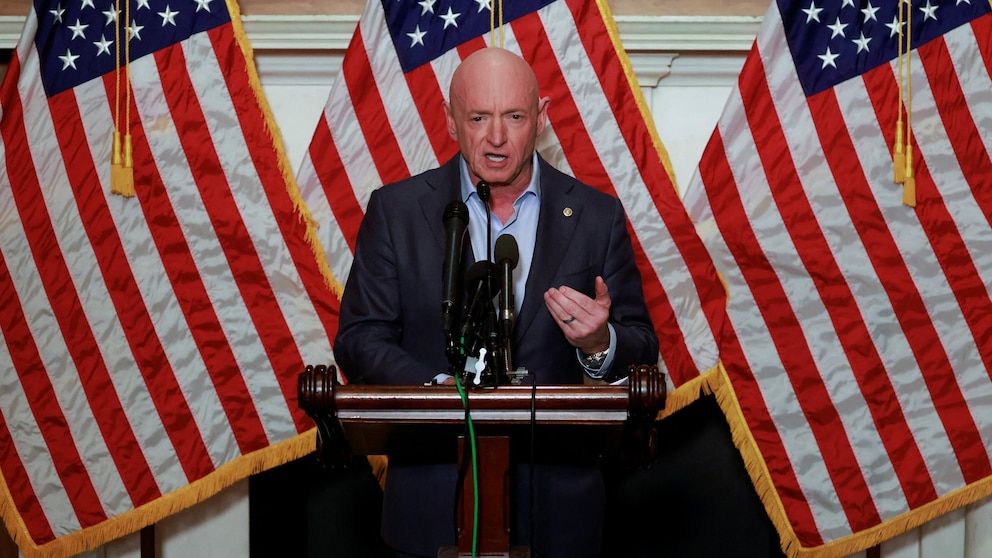
In a moment that has reverberated across political and military circles, Senator Mark Kelly, a former Navy pilot and decorated astronaut, has emerged as a flashpoint in a growing confrontation between Congress, the military, and the White House. The catalyst: a video recorded by Kelly reminding service members that their oath is to the Constitution, not the president, and that they are legally and ethically required to resist unlawful orders.

What might have been a routine statement of military principle quickly ignited a political storm. According to multiple sources, Secretary of Defense Pete Hegseth ordered an escalation of investigations into the senator, framing the message as potentially “inappropriate” and signaling to the armed forces that dissent could carry consequences. For Kelly, this is not just a personal attack; it is a test of the independence and integrity of America’s professional military, and the reaction has alarmed veterans, current service members, and lawmakers alike.
“It’s unprecedented to see a sitting U.S. senator targeted in this manner for simply reiterating basic military ethics,” Kelly told reporters. “This is about more than me. It’s a message to active duty personnel, retired veterans, and federal employees: speak out against this administration at your peril.”
Veterans and military analysts agree that such a climate risks eroding the apolitical ethos that has long been a cornerstone of the United States armed forces. Ken Harbaugh, a former Navy pilot who now runs the Midas Touch Network, described the scenario as a stark departure from standard military leadership. “For any leader to say, ‘Shut up. You’re not allowed to ask questions, carry out the order,’ is the opposite of leadership,” Harbaugh said. “It’s nuts. It’s dangerous. We’ve been lucky more Americans haven’t been harmed by this level of incompetence.”
The reaction in the Pentagon appears cautious but unsettled. Insiders report unease among senior staffers, who are reportedly concerned about the politicization of the military and the precedent set by punitive measures against a lawfully elected senator. “People are talking behind the scenes,” said one source familiar with Pentagon discussions, “but they’re worried about retaliation if they speak publicly.” The sense of a chilling effect on open discourse within the military has added to growing concern among congressional observers and watchdog groups.
Kelly’s video also comes against the backdrop of other controversial moves by the administration, including rhetoric about designating trafficking organizations as “naroterrorists” and framing domestic drug issues as threats akin to weapons of mass destruction. Analysts and legislators warn that such language blurs the line between lawful enforcement and military action, raising legal and ethical concerns about unilateral presidential authority. “This is not law enforcement; it is a military operation without due process,” Kelly explained. “Using the armed forces in this way is fundamentally un-American.”
The personal stakes for Kelly are high. He has faced threats and intimidation in response to his statements, echoing a broader pattern of attacks against senators and public officials who challenge the administration. Harbaugh and other veterans have rallied in support, underscoring the unusual circumstance of a former astronaut and decorated military officer being confronted for advocating adherence to the law. “We’re here for him,” said Harbaugh. “He’s standing up not just for himself, but for every service member committed to the Constitution.”
Political analysts caution that the broader implications extend beyond Kelly’s personal ordeal. They warn that targeting officials for lawful speech risks undermining democratic norms, emboldening the administration to push further against congressional oversight and public accountability. The upcoming 2026 elections are likely to test whether wealthy backers of the administration can continue to shape political power in ways that sidestep public scrutiny, with Kelly’s situation serving as a high-profile warning.
For now, the senator has remained resolute, emphasizing that his obligation to the Constitution supersedes any partisan threat or personal risk. “Our military is strong because it is professional, apolitical, and dedicated to the citizens it serves,” Kelly said. “We cannot allow anyone to undermine that integrity.”
As the political and military fallout continues, one thing is clear: the confrontation over loyalty, lawful orders, and the independence of America’s armed forces is far from over. Senators, veterans, and ordinary Americans alike are watching closely, aware that the outcome of this standoff could set lasting precedents for the limits of executive authority and the protection of constitutional principles.
Whether Kelly’s stance will galvanize colleagues or inspire broader resistance remains to be seen. What is certain is that his bold public message has captured the nation’s attention and thrust the fundamental question of civilian-military relations into the spotlight, ensuring that the drama surrounding loyalty, legality, and political power will continue to unfold in the weeks and months ahead.