What began as a routine diplomatic appearance escalated into one of the most consequential flashpoints in modern Canada–U.S. relations, exposing how fragile sovereignty can become when economic dependence collides with geopolitical pressure. At the center of the controversy was a blunt warning delivered publicly by the U.S. ambassador to Canada—language that many Canadian officials and observers interpreted not as advice between allies, but as an ultimatum that crossed a long-standing red line.

According to diplomats familiar with the situation, the warning linked Canada’s defense procurement decisions directly to its access to U.S. trade and markets. In diplomatic terms, this was extraordinary. Defense cooperation between the two countries has historically been framed around NATO interoperability and shared security interests, not economic punishment. The moment the ambassador made the connection explicit, it triggered alarm inside Ottawa. What had once been assumed to be a partnership of equals suddenly appeared conditional, transactional, and coercive.
The immediate issue revolved around Canada’s fighter jet replacement program, often portrayed publicly as a technical debate between platforms. Yet insiders argue that focusing solely on aircraft specifications misses the deeper issue. The controversy exposed how defense procurement can become a tool of leverage, binding a country’s military readiness, industrial base, and even foreign policy flexibility to the approval of a more powerful ally. For Canada, the realization was unsettling: a single procurement decision could ripple outward into trade, employment, and economic stability.

Behind closed doors, senior officials began asking questions that had rarely been voiced so openly. How independent can a country be if its air force relies on software, maintenance systems, and supply chains controlled abroad? What happens if political relations deteriorate and access to updates, parts, or approvals is delayed or denied? These concerns were no longer theoretical. They were now tied to a very real diplomatic threat delivered on a global stage.
The response from Ottawa was notably restrained. There were no fiery press conferences or public denunciations. Instead, Canada went quiet. That silence, sources say, was strategic. Rather than escalating rhetorically, the government began reassessing long-standing assumptions about automatic alignment with Washington. Officials quietly examined alternatives—not only in defense procurement, but across trade, industrial policy, and diplomatic partnerships.
This recalibration reflected a broader shift. For decades, Canada’s economic and security architecture has been deeply integrated with that of the United States. While this integration brought prosperity and stability, it also created vulnerabilities. When trade access or defense cooperation is framed as a privilege rather than a mutual interest, dependence becomes a liability. The ambassador’s remarks forced that reality into the open.

Internationally, the episode did not go unnoticed. Allies in Europe and Asia watched closely, recognizing familiar patterns of pressure that smaller and mid-sized states often face when navigating relationships with superpowers. Quiet conversations intensified about diversification, technology transfer, and the importance of retaining national control over critical systems. Canada’s situation became a case study in how modern sovereignty is tested not by tanks at the border, but by contracts, clauses, and conditional access.
Domestically, the incident sparked a more subtle but powerful shift in public discourse. Polling and media commentary suggested growing discomfort with the idea that Canada’s economic well-being could be leveraged to enforce political compliance. While opinions differed on the best path forward, there was increasing consensus on one point: decisions of such magnitude should be made in Ottawa, not dictated from abroad.
In the months that followed, Canada began exploring quieter forms of resistance. Trade diversification talks accelerated. Industrial policy discussions emphasized domestic capacity and strategic autonomy. Defense conversations expanded beyond hardware to include questions of control, maintenance, and long-term independence. None of these moves were framed as anti-American, but rather as pro-sovereignty.
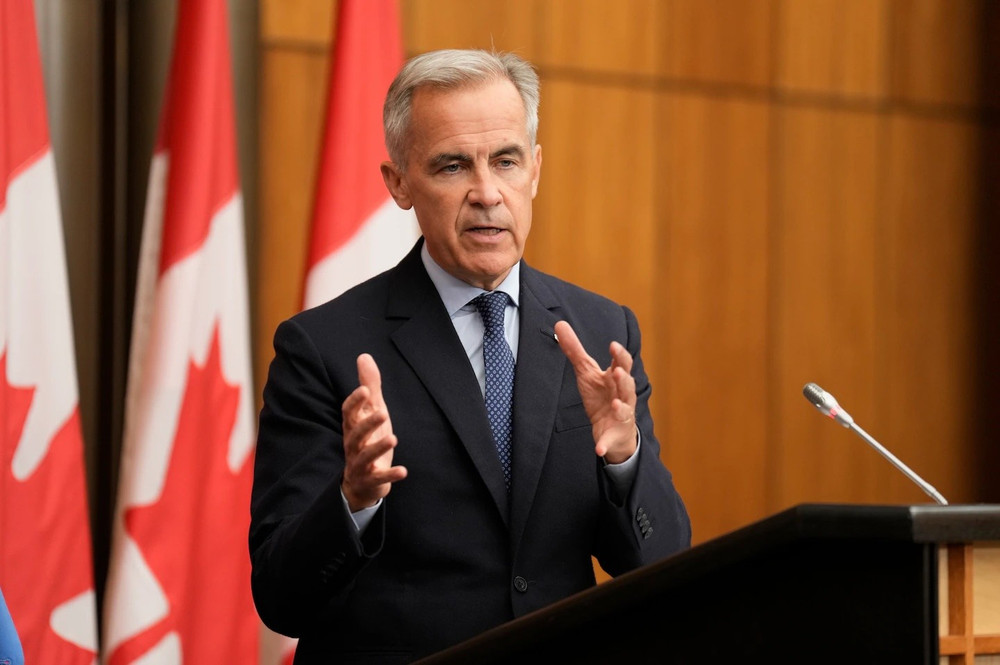
The ambassador’s warning was intended to force alignment. Instead, it achieved the opposite. By crossing a rhetorical and diplomatic red line, it exposed the asymmetry at the heart of the relationship and prompted Canada to reconsider how much dependence was too much. The shift was not loud, dramatic, or immediate—but it was real.
Canada did not announce a rupture. It did not grandstand. It simply stopped playing along with assumptions that no longer served its long-term interests. In doing so, it signaled a quiet but meaningful change: sovereignty, once taken for granted, was being actively re-examined—and carefully defended—in a world where alliances are increasingly shaped by leverage rather than trust.