A Sudden Fall for Mike Johnson Reveals a Deeper Rift Between Civilian Power and the Military
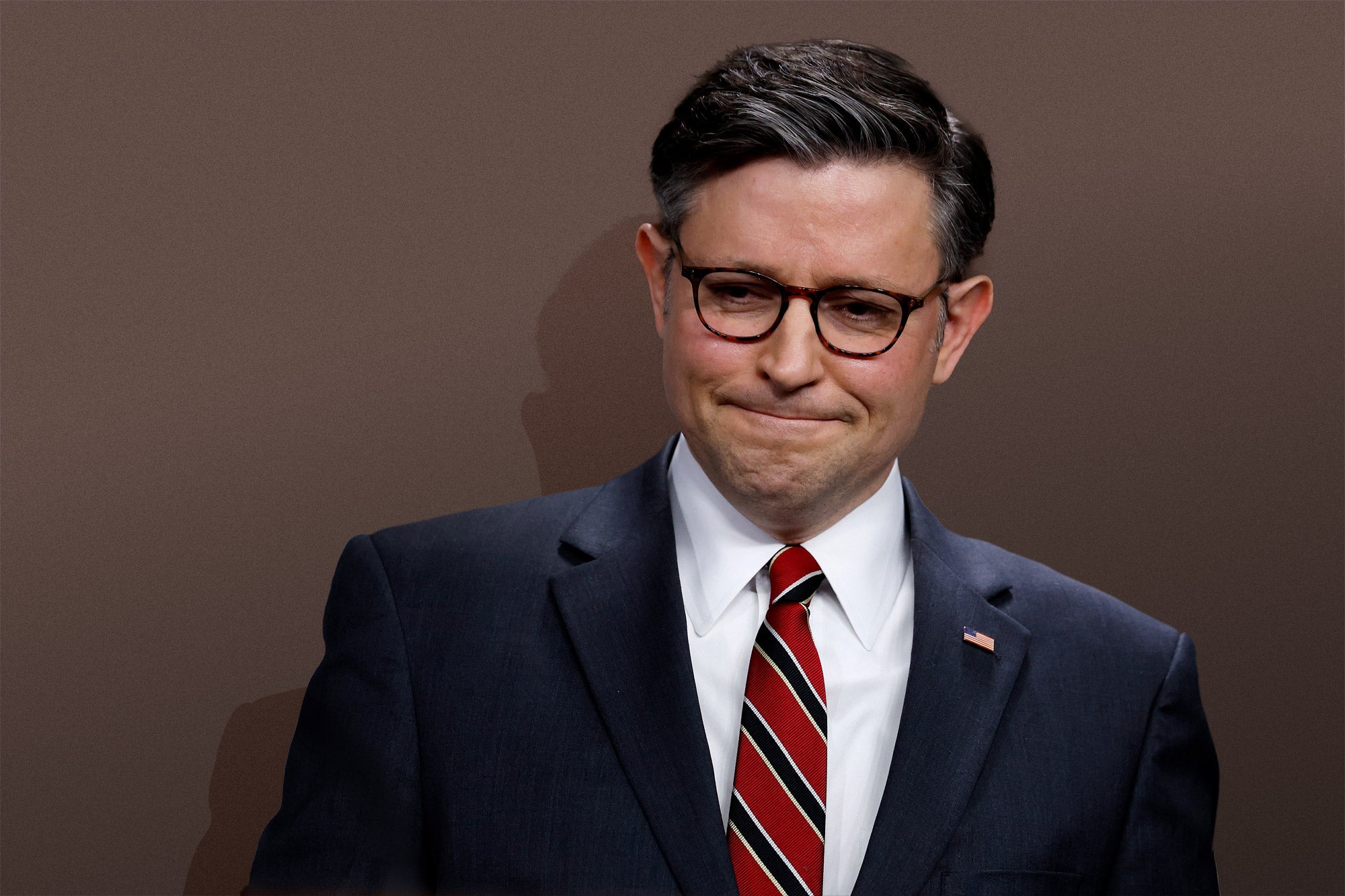
Washington has seen no shortage of abrupt political endings, but the removal of Mike Johnson as Speaker of the House landed with a particular chill. It was not merely the fall of a party leader undone by internal arithmetic. It was the public exposure of a widening fracture between congressional authority and a national security establishment increasingly willing to signal discomfort — even defiance — in unusually visible ways.

Johnson’s tenure, brief and turbulent, had always been defined by fragility. He inherited a divided House, an emboldened executive branch, and a moment of global instability that placed extraordinary pressure on civilian oversight of military power. What few expected was that his unraveling would coincide with a cascade of criticism — overt and implied — from current and former military leaders, many of whom had previously stayed scrupulously silent.
The immediate cause of Johnson’s removal was procedural: a revolt inside his own conference, fueled by legislative paralysis and eroding confidence. But the deeper story, now being pieced together by lawmakers and defense officials alike, suggests something more profound. Behind closed doors, concerns had been mounting over Johnson’s handling of military-related legislation, his public alignment with executive rhetoric, and what several insiders described as a failure to assert Congress’s constitutional role in matters of war and force.
Those concerns moved into the open over the past two weeks. Retired generals, former defense secretaries, and senior national security figures began appearing on television and at public forums, speaking with unusual bluntness. While few mentioned Johnson by name at first, the implication was unmistakable: civilian leadership, they warned, was drifting away from constitutional discipline and toward personalization of power.
The shift was striking. American military culture has long prized political neutrality, especially in public. Criticism of elected officials, when it comes, is typically measured, indirect, and rare. That norm appeared to fray as the administration escalated overseas operations without clear congressional authorization, while Johnson — once seen as a potential institutional counterweight — remained largely aligned or silent.
Several defense officials, speaking on background, said the breaking point came when Johnson declined to press for clarity on the administration’s strategic “end state” in ongoing military actions abroad. One senior officer described it as “a moment when Congress simply stopped asking the most important question.”
“What are we trying to achieve?” the officer said. “Without that, everything else is noise.”
As the criticism grew louder, Johnson’s position weakened. Lawmakers who had previously defended him began to distance themselves, citing not ideology but governance. The Speaker, they argued privately, had failed to protect the House as a coequal branch at a time when executive power — particularly military power — was expanding with little resistance.
The final days unfolded quickly. Emergency meetings. Quiet calls from donors. Warnings from senior members that the votes were no longer there. When Johnson was formally removed, the announcement was procedural, almost antiseptic. But the reaction was anything but.
Within hours, clips of retired officers denouncing “military politicization” and “constitutional erosion” were circulating widely online. Analysts debated whether the moment marked a dangerous politicization of the armed forces — or a rare, reluctant intervention by figures who believed silence had become irresponsible.
The White House sought to downplay the episode, framing Johnson’s removal as an internal congressional matter. Yet administration officials privately acknowledged concern about the optics. The image of a Speaker falling amid visible military unease is not one modern American politics is accustomed to managing.
What comes next remains uncertain. Johnson’s successor will inherit not only a divided chamber, but an atmosphere of mistrust between institutions that are supposed to operate in careful balance. Lawmakers across parties are now quietly asking whether the norms that once kept military leaders out of political crises are still holding — or whether they are being strained by the concentration of power at the top.
For Johnson himself, the ending was abrupt, even anticlimactic. There was no dramatic speech, no defiant stand. Just a gavel passed on and a Capitol already looking ahead.
But for Washington, the episode may linger. It has raised uncomfortable questions about accountability, silence, and the limits of loyalty — questions that do not disappear simply because one man has lost his job.
In a city built on precedent, this was a break from script. And the reverberations are still being felt.