Judges Tighten the Screws on Trump as Legal Risks Deepen
Donald J. Trump is confronting an increasingly perilous legal landscape, one in which judges are no longer content to issue warnings or levy fines, and prosecutors have left behind a detailed record that could shadow him long after his presidency ends.
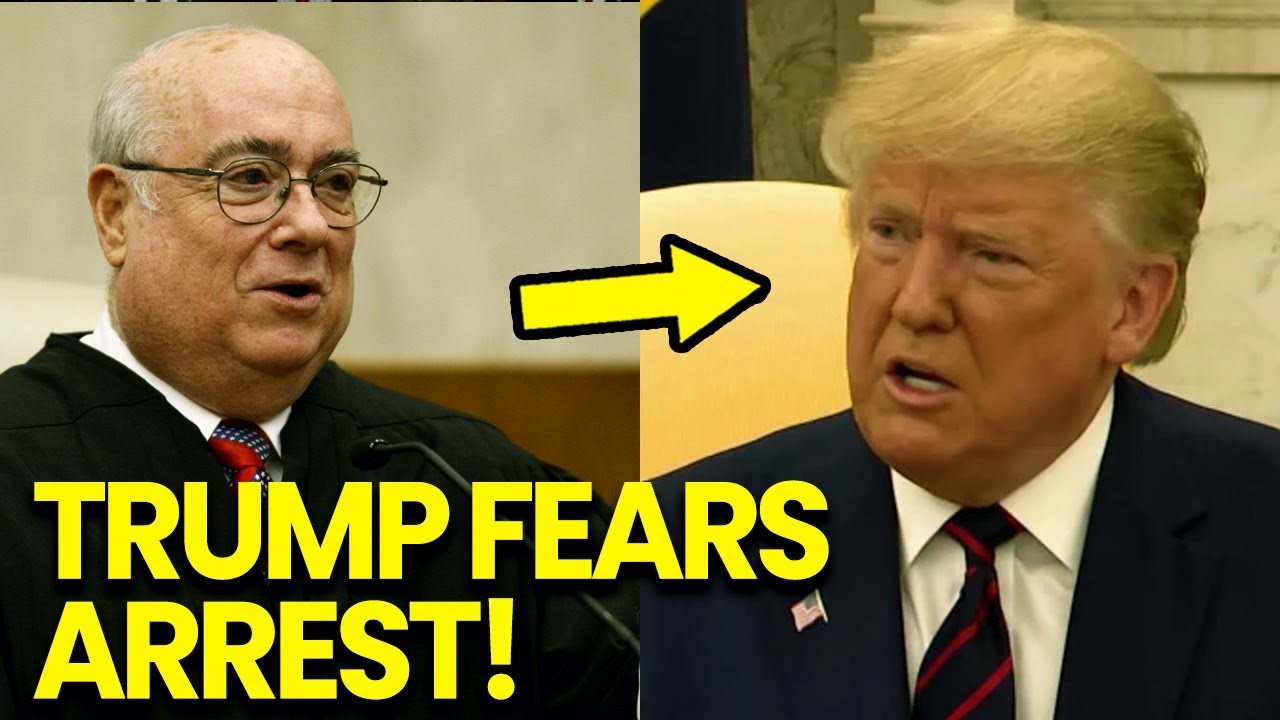
In New York, the most immediate threat comes from the criminal hush-money case, where Judge Juan Merchan has found Mr. Trump in contempt of court 10 times for violating a gag order that bars him from attacking jurors, witnesses, prosecutors and court staff. The judge initially imposed monetary fines, but in his most recent ruling he made clear that fines had failed to deter the former president’s conduct. Writing on the record, Judge Merchan stated that further violations of the court’s lawful orders “will be punishable by incarceration.”
That language was not rhetorical. According to reporting by CNN and others, court officers and the Secret Service have already discussed contingency plans for the unprecedented scenario of holding a former — and possibly future — president in custody, even if only briefly, at a courthouse. Those discussions have focused on basic but consequential questions: where Mr. Trump would be held, how Secret Service protection would function in a detention setting and what security arrangements would be required.

The existence of such planning underscores how seriously the court views the threat of jail. Judges do not typically authorize logistical preparations for sanctions they do not intend to use.
Mr. Trump, however, has continued to test the limits. Despite repeated warnings, he has persisted in public attacks on figures connected to the case, behavior that prosecutors argue undermines the integrity of the proceedings. Legal experts say an ordinary defendant would likely have been jailed for contempt long before a 10th violation. Mr. Trump’s unique status has brought patience, but that patience appears to be nearing its end.
Beyond New York, Mr. Trump’s longer-term exposure is being shaped by decisions in federal court that preserve the possibility of future prosecution once he is no longer president.
In his final report to Congress, Jack Smith, the former special counsel who oversaw the federal investigation into efforts to overturn the 2020 election, stated unequivocally that the evidence gathered would have been sufficient to “obtain and sustain a conviction at trial” on charges including conspiracy to defraud the United States and obstruction of an official proceeding. Mr. Smith emphasized that it was not a lack of proof that halted the case, but the Justice Department’s policy against prosecuting a sitting president, combined with delays.
That conclusion directly undercuts Mr. Trump’s repeated claims that the dismissal of the case amounted to exoneration. According to Mr. Smith’s account, the case was trial-ready, supported by evidence showing that Mr. Trump knew he had lost the election, promoted false claims of fraud anyway and pursued schemes — including the use of fake electors — aimed at blocking the peaceful transfer of power.
When Judge Tanya Chutkan dismissed the federal election-subversion case, she did so “without prejudice,” a crucial legal distinction. A dismissal without prejudice allows charges to be refiled in the future, unlike a dismissal with prejudice, which would permanently bar prosecution. Judge Chutkan explicitly noted that presidential immunity is temporary and expires when a president leaves office. Her language made clear that the dismissal reflected Mr. Trump’s status, not a judgment on the merits of the case.
Legal scholars say that wording was deliberate. The evidence remains. The legal theories remain. The case files remain intact, awaiting a moment when presidential immunity no longer applies.
Taken together, the New York contempt rulings and the preserved federal record create a multi-layered legal risk for Mr. Trump. In the short term, another gag-order violation could result in jail time. In the medium term, sentencing in the hush-money case — where Mr. Trump was convicted on 34 felony counts — has been delayed but not erased by his return to office. In the long term, federal prosecution related to Jan. 6 could again become viable once he leaves the presidency.
The pattern across cases has been consistent: Mr. Trump has adopted a strategy of defiance, attacking judges and prosecutors, and testing whether institutions will ultimately back down. That approach, familiar from his business and political career, appears to be faltering in courtrooms governed by rigid rules and written records.
Publicly, Mr. Trump continues to portray himself as the victim of politically motivated prosecutions. Privately, according to allies and observers, there is growing recognition that the risks are real. The courts have documented his conduct in painstaking detail, imposed escalating sanctions and preserved pathways for accountability in the future.
For now, the presidency remains Mr. Trump’s strongest shield. But it is, by definition, temporary. When it ends — whether in four years or sooner — the legal protections tied to the office will expire with it. What remains is a paper trail of judicial warnings, prosecutorial findings and preserved charges that suggest Mr. Trump’s legal battles are far from over.
Whether he can alter his behavior enough to avoid immediate consequences, and whether future prosecutors will revive dormant cases, are open questions. What is no longer in doubt is that the judiciary has signaled it is prepared to act — and that the margin for further defiance has grown vanishingly small.