Texas Sends a Shockwave Through the Republican Map as an Emergency Election Signals a Shifting Ground
The political tremor that rippled through Texas on Tuesday night was not the kind Republicans had planned for. In what party strategists privately described as a “containment race,” voters instead delivered a sharp warning — one that echoed far beyond county lines and straight into the national conversation about 2026 and 2028.
The emergency election loss for Republicans landed at a moment of growing unease inside the party, already strained by internal divisions, demographic shifts, and mounting questions about leadership. While the race itself was local, the implications were unmistakably national.
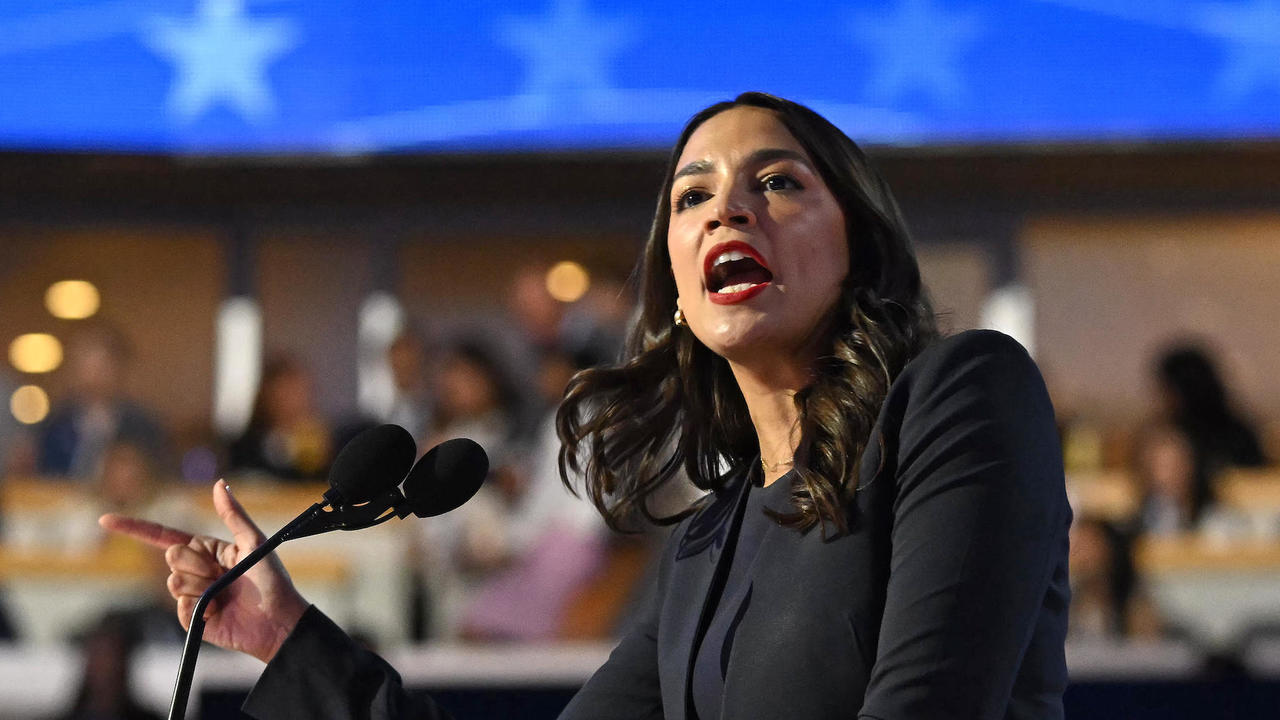
At the center of the conversation stands Alexandria Ocasio-Cortez, whose name surfaced repeatedly throughout the evening — not because she was on the ballot, but because she represents the direction many Democrats now believe the country may be drifting toward. When asked about an unverified early poll suggesting she held a narrow edge over Vice President JD Vance in a hypothetical 2028 matchup, Ocasio-Cortez dismissed the numbers as premature — then confidently added that she believed she would defeat him.
Her remarks, delivered with characteristic bluntness, reignited a broader debate within Democratic circles about generational change, electability, and the party’s future leadership. Supporters pointed to her evolution from insurgent freshman to seasoned lawmaker, while skeptics quietly returned to a familiar concern: whether the country is ready to elect a woman — particularly one so openly confrontational — to the presidency.

Yet Texas, long seen as an immovable Republican fortress, is increasingly complicating those assumptions.
That complication has a name: Jasmine Crockett.
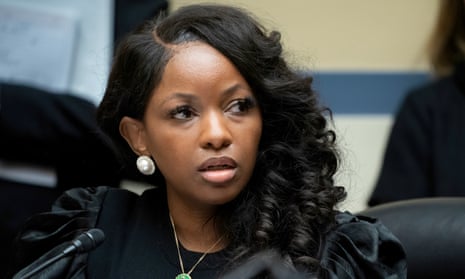
The Texas congresswoman, now a frontrunner in the state’s upcoming Senate race, has rapidly emerged as one of the most closely watched Democratic candidates in the country. Holding a commanding financial advantage over her primary rivals, Crockett has embraced a campaign built on broad outreach and unapologetic confrontation — a strategy that appears to be unsettling Republican leadership.
Vice President Vance’s remarks about Crockett at a conservative youth conference — comments widely criticized as racially charged — only amplified her national profile. Crockett responded forcefully, framing the attack as an attempt to energize a shrinking base rather than engage on substance. Her rebuttal shifted quickly to policy, where she accused Texas Republicans of abandoning working families in favor of billionaires and corporate interests.
Healthcare, in particular, has become a flashpoint. Crockett pointed to recent votes by Texas senators opposing the extension of Affordable Care Act subsidies — a move she said could push millions off insurance in a state already burdened with one of the nation’s highest uninsured populations. She also warned of broader fallout from looming federal cuts, framing the issue not as partisan theater but as a looming economic emergency.
Her platform extends further: raising the federal minimum wage, protecting small businesses squeezed by tariff policies, and imposing ethics oversight on the Supreme Court — a topic gaining renewed traction amid rising public distrust in institutions.
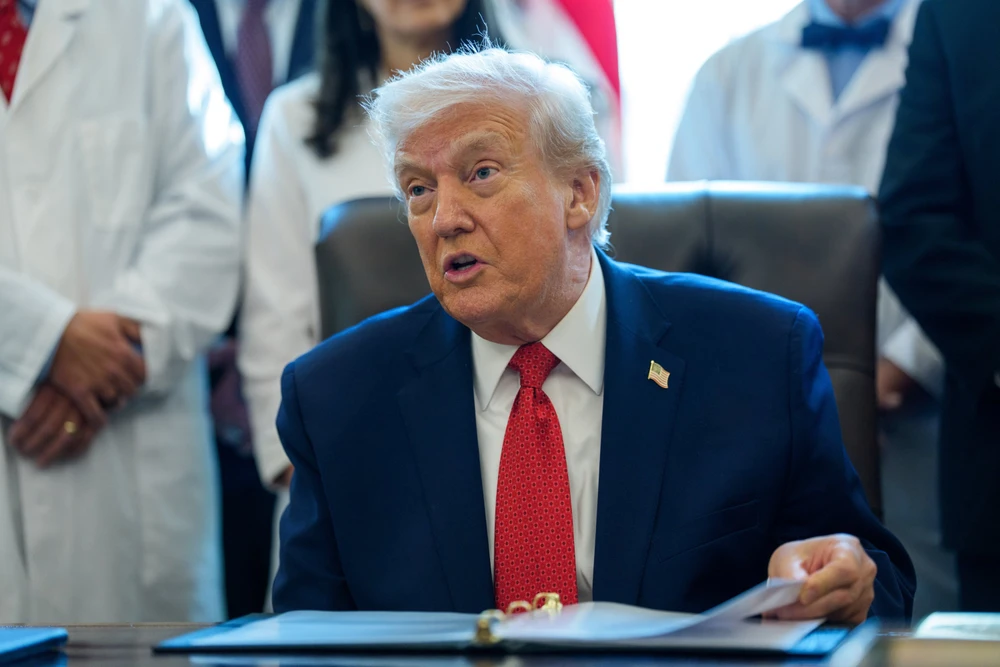
All of this unfolds against a backdrop of growing Republican fragmentation. While allies of T.r.u.m.p continue to insist he remains the unquestioned leader of the party, evidence of strain is mounting. Lawmakers have increasingly defied him on key issues, including long-sealed federal files and foreign policy disputes, signaling that loyalty is no longer automatic.
Perhaps most striking are new polling trends among Hispanic voters. Once a demographic Republicans had made notable gains with, recent data suggests a dramatic reversal — with approval of T.r.u.m.p plunging and disapproval surging by wide margins. In Texas, where Hispanic voters play a decisive role, the shift could prove decisive as early as the 2026 midterms.
Democrats, for their part, appear newly energized — less by ideology than by attitude. As one analyst noted, candidates like Crockett are not necessarily defined by progressive labels, but by a reputation for fighting — a trait increasingly prized by a restless electorate.
The Texas election may not have rewritten the political map overnight, but it cracked it just enough to let something through: uncertainty for Republicans, momentum for Democrats, and a growing sense that old assumptions no longer hold — a realization now spreading rapidly online as the internet continues to erupt.