Trump’s Tariffs Threaten U.S. Fast-Food Fries as Canadian Processors Eye Asian Markets
OTTAWA — President Donald J. Trump’s escalating tariffs on Canadian goods, including potatoes, have prompted a quiet but significant reassessment among Canada’s frozen french fry producers, who supply the vast majority of the product consumed by American fast-food chains. Industry leaders are signaling reduced contract volumes for 2025 and exploring alternatives in Asia, raising the prospect of supply constraints and higher prices for U.S. consumers.
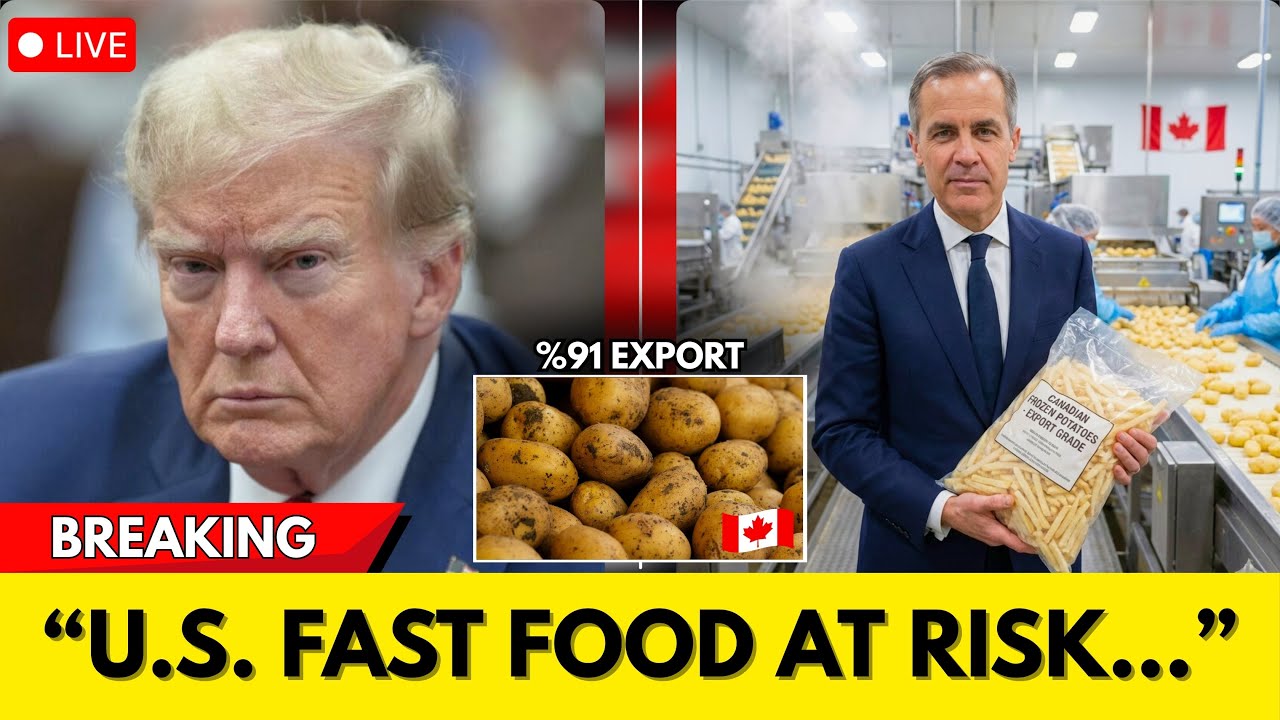
Canada exported $2.7 billion in frozen french fries in the 2023-24 marketing year, with 91 percent — $2.4 billion — destined for the United States, according to Agriculture and Agri-Food Canada. That dominance reflects decades of integration: U.S. chains like McDonald’s, Wendy’s, and Burger King rely on Canadian processors — McCain Foods, J.R. Simplot, and Cavendish Farms — for consistent, high-volume supply tailored to quick-service specifications.
The vulnerability emerged as Mr. Trump imposed or threatened duties on potatoes, citing national security and trade imbalances. Processors in Alberta, Manitoba, and Prince Edward Island, which account for much of Canada’s 5.8 million metric tons of annual potato production, face margins squeezed by a potential 25 percent tariff. “Trade uncertainty is forcing us to reconsider exposure to U.S. markets,” one executive told industry publication The Western Producer, noting talks with buyers in Japan, South Korea, and the Philippines.

U.S. imports of frozen potato products hit record levels in 2024, with Canada providing 86 percent. Domestic production cannot quickly scale to replace losses: building new facilities requires years and hundreds of millions in investment. European suppliers face high transatlantic shipping costs, rendering them uncompetitive for bulk orders.
Analysts warn even a 10 percent diversion of Canadian supply could tighten U.S. markets. “Fast-food menus are built around reliable fry availability,” said Kevin Grier, a market analyst. “Constraints mean higher costs passed to consumers or menu adjustments — neither appealing in an inflationary environment.”
The shift aligns with Prime Minister Mark Carney’s diversification push. Ottawa’s “Buy Canadian” procurement policy and $6 billion export infrastructure investment aim to double non-U.S. exports by 2035. Asian demand grows with expanding middle classes; Japan already ranks as Canada’s second-largest fry market.

U.S. border states feel early effects: Canadian tourism spending, a $20.5 billion contributor supporting 140,000 jobs, has softened amid strained relations. A Democratic Joint Economic Committee report highlighted 20 percent drops in crossings to Maine and ferry traffic to Bar Harbor.
Industry data show processors already trimming 2025 acreage contracts, citing tariff risks alongside surplus from 2024 harvests. “We’re not panicking, but we’re planning,” said a Manitoba grower. Redirected volumes need not be dramatic to pressure U.S. chains reliant on just-in-time delivery.
For Americans, the impact could surface at the counter: pricier value meals or portion limits during peaks. Chains have few short-term alternatives; long-term, rebuilding domestic capacity faces regulatory and capital hurdles.
Mr. Trump’s tariffs, intended to bolster U.S. producers, risk the opposite: elevating Canadian leverage as processors hedge with stable partners. As one Alberta executive noted, “We built for North America; now we’re building for the world.” The humble french fry, emblem of cross-border integration, has become an unlikely flash point in a widening trade rift.