Trump Administration’s “State Secrets” Claim Sparks Legal Firestorm in Venezuelan Deportation Case
In a stunning courtroom confrontation that has drawn both legal scrutiny and public outrage, the Trump administration’s decision to invoke the so-called “state secrets” doctrine has placed the Department of Justice under intense pressure. The move comes amid litigation over the deportation of several hundred Venezuelan immigrants to El Salvador, a measure that a federal judge has repeatedly characterized as unconstitutional.

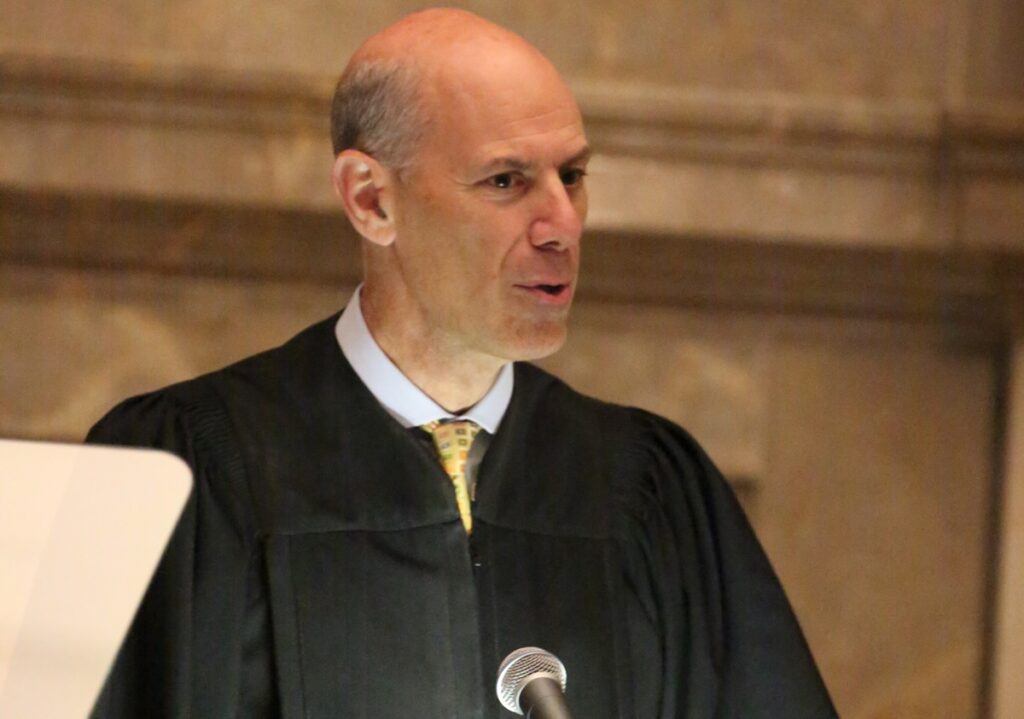
Judge James Boasberg, presiding over the case in the U.S. District Court for the District of Columbia, has consistently emphasized the fundamental rights of the migrants, noting that deportations without prior notice and a meaningful opportunity to be heard violate constitutional protections. In March, he issued a temporary restraining order requiring the administration to halt flights and ensure that the affected immigrants’ legal rights were honored. The Trump administration, however, has resisted compliance, raising questions about the limits of executive authority and the balance between national security and due process.
The administration’s justification—asserting that disclosure of flight schedules, passenger lists, and other details would compromise state secrets—has provoked disbelief from legal analysts. Much of the information in question is already known to flight crews, ground personnel, foreign authorities in El Salvador, and, remarkably, even publicly released video footage produced by the White House. “It strains credulity,” said one former federal prosecutor, “to suggest that publicly documented deportations could be treated as state secrets in order to avoid accountability to a federal judge.”
Federal judges, including Judge Boasberg, are equipped with mechanisms to handle sensitive information securely. Proceedings can be conducted in camera—behind closed doors—and ex parte, allowing judges alone to review classified or delicate materials without exposing them to public or opposing parties. These safeguards are designed precisely for situations where national security and legal oversight intersect. By declining to provide the requested information, the Trump administration is seen by many as attempting to sidestep judicial authority, raising the specter of both civil and criminal contempt charges.
Civil contempt allows a court to compel compliance through fines or other coercive measures, while criminal contempt addresses deliberate defiance of court orders, potentially resulting in personal penalties, including jail time. Legal experts suggest that the Trump administration’s strategy may backfire, as the court is empowered to pursue the full range of remedies when executive officials flout its directives. The stakes are heightened by reports that the Venezuelan immigrants in question are currently held in facilities in El Salvador, under arrangements reportedly involving financial compensation to the Salvadoran government. This arrangement has intensified concerns about human rights violations and the proper oversight of immigration enforcement.
The public reaction has been swift, fueled by social media dissemination of courtroom clips and commentary. Observers have noted that the administration’s invocation of state secrets—despite the availability of secure judicial procedures—appears designed more to delay scrutiny than to protect national security. Former officials and legal scholars alike have expressed astonishment at the apparent willingness to risk contempt proceedings to avoid providing basic operational details. As one commentator put it, “This is not a theoretical legal maneuver; it is a tangible affront to the rule of law.”
The case has broader implications beyond the immediate facts. It highlights enduring tensions between the executive branch and the judiciary, particularly in the context of immigration enforcement and constitutional protections. Moreover, it raises questions about the role of transparency in a democratic system, especially when publicized actions, such as deportation flights, are subsequently shielded from scrutiny under claims of secrecy. The juxtaposition of publicly documented events with an official refusal to provide information to the court underscores the extraordinary nature of the legal and ethical dilemmas involved.
Looking ahead, the Trump administration’s legal team faces a critical juncture. Judge Boasberg may issue a show-cause order, requiring the Department of Justice to justify its noncompliance and explaining why contempt sanctions should not be imposed. Such proceedings could mark a pivotal moment in defining the boundaries of executive discretion and judicial authority in cases involving sensitive national security claims.
For now, the case continues to unfold amid heightened public attention and a rapidly evolving legal landscape. Observers anticipate that forthcoming decisions could set important precedents, not only regarding the treatment of immigrant rights but also concerning the invocation of state secrets to avoid judicial accountability. The consequences for the administration and its legal team remain uncertain, but the episode has already sparked a wider debate about the limits of power, the sanctity of constitutional protections, and the role of courts in upholding the rule of law.