Late-night television has long occupied a peculiar space in American public life: part entertainment, part civic ritual. On a recent evening, that space narrowed even further when Stephen Colbert and Alec Baldwin appeared together, delivering a segment that underscored how deeply intertwined comedy, politics, and cultural power have become during the trump era.
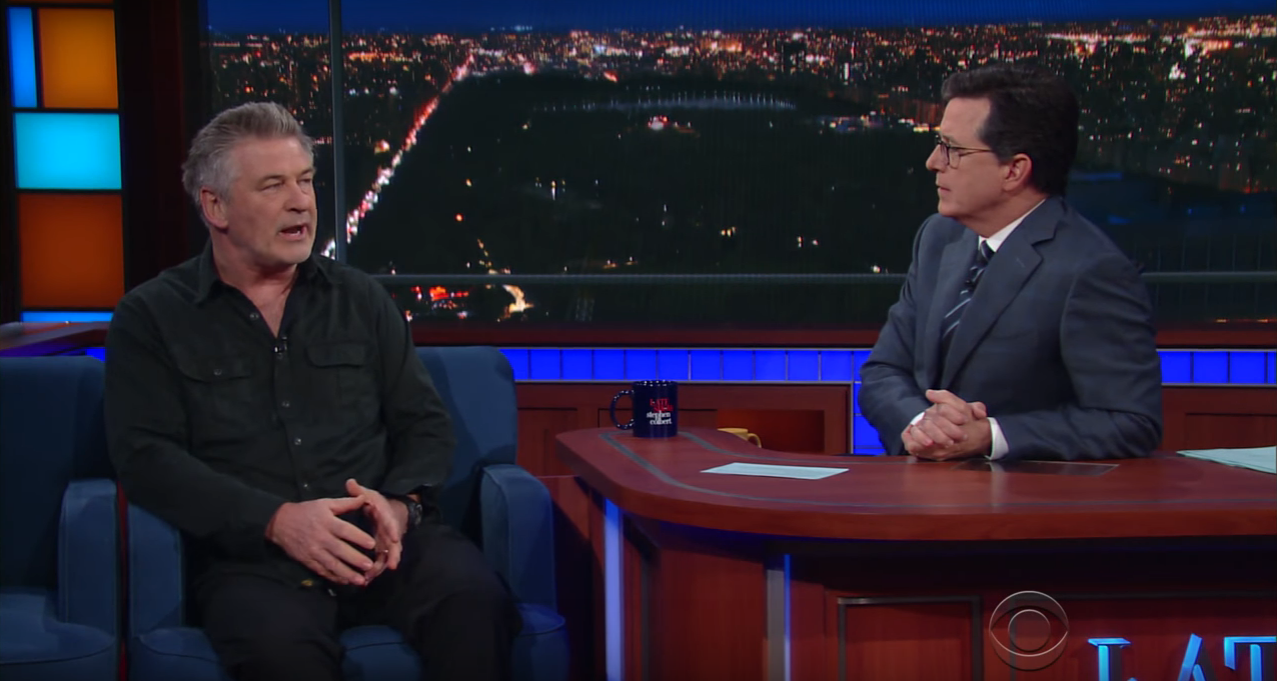
The segment unfolded with deliberate pacing. Colbert, the host of The Late Show, opened with a monologue that was less an attack than a methodical unpacking of trump’s latest public statements. Rather than rely on exaggeration, Colbert leaned on contrast—placing trump’s claims alongside past remarks, court filings, and public records. The humor emerged not from invention, but from accumulation. Each example added weight, until the contradictions became difficult to ignore.
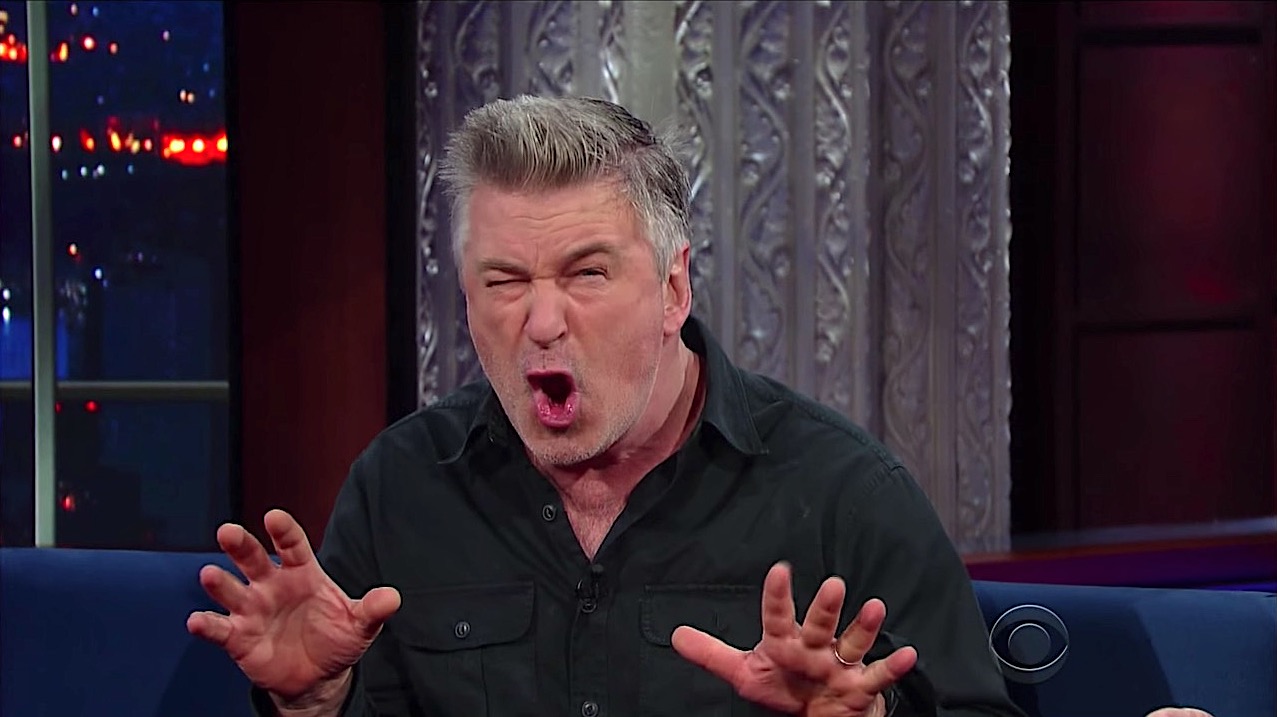
Then came Baldwin. For years, his portrayal of trump has been one of the most recognizable political impressions in modern television. This time, however, the performance felt more restrained—and in some ways more pointed. Baldwin’s trump did not shout constantly or descend into caricature. Instead, he mirrored familiar rhythms: the looping grievances, the exaggerated self-assurance, the sudden pivots from bravado to complaint. The audience laughter rose not because the character was outrageous, but because it was recognizable.
What made the exchange notable was the interplay between the two men. Colbert interrupted Baldwin’s mock monologues with facts; Baldwin responded with defensive bluster. The rhythm resembled a cross-examination disguised as comedy. At one point, Colbert remarked that trump’s political durability seemed rooted less in persuasion than in repetition—the ability to say the same thing loudly and often enough that it becomes familiar, if not credible. The line drew applause, but it also captured a broader observation shared by many political analysts.
Late-night television has criticized presidents before, but the trump presidency—and its aftermath—has altered the tone. Satire once aimed to puncture power. In this case, it often seeks to document it. Jokes are built not only around personality, but around legal exposure, institutional stress, and democratic norms. Comedy becomes a form of annotation, guiding audiences through a landscape that can feel overwhelming or abstract.
According to people close to trump, the segment did not go unnoticed. He has long paid attention to late-night television, responding publicly and privately to comedians he believes shape elite opinion. While such reactions are part of his established media habits, they also reflect an understanding that these shows reach audiences beyond traditional political news consumers. Late-night hosts do not simply mock; they frame narratives.
Within hours, clips from the Colbert–Baldwin exchange circulated widely online. Millions watched not because the segment revealed new information, but because it distilled familiar themes into a clear, shareable moment. Political scientists often note that persuasion rarely happens through single events. Instead, it emerges from repetition across platforms. In that sense, the viral spread of the segment mattered less for its immediate impact than for its contribution to an ongoing conversation.

Critics of late-night satire argue that it risks preaching to the converted, reinforcing existing beliefs rather than challenging them. Supporters counter that humor lowers defenses, allowing complex or uncomfortable realities to enter public consciousness more easily. Both views contain truth. What is undeniable is that figures like Colbert and Baldwin now operate as cultural intermediaries, translating political conflict into a language many Americans find accessible.
The segment also highlighted a broader shift in how authority is contested. In previous eras, presidents were primarily challenged by rival politicians or journalists. Today, comedians wield a different kind of influence—one rooted not in formal power, but in attention. They cannot legislate or prosecute, but they can define tone, ridicule pretension, and keep certain stories alive.
As the laughter faded and the show moved on, what lingered was not a single joke, but a sense of familiarity. The exchange felt less like a shocking takedown than a snapshot of an ongoing dynamic: a former president, a pair of comedians, and a public still negotiating how to process a political figure who continues to dominate the national imagination. In that space between humor and accountability, late-night television remains one of America’s most revealing mirrors.