By XAMXAM
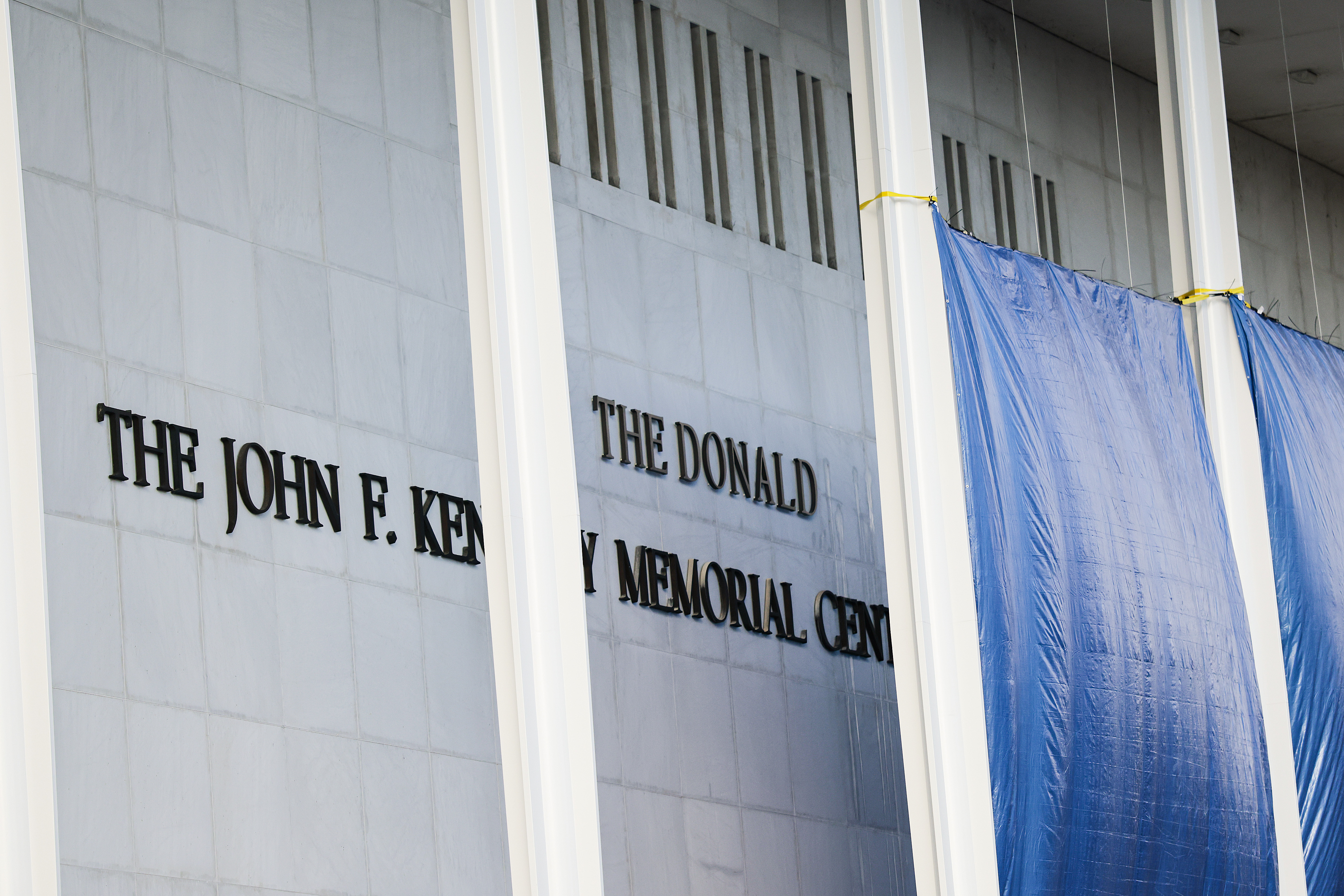
WASHINGTON — In a city accustomed to symbolic battles, few have escalated as quickly, or as emotionally, as the dispute now engulfing the John F. Kennedy Center for the Performing Arts. What began as an announcement that the institution would bear President Donald J. Trump’s name alongside that of President Kennedy has spiraled into a fierce confrontation over law, legacy, and the limits of presidential power.

Within hours of the announcement, signage and the Kennedy Center’s website were altered to reflect what was described by allies of the president as a unanimous vote of the board. President Trump publicly welcomed the move, suggesting he had “saved” the institution and expressing pride in the honor. The speed of the rebranding, however, only intensified backlash from lawmakers, artists, and members of the Kennedy family, who argued that the action was not merely provocative but unlawful.
By federal statute, the Kennedy Center is a living memorial to the 35th president, established by Congress in the aftermath of John F. Kennedy’s assassination. Renaming it, critics note, would require an act of Congress — not a board vote, unanimous or otherwise. To them, the attempt to affix Trump’s name to the building was not a bureaucratic misstep but a fundamental challenge to the idea that national monuments belong to the public, not to the officeholder of the moment.
Former Representative Joe Kennedy III, a grandnephew of the late president, framed the issue in moral as well as legal terms. The Kennedy Center, he said, was designed to honor a president who believed the arts could unify a divided nation. Placing another president’s name on that memorial, particularly one still very much a partisan figure, struck him as “bizarre” and deeply disrespectful.
The controversy sharpened further when Representative Joyce Beatty, an ex officio member of the Kennedy Center board, alleged that dissent during the meeting was actively suppressed. Beatty said she was muted when she attempted to raise objections and later informed she would not be allowed to speak. Despite this, the vote was described publicly as unanimous. For Beatty and other critics, the episode symbolized a broader pattern: the sidelining of process in favor of spectacle.

The White House and Trump allies have dismissed the outrage as overblown, portraying the move as recognition of Trump’s stewardship and support for the arts. Yet the symbolism has proven impossible to contain. To many in Washington’s cultural community, the episode recalled earlier efforts by the administration to rename institutions and alter historical narratives, reinforcing concerns that history itself is being treated as a branding opportunity.
Speculation has also grown about Trump’s future relationship with the Kennedy Center. Commentators and political opponents have suggested that once Trump leaves office, any attempt to attach his name to the building will be swiftly reversed, and that his presence at the venue may no longer be welcome. While no formal ban has been enacted, the intensity of the rhetoric underscores how thoroughly the dispute has poisoned relations between the president and one of the nation’s premier cultural institutions.
At its core, the fight is about more than a name on a façade. It is about who gets to define national memory. Trump has long been preoccupied with legacy, seeking visible markers of his impact and resisting narratives that cast him as merely temporary. For his critics, that preoccupation has curdled into insecurity, expressed through the urge to inscribe himself onto monuments built for others.

Supporters counter that every president seeks to shape how history will remember them, and that Trump is simply more explicit about it. But even some who acknowledge that impulse question the wisdom of attaching a living, polarizing figure to a memorial honoring a fallen one.
The Kennedy Center has weathered political storms before, often by insisting on its nonpartisan mission. This time, neutrality may be impossible. The dispute has already transformed the building from a symbol of cultural unity into a flashpoint of America’s ongoing struggle over power, memory, and respect for institutions.
Whether the attempted renaming stands or collapses under legal challenge, the episode has left a mark. It has revealed how fragile shared symbols can be — and how quickly they can become arenas for grievance rather than grounds for common ground. In Washington, the question now is not only whose name belongs on the Kennedy Center, but what kind of country decides such things in the first place.