The Justice Department’s partial release of documents related to Jeffrey Epstein was intended to draw a line under one of the most notorious scandals in modern American history. Instead, it tore the line wide open.
Late Friday, the Department acknowledged that only a fraction of the long-promised Epstein files had been made public, despite earlier assurances that the disclosure would be comprehensive. The admission set off immediate backlash — not just from advocacy groups and Epstein survivors, but from lawmakers across the political spectrum, many of whom accused the government of repeating the very secrecy that allowed Epstein’s abuse network to persist for decades.
For survivors, the reaction was visceral. Members of the family of Virginia Giuffre, one of Epstein’s most prominent accusers who died by suicide earlier this year, said they believed the released documents amounted to roughly 10 percent of what had been requested. The sense of betrayal was palpable. The legislation authorizing disclosure, they noted, was framed as a commitment to full transparency, not a selective unveiling marked by heavy redactions and unexplained omissions.
That frustration was echoed by Marina Lerta, a survivor of Epstein’s abuse and the individual identified as “minor victim number one” in Epstein’s 2019 New York indictment. In a televised interview following the release, Ms. Lerta said she and other survivors were neither consulted nor notified in advance by the Justice Department — a fact she described as deeply troubling.
“We expected far more,” she said, adding that the emotional toll of the partial disclosure had reignited anxiety and anger among survivors who had waited years for answers.
The documents themselves offered little clarity. Hundreds of pages were released, many of them entirely blacked out. Others included photographs and references to prominent figures — including former President Bill Clinton and several celebrities — without context or explanation. While no evidence of wrongdoing was presented against those named, the lack of narrative or documentation left the public with more questions than answers.
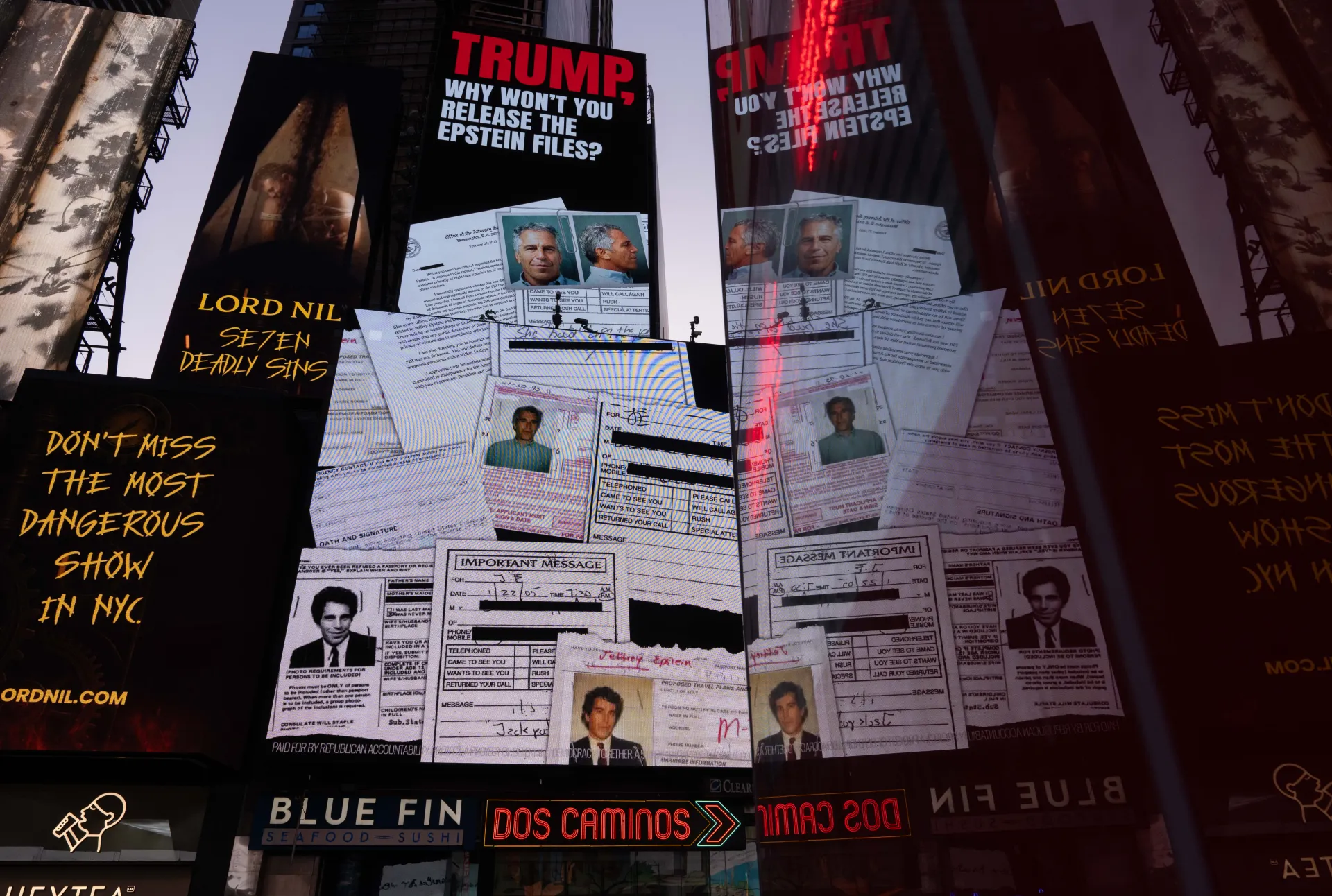
To survivors, the redactions felt less like prudence and more like provocation. “What was the point of releasing pages that tell us nothing?” Ms. Lerta asked. “If they’re blacked out, it suggests there’s something there — something we’re still not allowed to see.”
Perhaps the most disturbing revelations were not new names, but confirmations of long-alleged patterns. Ms. Lerta described seeing references in the documents to Epstein’s fixation on the age of his victims — including his insistence on verifying identification to ensure girls were under 18. Her account aligns with years of testimony describing Epstein’s systematic exploitation of minors, often under the guise of modeling opportunities or legitimate work.
Beyond individual abuse, survivors argue the files point to a far broader structure: an international trafficking network involving modeling agencies, visa arrangements, educational institutions and intermediaries who, knowingly or not, facilitated Epstein’s crimes. According to Ms. Lerta, the Justice Department itself has estimated that as many as 1,200 victims may have been involved — a figure that dwarfs the number of survivors who have publicly come forward.
Many of the most vulnerable, she said, remain silent. Eastern European women, in particular, are believed to fear retaliation or immigration consequences tied to visas they received to work in the United States. Their silence, advocates argue, is one more reason full transparency matters.
What has surprised even seasoned observers is the political alignment now forming around the issue. Calls for the complete release of the Epstein files have united lawmakers who agree on little else. Conservatives frame the redactions as proof of a “deep state” protecting powerful interests. Progressives see a familiar story of elite impunity and systemic failure to protect women and girls. Survivors themselves span the ideological spectrum.
“This isn’t a partisan issue,” Ms. Lerta said. “It’s a human rights issue.”
The controversy has inevitably pulled President Donald Trump into the orbit of the scandal, not through new allegations, but through the political consequences of the disclosure decision. Critics argue that the administration underestimated the public’s appetite for accountability — and overestimated its tolerance for ambiguity. By releasing partial files, they say, the Justice Department managed to inflame suspicion on both the left and the right, creating a rare coalition united by mistrust.
For now, the Department has defended its actions by citing legal constraints, grand jury secrecy rules and privacy concerns. But those explanations have done little to calm the backlash. Congressional inquiries are already being discussed, and survivor groups are demanding direct involvement in any future releases.
The Epstein case has always been about more than one man. It is a story of power, protection and prolonged silence — of institutions that failed repeatedly, and of victims who paid the price. The latest document release was supposed to mark progress toward accountability. Instead, it has reinforced a darker conclusion: that the most important truths may still be hidden behind black ink.
And until those pages are fully revealed, the demand for answers — from survivors, lawmakers and the public alike — is only growing louder.