Justice Department Faces Scrutiny After Epstein-Related Files Disappear From Public Website
Washington — The Justice Department is facing mounting scrutiny after multiple documents and photographs linked to the Jeffrey Epstein investigation appeared to be removed from its public website, including at least one file that had contained images of former President Donald J. Trump. The apparent deletions, first noticed by independent researchers and journalists late Tuesday night, have ignited accusations of a deliberate cover-up and renewed concerns about transparency surrounding one of the most controversial criminal cases in recent U.S. history.
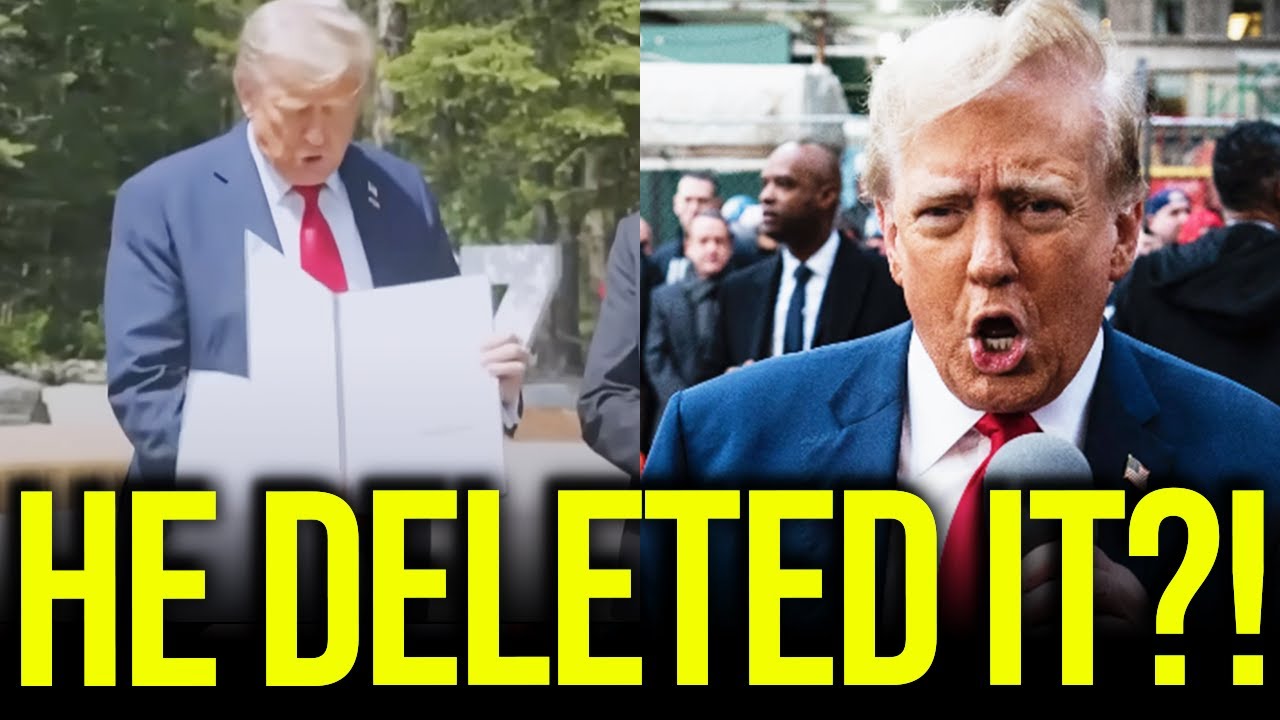
According to digital records and archived downloads reviewed by several analysts, a specific file — identified as EFTA-0468 — was publicly accessible on the Justice Department’s Epstein document portal earlier this week. By Wednesday morning, the file was no longer available, and the numbering sequence on the site skipped directly from EFTA-0467 to EFTA-0469. Individuals who had previously downloaded the complete archive said the file was also missing from newly generated data sets, suggesting that the archive itself had been altered rather than temporarily malfunctioning.
The removed file reportedly contained photographs showing Mr. Trump in proximity to Epstein and Ghislaine Maxwell, Epstein’s longtime associate who was later convicted on sex trafficking charges. The images had circulated publicly in the past, but their inclusion in an official government release carried heightened significance. No explanation has yet been provided by the Justice Department for the file’s disappearance.
The controversy comes amid broader frustration over the administration’s handling of the Epstein Files Transparency Act, a law requiring the Justice Department to release all non-privileged Epstein-related materials within 30 days of enactment, with limited and clearly justified redactions. Legal experts note that while redacting the names of survivors and sensitive investigative methods is standard practice, wholesale removal of documents — particularly after publication — raises serious legal and ethical questions.
Representative Alexandria Ocasio-Cortez of New York criticized the department’s actions in a statement posted online, calling the apparent deletions “a cover-up in plain sight” and demanding accountability from senior officials. “Everyone involved will have to answer for this,” she wrote, naming Attorney General Pam Bondi and other senior figures. “This is about protecting powerful people at the expense of survivors and the public’s right to know.”
Independent researcher Adam Cochran, who documented the missing files, said he verified the deletion by comparing locally saved copies with newly downloaded archives. “This isn’t a broken link or a clerical error,” Mr. Cochran said in an interview. “The file no longer exists in the official dataset. That means someone made a decision to remove it.”
Additional reports suggest that the missing file may not be an isolated case. Journalist Harry Sisson reported that at least 16 documents and photographs disappeared from the Epstein files overnight, according to a review conducted by multiple watchdog groups. The Associated Press also confirmed that several items previously listed were no longer accessible, though the Justice Department declined to comment on the specifics.
A department spokesperson reiterated earlier claims that “no politically exposed persons were redacted or withheld” and that “redaction reasons were provided for every withholding.” However, legal analysts argue that deleting an entire file differs materially from redaction and could violate both the transparency act and federal record-keeping laws.
The revelations have intensified pressure from across the political spectrum. While Democrats have led calls for investigations and resignations, a small number of Republican lawmakers, including Representatives Thomas Massie and Marjorie Taylor Greene, have also questioned the handling of the Epstein materials, citing the need for full transparency regardless of political affiliation.
For survivors of Epstein’s abuse, the controversy is a painful reminder of decades of institutional failure. Epstein’s crimes, which spanned years and involved numerous allegations of sexual exploitation of minors, were long enabled by secrecy, favorable plea deals, and what critics describe as deference to wealth and influence. In 2008, Epstein received a highly controversial non-prosecution agreement in Florida, a decision that has since drawn bipartisan condemnation.
Advocates say the current dispute underscores a persistent divide between powerful elites and ordinary Americans seeking accountability. “Survivors have been asking for transparency for decades,” said one victims’ rights advocate. “Every delay, every redaction, every missing document reinforces the belief that the system protects those with money and connections.”
The Justice Department has not announced whether the missing files will be restored or whether an internal review is underway. Meanwhile, watchdog groups are urging citizens to preserve archived copies and continue pressing for answers.
As comparisons to historical political scandals circulate online, the administration now faces a familiar dilemma: address the controversy head-on or risk deepening public distrust. For now, the unanswered questions surrounding the Epstein files — and the sudden disappearance of key materials — continue to fuel suspicion, outrage, and calls for accountability that show no signs of fading.