The political temperature rose sharply this week as former President Donald Trump returned to the campaign trail amid mounting signs of strain inside the Republican coalition. In North Carolina, a state long considered a reliable battleground for conservative strategy, early results and voter turnout patterns suggested a setback that reverberated well beyond state lines. The episode has become a revealing snapshot of a party grappling with shifting demographics, internal divisions, and a restless electorate.
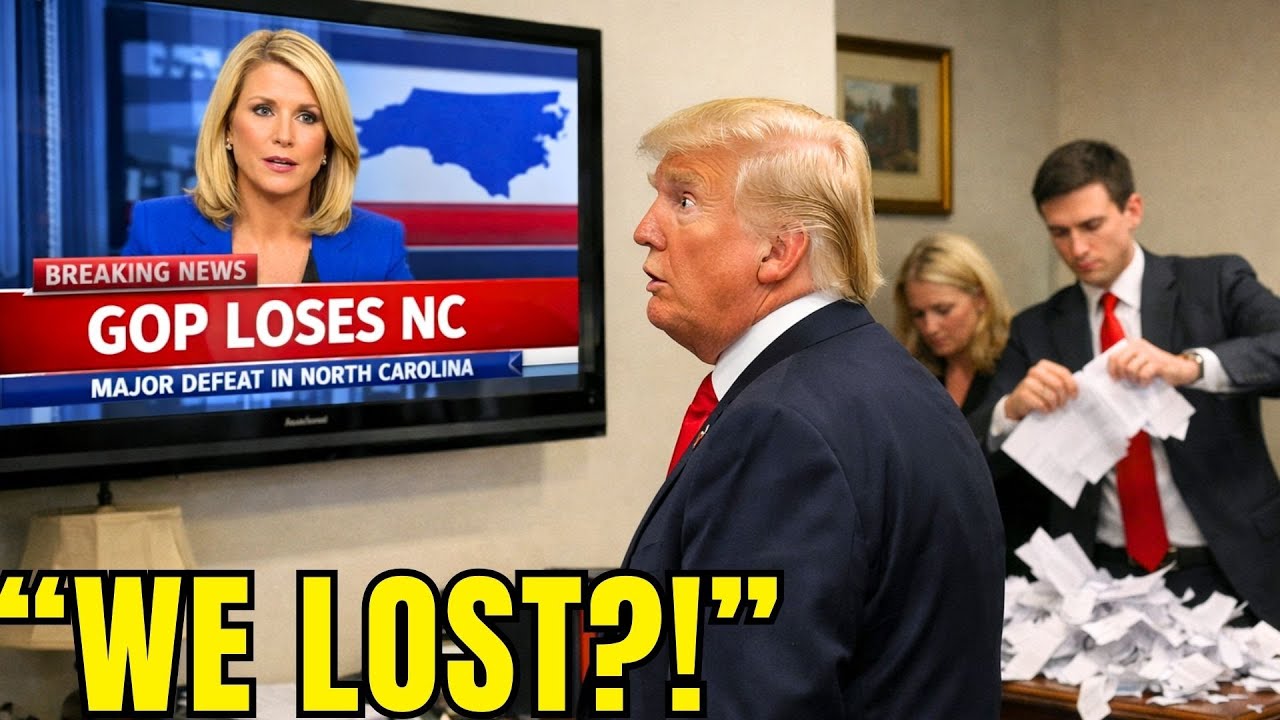
At a hastily organized rally, Mr. Trump sought to project confidence, repeating familiar themes of grievance and defiance. Yet the tone, according to attendees and analysts, felt more urgent than triumphant. The crowd was energetic, but the message seemed aimed as much at reassuring allies as at mobilizing voters. For a political figure who has long thrived on dominance, the optics hinted at pressure.
North Carolina’s outcome underscored a broader reality confronting the GOP. Years of aggressive redistricting had been designed to secure durable advantages, but this cycle those maps appeared less protective. Court challenges, demographic changes, and heightened voter awareness combined to weaken what once seemed impenetrable lines. The result was not simply a narrow loss, but a symbolic one that called long-standing assumptions into question.
Voters interviewed across urban and suburban precincts described frustration with what they viewed as political manipulation. Issues such as education, healthcare access, and economic stability eclipsed partisan loyalty for many. The anger was not loud, but it was persistent, translating into turnout patterns that surprised even seasoned operatives. In this environment, strategy met sentiment—and sentiment prevailed.

For Mr. Trump, North Carolina had been intended as a firewall, proof that his influence could still bend electoral math. Instead, the setback fueled speculation about his grip on the party ahead of the midterm cycle. Allies privately acknowledged concern that rallies alone may no longer be sufficient to energize a coalition that is both aging and fragmenting.
Republican leaders offered mixed reactions. Some urged a recalibration, emphasizing local issues and broader outreach. Others doubled down, framing the results as an anomaly driven by external forces. The lack of a unified response revealed deeper uncertainty about the party’s direction, particularly as Trump-backed candidates face increasingly competitive races.
Democrats, while cautious, saw an opening. They pointed to North Carolina as evidence that structural advantages cannot fully override public mood. Organizers highlighted investments in grassroots mobilization and legal challenges to district maps as essential factors. The message was clear: engagement, not engineering, was the decisive force.

Political scientists noted that the episode fits a national pattern. Gerrymandering, once a reliable tool, is losing potency in an era of rapid information flow and judicial scrutiny. Voters are more aware of the mechanisms shaping their choices, and that awareness can translate into backlash. North Carolina became a case study in unintended consequences.
The media spotlight on Mr. Trump’s reaction amplified the drama. Headlines dissected his language, his posture, even the pacing of his remarks. Was this a leader rallying troops, or one bracing for erosion? The answer may depend on upcoming contests, but the uncertainty itself marked a departure from the certainty that once defined his brand.
As the midterm landscape takes shape, North Carolina’s signal will linger. It suggests a volatile season ahead, marked by competitive races and unpredictable outcomes. For the GOP, the challenge is not merely recovering from a single loss, but confronting a political environment where old formulas no longer guarantee success—and where voter rage, quietly organized, can redraw the map.