Washington — A tense live segment on CNN this week underscored the pressures facing cable newsrooms when fast-moving political claims collide with the demands of real-time broadcasting.
The exchange began as a routine discussion before pivoting sharply when statements attributed to Donald Trump were read aloud on air, drawing the conversation toward allegations involving Ilhan Omar. Viewers quickly noticed a shift in tone. The host paused, asked clarifying questions, and appeared to recalibrate as the segment unfolded—an on-camera adjustment that, within minutes, became the focus of online debate.

Clips circulated rapidly across social platforms, where reactions split along familiar lines. Supporters of Mr. Trump argued that airing the claims was newsworthy in itself, reflecting the former president’s continuing influence on the political conversation. Critics countered that repeating disputed assertions without immediate verification risked amplifying misinformation, particularly in a live setting where corrections are difficult to deliver with equal reach.
Inside the network, people familiar with broadcast operations said the moment illustrated a perennial challenge: how to handle claims from prominent figures that are newsworthy but contested. In taped segments, producers can add context, graphics or fact-checking chyrons. Live television offers fewer safeguards.
“This is the tradeoff of immediacy,” said a former cable news executive. “You want to reflect what powerful actors are saying in real time, but you also have to protect viewers from unverified or misleading statements.”
CNN did not issue a formal statement addressing the segment, though anchors later emphasized the importance of verification and context when discussing allegations. The network’s editorial standards require that disputed claims be clearly labeled and, when possible, countered with established facts.
Media analysts say the episode resonated because it exposed the mechanics of live journalism—hesitation, recalibration and the visible effort to regain narrative control. In an era when viewers are accustomed to polished presentations, such moments can appear jarring, even if they reflect responsible caution.
“The pause was the point,” said a professor of journalism ethics. “It signaled uncertainty, which is honest. But honesty can look like weakness when audiences expect instant answers.”
The broader context is a media environment saturated with political claims designed to provoke reaction. Mr. Trump’s statements frequently drive coverage because of their impact on public discourse, regardless of their accuracy. News organizations face pressure to cover them while also meeting heightened expectations for fact-checking.
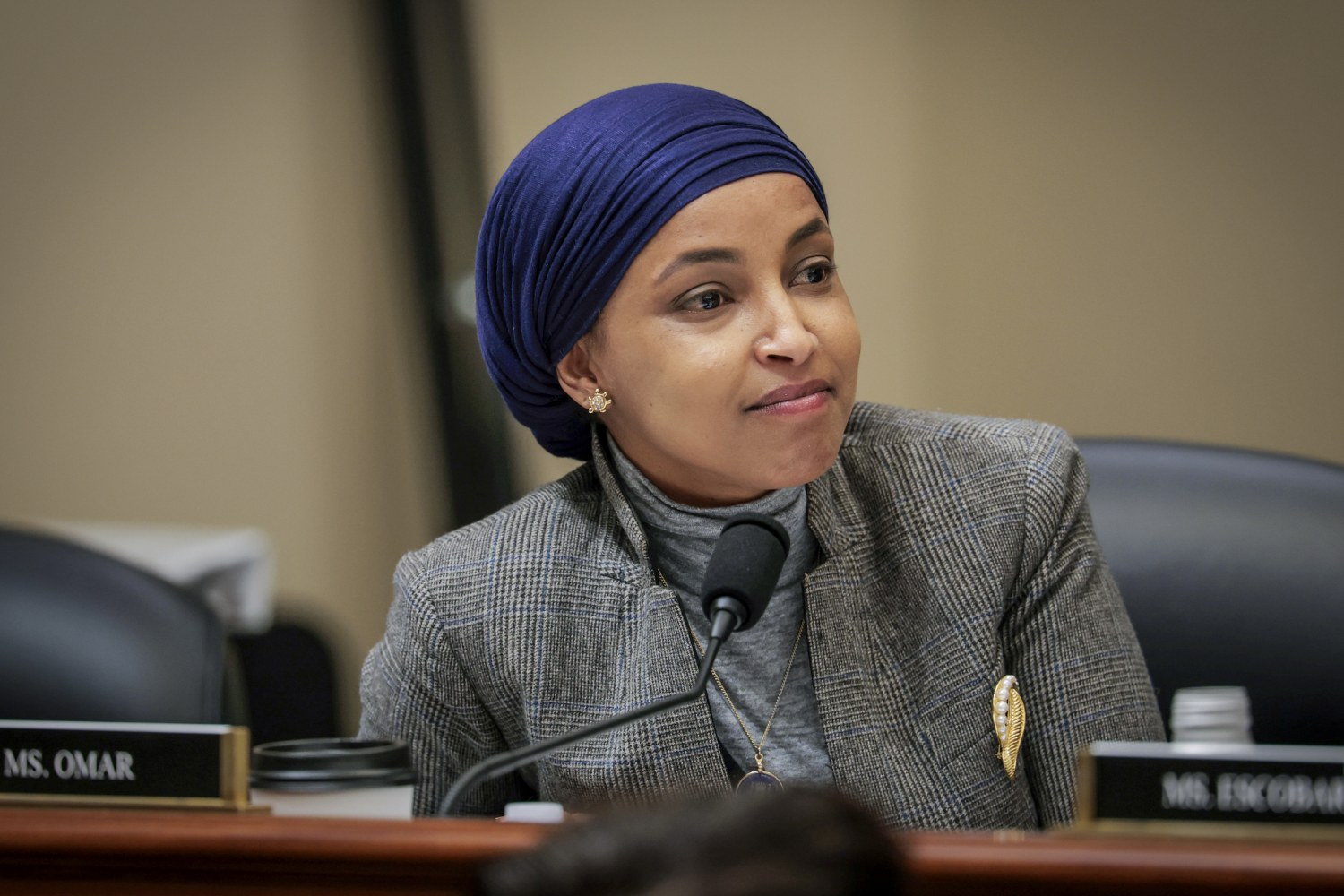
For Ms. Omar, the resurfacing of contested claims added another layer of scrutiny. Her office has consistently disputed similar allegations in the past, emphasizing the need for accurate records and fair treatment. Allies cautioned against conflating the act of reporting a claim with its validation.

Online, the segment’s virality was fueled less by the substance of the claims than by the perceived on-air dynamics. Viewers replayed pauses and expressions, debating whether the host was caught off-guard or appropriately careful. The clip became a proxy for broader arguments about media responsibility.
“This wasn’t about a single interview,” said a media strategist. “It was about trust—whether audiences believe networks can navigate controversy without becoming conduits.”
Historically, live television has produced moments that crystallize public debates, from unexpected admissions to visible course corrections. Such moments can reinforce credibility when handled transparently, or undermine it if viewers perceive evasion.
By the end of the evening, the segment had drawn attention from commentators across the political spectrum. Some praised the host’s restraint; others criticized the decision to air the claims without immediate resolution. The divergent reactions reflected a polarized audience with conflicting expectations of what journalism should deliver in real time.
For newsrooms, the lesson may be procedural rather than political. Editors increasingly emphasize pre-broadcast guardrails—clear framing language, rapid-response fact-check teams, and on-screen disclaimers—to manage the risks of live coverage. Yet none can fully eliminate uncertainty.
“Live news is inherently imperfect,” said the ethics professor. “The question is whether imperfection is acknowledged and corrected.”
As the clip continues to circulate, its significance lies not in any single assertion but in how modern media handles contested narratives under pressure. The episode illustrates how quickly a routine segment can become a case study in editorial judgment—and how audiences now scrutinize not just what is said, but how it is handled.
In a media ecosystem where trust is fragile, the on-air pause may matter as much as the words that prompted it. Whether viewers interpret that pause as caution or confusion will shape perceptions long after the clip fades from feeds.