No ‘Trump Bomb,’ Just a Court Ruling: How a Routine Legal Dispute Became Manufactured Drama
In the age of hyper-partisan media and algorithm-driven outrage, even the most ordinary moments of government can be inflated into spectacles. A recent federal court ruling involving President Donald Trump and a FEMA disaster-prevention program offers a textbook example of how routine legal processes are transformed into dramatic narratives that bear little resemblance to reality.
At the center of the story is Donald Trump, a figure who has long attracted fascination not only for his policies but also for his taste for spectacle. Trump’s affinity for glittering symbols of power—from gold-plated décor to ceremonial tokens of authority—has often been used by critics as shorthand for his governing style. Yet none of that pageantry explains the substance of what actually happened this month in federal court.
On December 11, U.S. District Judge Richard Stearns ruled that the Trump administration could not unilaterally terminate FEMA’s Building Resilient Infrastructure and Communities (BRIC) program, a grant initiative Congress had already funded. The program provides billions of dollars to states and municipalities for disaster-prevention projects such as flood barriers, wildfire mitigation, and earthquake retrofitting. Twenty states sued after the administration attempted to shut it down, arguing that the executive branch lacks the authority to cancel congressionally appropriated spending.
Judge Stearns agreed. His decision rested on a basic constitutional principle: Congress controls the purse, and the executive branch is charged with carrying out the law, not rewriting it. The ruling required FEMA to continue distributing funds while the case proceeds through the appeals process.
That was the entirety of the legal development. No emergency injunctions beyond the program itself. No sweeping rebuke of presidential authority. No immediate threat to Trump’s presidency. Yet within hours, headlines and commentary began describing the decision as a “Trump bomb” and portraying the president as “freaking out.”
The record shows otherwise.
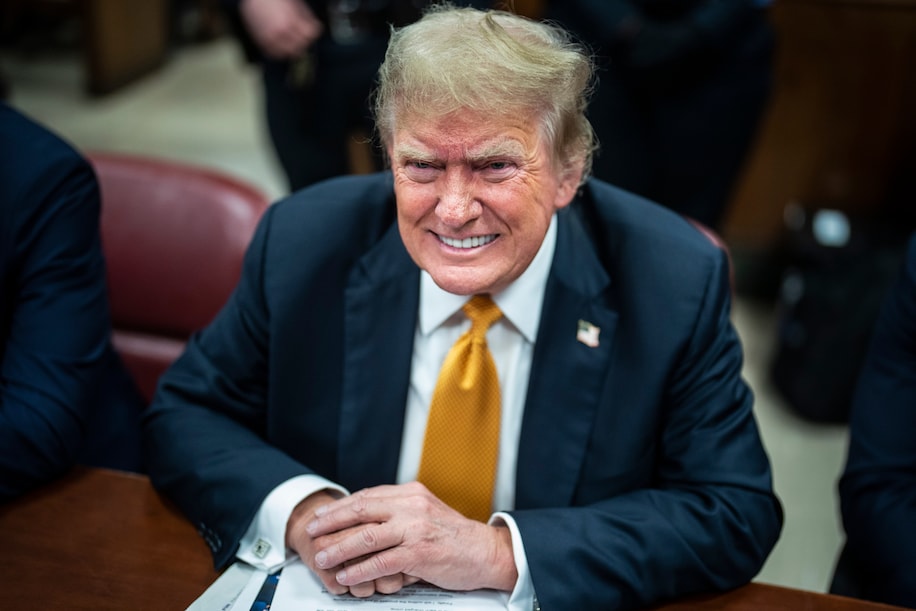
On December 12, Trump responded in a familiar way. Posting on Truth Social, he criticized the ruling as “activist judge nonsense,” labeled the BRIC program a wasteful “green slush fund,” and directed the Department of Justice to appeal. This response was neither novel nor chaotic. Trump has reacted in nearly identical fashion to dozens of unfavorable rulings over the years: condemn the decision, defend his policy position, and pursue an appeal.
That is not a meltdown. It is the standard operating procedure of modern politics.
In fact, viewed in context, the FEMA decision stands out less as a crisis than as an exception. Over the past several months, Trump’s administration has notched significant legal and political victories. The Supreme Court of the United States has granted stays allowing several contested Trump policies to remain in effect while litigation continues. The D.C. Circuit has recently affirmed broad presidential authority to remove certain executive officials. Meanwhile, the Senate has confirmed dozens of administration nominees, rapidly filling out the machinery of government.
Against that backdrop, a single district court loss on one grant program hardly qualifies as an existential threat. It is a policy dispute moving through the courts exactly as the system is designed to function.
The exaggerated coverage reflects a broader pattern. Real events occur—a court ruling, a filing, a procedural setback—and are then layered with invented emotional reactions meant to drive clicks and outrage. Yesterday’s “quiet surrender” becomes today’s “freakout,” even when the underlying facts remain unchanged.
There is, of course, a legitimate debate at the heart of the FEMA case. Supporters of the BRIC program argue that investing in disaster prevention saves lives and money, particularly as climate-related disasters intensify. Trump and his allies counter that the program is inefficient and that funds would be better spent on border security and immediate disaster response. Reasonable people can disagree on those priorities.
What should not be controversial is the difference between a policy disagreement and a political meltdown.
In a media environment saturated with drama, restraint can feel anticlimactic. But the truth of this episode is straightforward: a judge ruled, a president disagreed, and an appeal was filed. No bomb was dropped. No panic ensued. Just another chapter in the ongoing tug-of-war between the branches of government—less glamorous than gold-plated headlines, but far closer to reality.