Washington — Federal officials moved this week to dispute claims circulating online about an encounter involving Immigration and Customs Enforcement and a member of Representative Ilhan Omar’s family, setting off a fast-moving political dispute that has drawn in the Department of Homeland Security and reignited partisan tensions in the capital.
The controversy emerged after public assertions suggested that ICE agents had stopped or questioned Ms. Omar’s son, an allegation that quickly spread across social media and cable news. Within hours, DHS officials said they could find no record of such an encounter, emphasizing that internal systems showed no documentation supporting the claim.
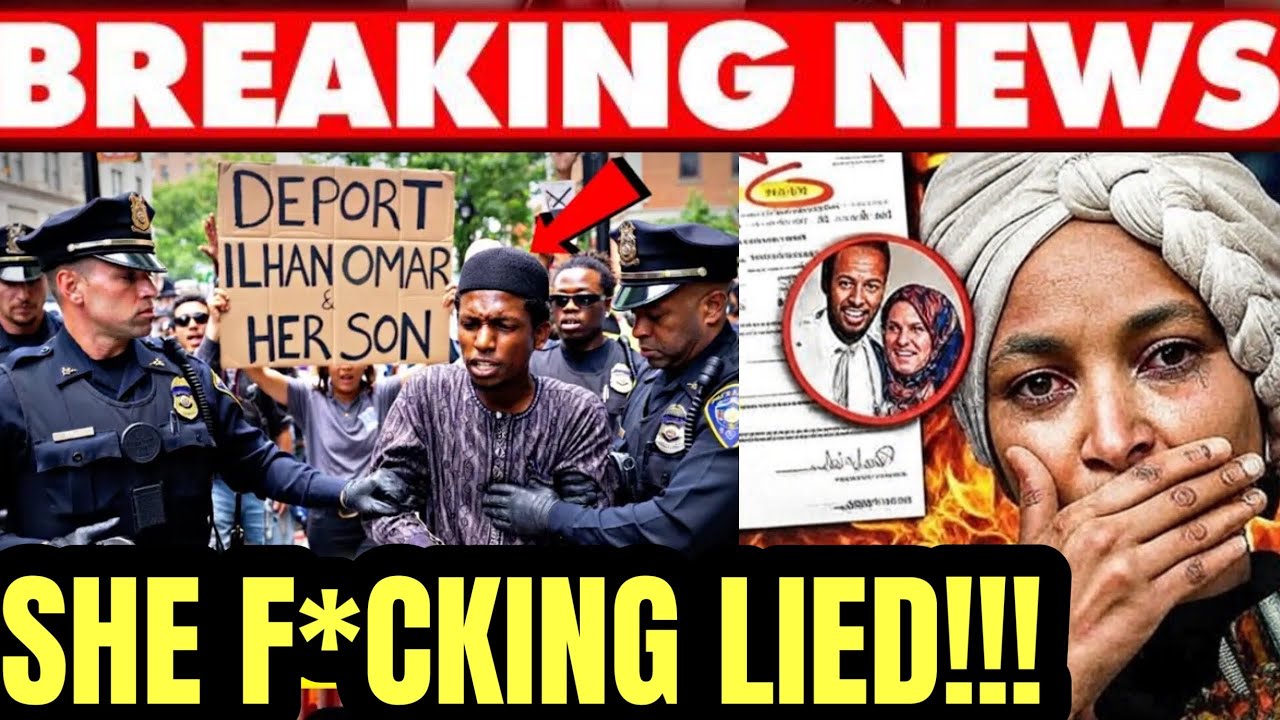
“There is no record of a stop,” a DHS official said, speaking on the condition of anonymity to discuss internal reviews. The official added that agencies routinely document enforcement encounters and that the absence of a record is significant, though not necessarily dispositive in public debates fueled by incomplete information.
Ms. Omar disputed the government’s characterization, saying that the situation had been misrepresented and that she was seeking clarity. Her office did not provide documentation to substantiate the allegation but said it was reviewing the matter and urged restraint until facts were established.
The diverging accounts set off a scramble behind the scenes. Aides and allies on both sides began reviewing timelines and statements, mindful that even unproven claims involving federal law enforcement can quickly escalate into broader arguments about credibility and institutional trust. Reporters pressed officials for details, while commentators dissected every word of the competing statements.
The episode also drew attention from former President Donald J. Trump, who signaled that he was closely watching the dispute and suggested that further action could follow, without specifying what that might entail. His comments amplified the attention, reframing what might otherwise have remained a narrow fact dispute into a wider political confrontation.
Analysts cautioned against jumping to conclusions. “This is a classic case of claim and counterclaim,” said a former DHS official. “The key question is evidence. Without records, corroboration or independent verification, narratives can run far ahead of reality.”

ICE encounters are typically logged through multiple systems, including officer reports and database entries. Errors and delays can occur, but officials say undocumented stops are uncommon. Civil liberties advocates, however, note that gaps in recordkeeping have fueled mistrust in the past, particularly in high-profile cases involving immigration enforcement.
The broader context matters. Ms. Omar, a Minnesota Democrat, has been a frequent target of political attacks related to immigration and national security, while also being a vocal critic of ICE and DHS practices. That history has shaped how supporters and critics interpret the current dispute, often through partisan lenses.
Supporters of Ms. Omar described the episode as politically charged, arguing that public denials by federal agencies do not automatically settle questions of fact. Critics countered that serious allegations require substantiation and warned that repeating unverified claims risks undermining confidence in institutions.
Inside Washington, the immediate concern was less about the allegation itself than about how quickly it spread. Officials across agencies are increasingly sensitive to viral claims that can demand rapid response, even when underlying facts are unclear.
“This is the cost of speed,” said a communications strategist who has advised both Democratic and Republican offices. “Once something is out there, the burden shifts to proving a negative, which is always harder.”
So far, no independent evidence has emerged to confirm that an ICE stop occurred. DHS has said it continues to review internal records, and Ms. Omar’s office has said it is seeking further information. Neither side has indicated that formal complaints or legal actions have been filed.
The dispute has not altered policy or enforcement practices, but it has sharpened debate over transparency and accountability. For lawmakers, the episode illustrates how disputes involving federal agencies can quickly become proxies for larger arguments about trust in government.

Mr. Trump’s involvement adds another layer. His past rhetoric on immigration and law enforcement has often intensified scrutiny of individual cases, even when details remain contested. Political observers say that dynamic increases the stakes, making resolution more difficult.
“What might have been resolved quietly is now a national conversation,” said a political scientist at Georgetown University. “That doesn’t make the facts clearer — it just raises the temperature.”
As of now, the situation remains unresolved. DHS maintains there is no record of the alleged encounter. Ms. Omar disputes the characterization and says more information is needed. No additional documentation has been released publicly.
For the public, the episode serves as a reminder of how easily claims can outrun verification, particularly when they involve emotionally charged issues like immigration enforcement and family. For institutions, it underscores the challenge of responding quickly without overstating certainty.
Whether further records surface, or whether the dispute fades amid competing news cycles, remains to be seen. What is clear is that the controversy has moved beyond a single allegation to a broader question of credibility — not only of the individuals involved, but of the systems tasked with documenting and explaining what happened.
In Washington, where trust is often in short supply, that question tends to linger long after the headlines move on.