It was a dramatic and highly charged moment on Capitol Hill that reignited long-simmering fears about political influence over federal regulators. During a U.S. Senate oversight hearing, Federal Communications Commission (FCC) Chairman Brendan Carr found himself cornered under intense cross-examination by Democratic senators, who pressed him on whether the FCC can still be considered an independent agency. What began as a technical discussion about regulatory authority quickly escalated into a high-stakes confrontation over free speech, executive power, and the future of media oversight in the United States.
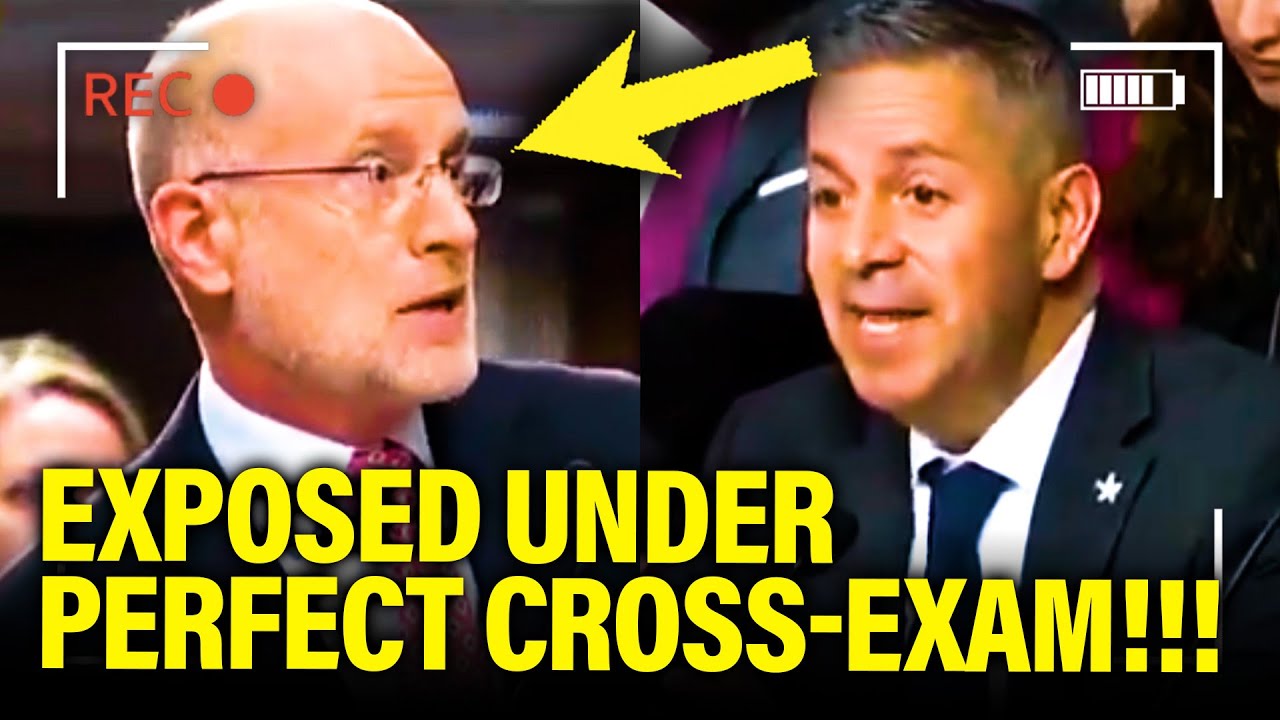
At the center of the controversy was Carr’s repeated acknowledgment that FCC commissioners can be removed by the president “for any reason or no reason at all.” Under questioning, Carr conceded that, in a formal legal sense, the FCC lacks the “for-cause removal” protections typically associated with independent agencies. This admission stunned lawmakers, particularly because the FCC’s own website described the commission as an “independent U.S. government agency overseen by Congress” at the very moment the hearing was underway. Senators immediately seized on the contradiction, accusing the agency of misleading the public.
The exchange grew even more explosive when senators revealed that the FCC’s website was quietly updated after Carr’s testimony, removing references to the agency’s independence. Critics framed the edit as evidence of damage control rather than transparency, fueling accusations that the commission was reshaping its public identity under political pressure. For many observers, the timing of the change deepened concerns that institutional norms were being rewritten in real time.
Much of the questioning focused on Carr’s past public comments and investigations involving major broadcast networks, particularly those that have aired content critical of D.O.N.A.L.D T.R.U.M.P. Senators repeatedly raised his remarks suggesting that broadcasters could face regulatory consequences if they failed to comply with the FCC’s “public interest” obligations. While Carr denied threatening any specific network or comedian, lawmakers argued that his language carried an implicit warning, especially given the FCC’s broad authority over broadcast licenses.

The issue of political satire became a flashpoint. Senators cited Carr’s earlier statements defending satire as a cornerstone of free speech, contrasting them with later comments that appeared to justify regulatory scrutiny of broadcasters following controversial monologues. Under cross-examination, Carr insisted that satire itself is protected, but emphasized that broadcasters using public airwaves are subject to longstanding rules related to news distortion, broadcast hoaxes, and public interest standards. That distinction did little to reassure critics, who warned that vague standards could be weaponized against dissenting voices.
Another major concern raised during the hearing was selective enforcement. Senators pointed out that multiple investigations had been launched into networks perceived as critical of the administration, while others were seemingly spared similar scrutiny. Carr disputed the characterization but acknowledged that enforcement priorities had shifted toward what he described as reasserting neglected public interest obligations. Opponents countered that the pattern risked chilling speech and undermining trust in regulatory neutrality.
Behind the scenes, analysts say the hearing exposed a deeper institutional struggle over how much control the executive branch should wield over independent regulators. Legal scholars note that recent court decisions strengthening presidential removal powers have blurred traditional boundaries, creating uncertainty across agencies like the FCC. Carr’s testimony, in that context, was seen as a candid—if unsettling—reflection of how those legal shifts are playing out in practice.
:max_bytes(150000):strip_icc():focal(711x275:713x277)/brendan-carr-testimony-091825-cc9c8e9b15524a47b5a09c2ae68f6aa4.jpg)
Public reaction was swift and polarized. Clips from the hearing spread rapidly online, with critics warning of creeping authoritarianism and supporters arguing that Carr was simply enforcing laws as written by Congress. Media watchdog groups expressed alarm that the FCC’s posture could discourage robust political commentary, while defenders of the chairman accused senators of grandstanding and misrepresenting regulatory law.
Ultimately, the Senate showdown underscored a broader debate about democracy, accountability, and the role of independent institutions in an era of heightened political pressure. Whether Carr’s testimony marks a turning point or merely a flashpoint remains unclear. What is certain is that the hearing has intensified scrutiny of the FCC’s leadership, its relationship with the White House, and the fragile balance between regulation and free expression in American media.