A Legal Question, a Media Firestorm, and the Politics of Citizenship
The studio lights were still warm when Megyn Kelly leaned forward and lowered her voice, signaling to viewers that something once treated as untouchable was now, suddenly, open for debate. For years, questions surrounding Representative Ilhan Omar’s path to U.S. citizenship were dismissed as fringe or inflammatory. Now, in a segment that quickly ricocheted across conservative media, Kelly and her guests framed those same questions as a matter of paperwork, procedure, and law—stripped, they argued, of taboo but not of consequence.
At the center of the discussion was a long-circulating allegation: that Omar had engaged in immigration fraud through a marriage to her brother. Kelly was careful, at least initially, to note that even critics now concede the statute of limitations on that specific claim has likely expired. Legal commentators cited by her program said that, even if the allegation were substantiated, it would no longer serve as a viable basis for prosecution. Yet the segment did not stop there. Instead, it pivoted to a different and more technical vulnerability—one that, Kelly suggested, could still carry serious implications.
That question revolves around Omar’s claim that she derived U.S. citizenship through her father’s naturalization in 2000, shortly before she turned 18. According to documents referenced on air, a Freedom of Information Act request seeking records of her father’s naturalization reportedly returned no results. The absence of paperwork, Kelly argued, opens a narrow but consequential legal door: if the father’s naturalization were fraudulent or never finalized, Omar’s own citizenship could theoretically be challenged. Under U.S. law, denaturalization is rare but possible, and in extreme cases can lead to deportation and disqualification from holding federal office.
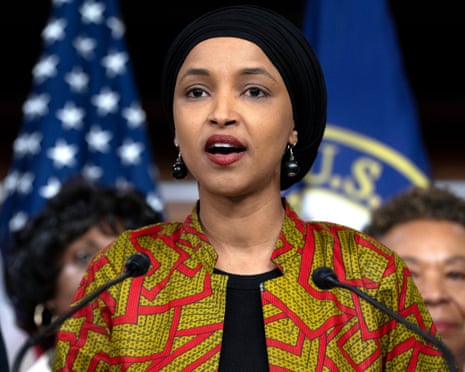
The tone of the segment oscillated between legal analysis and political provocation. Guests emphasized that this was not about predicting outcomes but about explaining how immigration law functions when documentation is missing or disputed. Still, the language was unmistakably charged. One commentator called the prospect of accountability a “political earthquake,” noting that if Omar were found not to be a lawful citizen, she could not legally serve in the House of Representatives.
Omar herself has repeatedly and forcefully rejected these claims. In past confrontations with conservative activists and reporters, she has dismissed the allegations as racist, obsessive, and unworthy of response. “I’m not going anywhere,” she has said, arguing that her critics are motivated less by law than by animus. In the clip replayed during Kelly’s segment, Omar’s answers were brief and defiant, offering attitude rather than documentation—a contrast her critics seized upon as evidence of vulnerability, while her supporters viewed it as justified exhaustion.
The segment widened further, folding Omar’s case into a broader debate over immigration enforcement under T.r.u.m.p. Supporters of the former president framed renewed scrutiny as a return to “accountability,” not cruelty, arguing that laws long on the books were simply being applied again after years of selective enforcement. Footage of tense Immigration and Customs Enforcement encounters in Minneapolis was used to underscore that point, juxtaposed with chants from protesters accusing agents of brutality. To Kelly’s panel, the scenes illustrated a cultural and political collision: enforcement versus resistance, law versus emotion.
Critics, however, warn that such framing risks turning complex legal questions into spectacle. Immigration scholars note that FOIA gaps do not necessarily prove wrongdoing; records can be lost, misfiled, or held under different names. Civil rights advocates argue that public speculation about deporting a sitting congresswoman feeds a dangerous narrative that citizenship itself is conditional for certain Americans.
What remains clear is that the conversation has shifted. Questions once confined to obscure blogs are now being debated on cable news and trending across platforms. Whether any formal investigation substantiates the claims is still unknown, and no charges have been filed. But as legal theory, partisan media, and immigration politics collide, the story is moving faster than the facts—spreading across timelines, igniting arguments, and leaving the internet visibly, relentlessly on edge as it continues to explode with speculation.