Canada did not announce its decision with fanfare, nor did it frame the move as a historic break. There was no dramatic speech, no emergency NATO summit broadcast to the public. Yet behind closed doors in Ottawa, a single defense choice quietly detonated a geopolitical shockwave that rippled through Washington, Brussels, and the global defense industry. What appeared on the surface to be a routine fighter jet decision rapidly revealed itself as something far more consequential: a fundamental rethinking of sovereignty, power, and control in modern military alliances.
For decades, Canada has been regarded as one of the United States’ most dependable defense partners. As a founding member of NATO and a cornerstone of NORAD, Ottawa was widely expected to remain fully embedded within the American-led F-35 ecosystem. The aircraft had evolved beyond a fighter jet into a symbol of alliance unity, interoperability, and strategic alignment. The assumption in Washington was simple and rarely questioned: Canada would ultimately fall in line. That assumption cracked overnight.
The true issue was never about speed, stealth, or price tags. Canadian defense planners were focused on a deeper, more uncomfortable question: who truly controls a nation’s military when the core systems it depends on are governed elsewhere? In an era where air power is defined as much by software, data access, and permissions as by engines and airframes, Ottawa concluded that ownership matters more than appearances. The F-35 model grants capability, but not full control. Updates, diagnostics, mission software, and long-term sustainment remain externally governed, turning sovereignty into a negotiated process rather than a guaranteed right.

Over time, Canadian officials saw how dependency compounds. Every software upgrade becomes a request. Every modification becomes a negotiation. Operational autonomy erodes quietly, update by update, until control is filtered through foreign timelines and priorities. For some allies, that trade-off is acceptable. For Canada, especially given its vast geography and unique Arctic responsibilities, it was not.
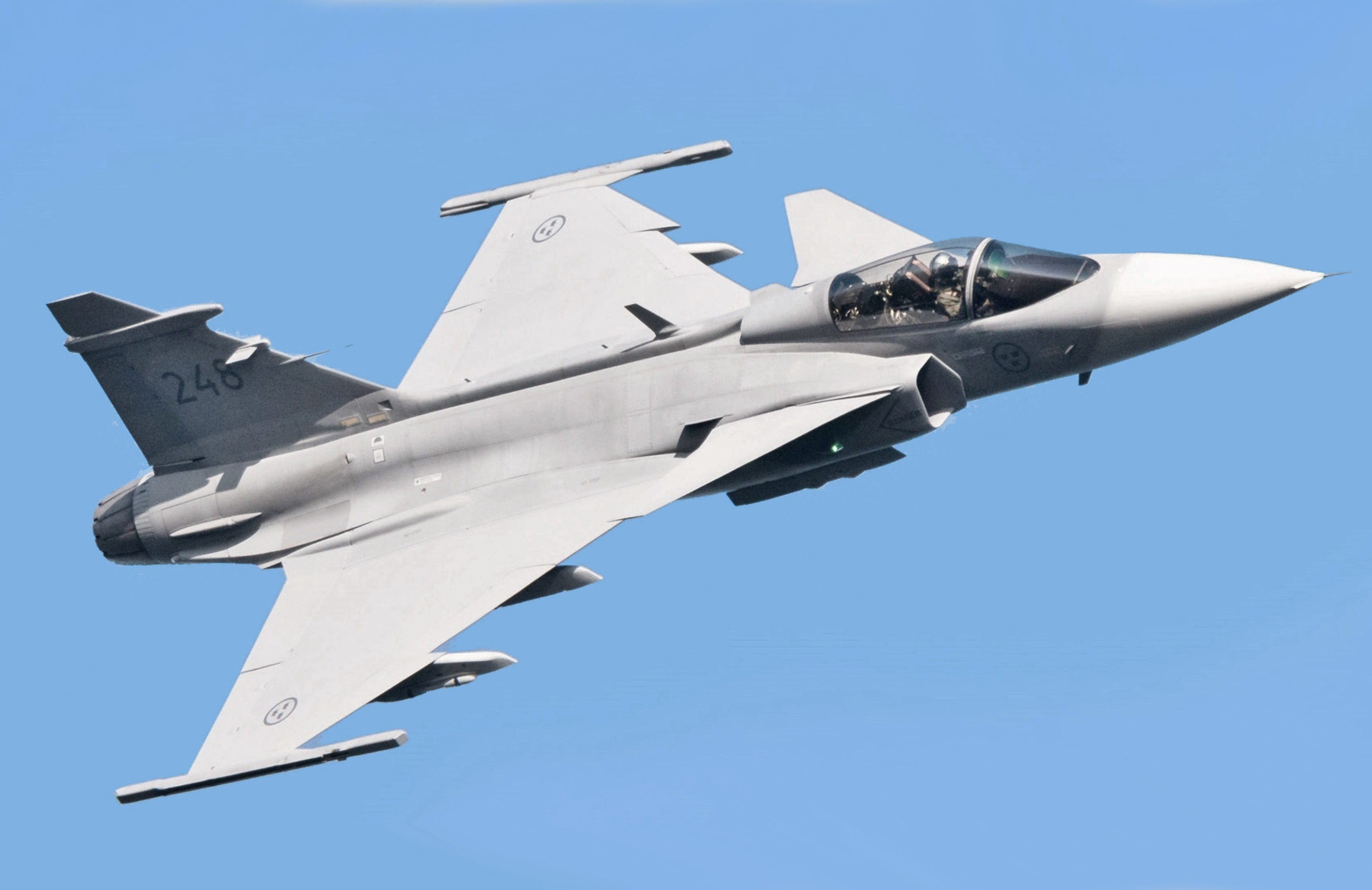
This realization pushed Ottawa toward an alternative that stunned many observers. Sweden’s Gripen offered not just an aircraft, but a fundamentally different philosophy of air power. The platform is designed around operator sovereignty: full software access, domestic modification rights, and independent maintenance authority. Under this model, Canada would not simply operate the aircraft—it would own it, adapt it, and sustain it on its own terms.
That distinction matters profoundly in the Canadian context. The Arctic is not a theoretical battlespace. Extreme cold, vast distances, and limited infrastructure demand aircraft that can operate from short, rough runways and dispersed locations. Gripen’s ability to launch from highways, function with minimal ground support, and maintain high sortie rates in severe conditions aligns directly with Canada’s geographic reality. Dispersed operations increase survivability, reduce vulnerability to targeted strikes, and allow sustained presence across the North, where strategic competition is accelerating.
The decision also carries major economic and industrial implications. Instead of defense dollars flowing outward into foreign-controlled supply chains, the agreement pulls capability inward. Final assembly, maintenance, upgrades, and systems integration occur on Canadian soil, anchoring high-skilled aerospace jobs at home. Canadian engineers gain access to advanced avionics and software architecture—the true currency of modern defense power—rebuilding an industrial ecosystem that had been steadily hollowed out over previous decades.
For Washington, the discomfort was not primarily technical. Gripen integrates with NATO standards, data links, and joint operations doctrine. Interoperability was never truly at risk. The deeper concern was precedent. Canada demonstrated that a close ally could step outside the F-35 ecosystem without breaking alliance cohesion. That realization quietly reverberated across Europe, where other mid-sized nations are now reassessing long-term costs, software lock-in, and maintenance dependency.
What makes Canada’s move particularly powerful is its restraint. There was no anti-American rhetoric, no dramatic rejection of NATO, no public confrontation. The decision was framed as pragmatic, geographic, and strategic. That calm assertion of choice made it harder to dismiss and more difficult to counter. It signaled that alliance membership does not require technological submission.
In the modern world, power no longer resides solely in hardware. It lives in software access, upgrade authority, maintenance rights, and the ability to decide national timelines without external permission. Canada understood that reality early and acted before dependency became permanent. This was not a rejection of allies, but a redefinition of partnership—one based on cooperation without control.
By choosing sovereignty over conformity, Canada repositioned itself inside NATO as a partner with leverage rather than an automatic follower. The $90 billion air power shift was not just a procurement decision; it was a strategic reset. And in an era where control over systems increasingly defines national power itself, that quiet choice may prove to be one of the most disruptive defense decisions of the modern alliance era.