A routine press availability outside the Capitol on Tuesday took an unexpected and combustible turn when Lindsey Graham, a long-time Republican power broker and once one of Donald Trump’s most visible allies, delivered an unusually blunt public warning about the party’s direction and Mr. Trump’s approach to Venezuela.
What began as standard questions about foreign policy quickly escalated into what aides later described as a long-brewing rupture surfacing in real time. With cameras rolling, Mr. Graham criticized what he called a “reckless miscalculation” in Mr. Trump’s Venezuela posture, warning that the strategy risked destabilizing the region while leaving the United States diplomatically isolated.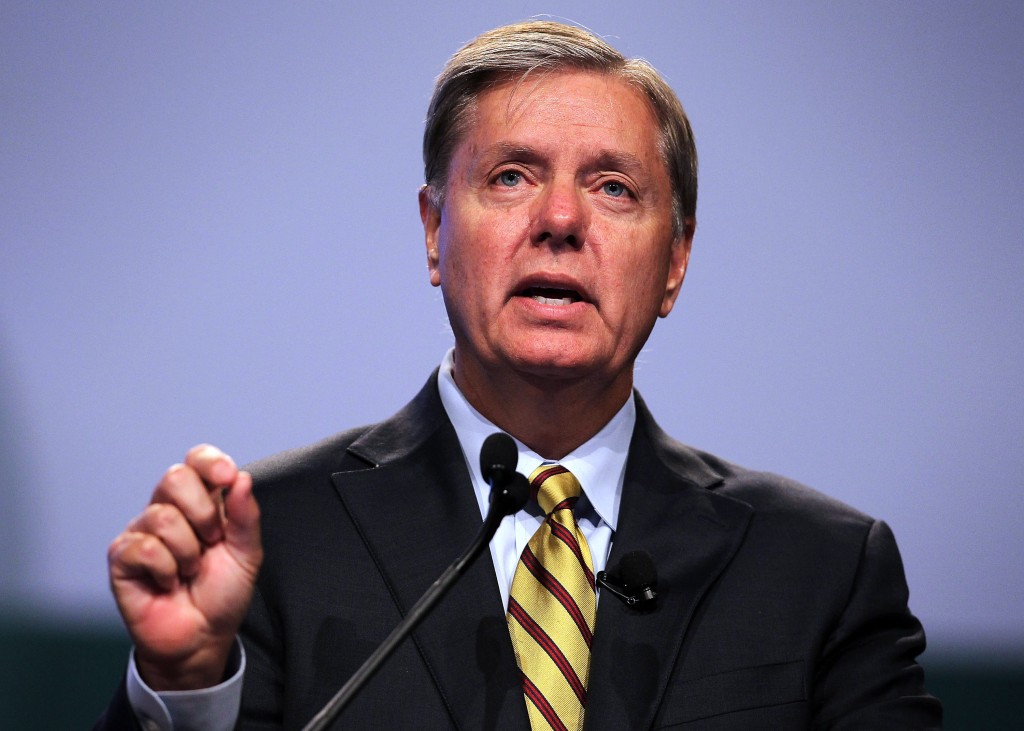
“This is how you back yourself into a corner,” Mr. Graham said, visibly frustrated. “And when you do it on the world stage, the consequences aren’t theoretical. They’re real, and they’re dangerous.”
The remarks marked one of the sharpest public breaks from Mr. Graham in years, particularly striking given his history as a reliable defender of Mr. Trump during impeachment battles, foreign policy controversies, and repeated intra-party disputes. The reaction was immediate. Reporters leaned in. Clips circulated within minutes. By mid-afternoon, the exchange was dominating cable news and trending across social media platforms.
Republican aides, speaking privately, said the outburst was anything but spontaneous. According to two people familiar with internal discussions, frustration had been building for weeks over a lack of clarity surrounding Venezuela briefings, including unanswered questions about military posture, diplomatic channels, and coordination with regional allies. Mr. Graham, they said, had raised concerns behind closed doors with little response.
“This wasn’t about one question,” said one senior Republican aide. “This was about feeling ignored and realizing the stakes were too high to stay silent.”![eMagazine] Nhiệm kỳ đầu của ông Donald Trump tại Nhà Trắng: Thắng và thua](https://nld.mediacdn.vn/2020/11/1/donald-trump-2-1604218087343787030044.jpg)
Mr. Trump’s Venezuela gambit — a mix of public threats, ambiguous signals, and shifting rhetoric — has long divided Republican foreign policy circles. Hawks argue that aggressive pressure is necessary to counter authoritarian regimes and curb adversarial influence in the hemisphere. Others warn that poorly defined red lines and unilateral moves risk escalation without a clear endgame.
Democrats seized on Mr. Graham’s remarks as evidence of deeper fractures within the Republican Party. “When even Trump’s closest allies are calling this dangerous on camera, that should concern everyone,” said one Democratic senator. But the sharper impact was felt within GOP ranks, where loyalty has often outweighed dissent.
Supporters of Mr. Trump moved quickly to downplay the moment, framing it as a disagreement over tactics rather than a broader repudiation. “Senator Graham is passionate, but the president understands strength,” one Trump-aligned strategist said. Still, the language used — including references to a “fatal mistake” — unsettled some Republicans, particularly those facing competitive races.
Behind the scenes, phones lit up across leadership offices as aides assessed the fallout. One senior party figure acknowledged that the clip complicated efforts to project unity on foreign policy. “This is not the image you want heading into a volatile international moment,” the official said.
For Mr. Graham, the episode may represent a recalibration. Once a vocal advocate of muscular interventionism, he has increasingly emphasized predictability, alliances, and congressional consultation. Publicly challenging Mr. Trump risks backlash from the party base, but remaining silent carried its own cost.
By evening, the press scrum had taken on symbolic weight: a moment when frustration boiled over and party discipline cracked under the pressure of global stakes. Whether it signals a lasting break or a brief flare-up remains unclear. What is certain is that, with cameras rolling, one of the Republican Party’s most recognizable voices chose to say what is usually confined to private rooms — and the party is now grappling with the consequences.